Chile: New Directions and Uncertainty with a Strong Security Partner
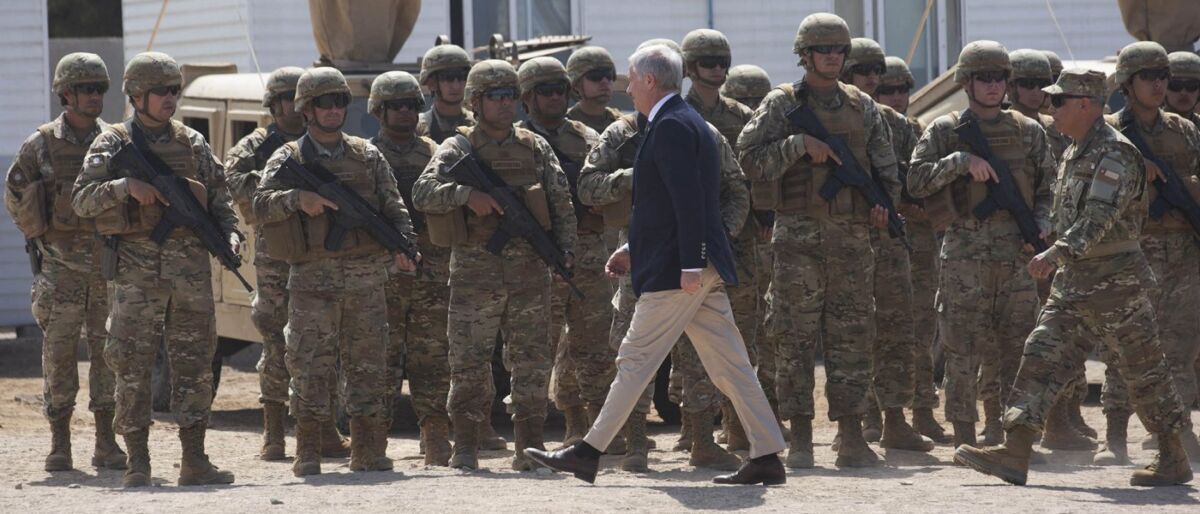
During his March 11, 2026, inaugural address, incoming Chilean President José Antonio Kast declared that with his government, Chileans would retake their streets and communities from criminals. Linking public insecurity to the significant quantities of immigrants, drugs, and contraband entering through Chile’s northern border in recent years, President Kast instructed the Chilean Army to begin digging a trench to fortify the border, with a wall and other control systems to follow.
More broadly, President Kast’s discourse during the campaign and actions since arriving in office indicate his intention to involve the Chilean Armed Forces more deeply in public security. Many in the defense sector consulted for this work also hope he will allocate more resources to the institution, and boost its standing in Chilean society, following limited budgets and a perceived overemphasis on its past human rights abuses by the outgoing leftist government of Gabriel Boric.
From March 22 to March 28, the author conducted a series of dialogues with defense officials and other experts in Santiago and Valparaiso, Chile, focused on the challenges, opportunities, and institutional questions facing the Chilean Armed Forces under the Kast administration. While the Chilean Armed Forces will likely play an enhanced role in securing the country’s northern border, and in public security more broadly, the policies of the Kast administration will also likely impact the posture of the Chilean Armed Forces toward a range of other areas in which they have responsibilities, from Araucanía to the Pacific to Antarctica, as well as with respect to key institutional questions regarding personnel, equipment, and resources more broadly. This work focuses on those changing roles and questions.
President Kast’s New Security Leadership Team
Those consulted for this work were generally positive about President Kast’s new security leadership team. His defense minister, Fernando Barros Tocornal, while not coming from a defense background, is regarded as both highly competent and possessing the administrative sophistication to protect the equities of the military as an institution in Chile’s polarized political environment. President Kast’s minister of national security, as an experienced prosecutor, is similarly highly regarded as possessing great competence and law enforcement knowledge.
The leadership of the Chilean Joint Staff and military service heads, who continue in office, reportedly have a better working relationship with President Kast than with Chile’s former President Boric.
Despite such a positive assessment, some consultants for this work expressed minor concerns. These included a significant number of senior security sector leaders with backgrounds in the Chilean Navy, rather than the army. Some also noted a continuing pattern of prioritizing special operations personnel over other backgrounds for major commands.
The Northern Border and “Macrozone”
Expanded control of the northern border region, known as the “Northern Macrozone,” the primary route of entry for the estimated 2 million immigrants entering Chile since 2018, as well as associated gangs, drugs, and other contraband, is a key priority for the Kast administration. The Chilean Armed Forces are seen as one key tool for moving quickly to address the problem. Within days of his inauguration, engineering units from the army began digging a ditch designed to impede the transit of vehicles and persons in key areas along the 1,000-kilometer border with Peru and Bolivia, to be followed by a wall and other controls. The Chilean Armed Forces will eventually build a system of trenches, walls, cameras, and sensors along the border under its Frontier Shield Plan, although some portions, particularly along the border with Bolivia, are considered impassable mountainous terrain not requiring further physical barriers.
The first 10 kilometers on the Chilean side of the border is, by Chilean law, a national security zone in which the military has freedom to deploy in support of controlling crossings. Importantly, however, although President Kast has spoken of a “government of emergency,” he has not declared a “state of exception,” as was done by his predecessor in the south, which would give the military arrest authority beyond detaining those committing crimes in front of them. Chile’s national police, including the Carbiñeros, and its investigative police (PDI), will continue to play the principal role in actually arresting people illegally crossing the border and committing crimes in the region. Nonetheless, the military will likely dedicate additional resources there, expand coordination with the police, and use its logistics capabilities, equipment, and manpower to physically secure the border, detect intrusions, and support police making arrests in the zone. At sea, the Chilean Coast Guard, part of its navy, will play an enhanced role in preventing the smuggling of migrants, drugs, and other contraband.
Beyond the land border, northern Chilean ports, including Iquique, with its large free trade zone (ZOFRI), are hubs for illicit activity in the region. A 1948 treaty giving Bolivia access to the sea through these ports complicates control insofar as it restricts Chile’s ability to inspect cargo.
Drugs smuggled into Chile by land and exported to Europe and Asia from these northern ports is also a problem in the sights of Chilean authorities, including exports of drugs to Oceana, which has become a particular problem in recent years.
In the “whole-of-government” effort to control the Northern Macrozone, a key role will be played by President Kast’s designated coordinator for the region, Retired Vice Admiral Alberto Soto. Although the position has little legal authority, Soto reportedly has both the confidence of President Kast and significant experience in the region due to his time commanding the First Naval District, associated with the maritime space of the region. He is viewed as a competent leader, expected to seek expanded cooperation with neighboring Peru and Bolivia in areas such as police, intelligence, and border issues, considered critical in responding to the challenge.
A Military Urban Security Role?
Beyond the North, according to those consulted for this work, there has been discussion of a role for the Chilean military in augmenting police patrols in urban areas across the country, where violence by gangs such as the Venezuelan group Tren de Aragua, their splinter groups such as the Gallegos, and Peruvian gangs such as the “Pulpos” and “de Callao” have become a particular problem.
Although symbolically, military patrols might boost a sense of security, the Chilean Armed Forces’ manpower is already stretched thin. Moreover, Chilean police are already considered relatively more capable and corruption-free than in other countries where the army has been brought in. In addition, legal vulnerabilities from military contact with civilian populations, the need to provide specialized training and equipment for such missions, and sensitivities from the legacy of military human rights violations during the Pinochet dictatorship, led many consulted for this work to regard such a possibility as remote.
Security Against Mapuche Terrorist Threats in Araucanía
Beyond the northern border and a possible role in internal security missions, the Chilean Army faces questions of the future of its deployment in Araucanía, known as the “Southern Macrozone,” of the country which has been the site of terrorist violence by radical Mapuche indigenous groups in recent years, prompting the prior government of Sebastián Piñera to declare a state of exception, authorizing the military to conduct patrols and detentions in the region, as a compliment to the Carbiñeros, PDI, and local authorities. The relative calm in the region raises the question of whether the Kast government may cancel the state of exception, in order to free up the deployment of limited military personnel to the North.
Security in the Pacific
Particularly for the Chilean Navy, security in the Pacific continues to be a core, challenging national security mission. With the projection of Chile’s 200 nautical mile exclusive economic zone from its 4,000-mile coastline, as well as from Easter Island, in addition to the area of the Pacific in which Chile has primary search and rescue responsibilities, the maritime terrain its navy must cover is vast. Illegal fishing, including the activities of the largely Chinese deepwater fleet, presents ongoing challenges to sustainability for Chilean fisheries and the communities they support.
In recent years, Chile has been involved in an expanded number of multilateral security exercises with the United States in support of its Pacific security responsibilities, including UNITAS, Rim of the Pacific (RIMPAC), and Pacific Dragon. The expanding capabilities and reach of China’s navy in this area, and the prospect for large-scale combat between China and Western nations, although Chile does not consider China an “adversary,” make the nation’s Pacific security responsibilities an increasingly salient issue.
Tierra del Fuego and Antarctica
The southernmost reaches of Chile, which border Argentina and serve as the gateway for both to Antarctica, are strategically vital for Chile and of core interest to its armed forces. The Straits of Magellan, under Chilean sovereign control per the treaties of 1881 and 1984, and the more southerly Drake Passage, would be key transit points between the Atlantic and the Pacific for the largest ships of the United States and other armed forces in the event of a war in the Indo-Pacific. In keeping with the strategic importance of this area, Chile participates with the United States in regular exercises in the region, such as Pacific Dagger.
Chile’s access to the Antarctic through Punto Arenas and the more southerly Port Williams increases the strategic importance of the area even further as the 2048 date for possibly renegotiating parts of the Antarctic Treaty nears, particularly given the continent’s strategic minerals, competing territorial claims, and multiple Chinese bases there.
Finally, although not widely noticed in Washington, D.C., the historic rivalry between Chile and Argentina leads the Chilean Armed Forces to observe with concern the latter’s dispute over Islands in the Beagle Channel, presidential rhetoric suggesting broader claims, and Argentine security cooperation with the United States including acquisition of 24 Block 70 F-16 fighters, a variant more advanced than those possessed by Chile, although far fewer than the 44 possessed by Chile.
Defense Policy and Resources
Despite significant expectations regarding changes in the Kast government’s employment of the armed forces and their dedication of greater resources, as of April 2026, much uncertainty existed in Chile on both counts. Upon assuming office, the Kast administration blocked adoption of Defense Policy and Strategy documents which had been imposed on it at the last minute by the outgoing Boric administration, based on concerns that the documents contained an excess of “woke” social content, yet there is not yet a timeline for the release of corresponding documents that represent the new orientation and direction of the Kast administration.
With respect to resources, despite President Kast’s advocacy for an eventual increase in Defense Spending, for the current year, the Chilean Armed Forces have been subject to the same across-the-board 3 percent budget cut imposed on other ministries. The effect of the cuts is limited, however, to operations and personnel, since in the Chilean system, since the time of the government of Sebastián Piñera, who eliminated the “automatic” funding for the Chilean Armed Forces as a portion of earnings from copper exports, the Chilean Armed Forces have a multiyear budget for equipment procurement that is protected from year-to-year budget fluctuations.
With the presumption that the needed budget allocation for the Chilean Armed Forces will eventually be forthcoming, they have multiple initiatives on the table.
The army is currently modernizing its fleet of tactical trucks with replacements principally from Mercedes-Benz. A modernization of aging 6×6 Mowag armored vehicles, possibly involving the purchase of 4×4 and 8×8 vehicles as well, is also on the table. Turkish vehicles are rumored to be favored, although more expensive U.S. Stryker vehicles, whose engines are better suited for operations in higher elevations in Chile’s mountainous regions, have reportedly been considered.
The Chilean Navy is currently completing a new multipurpose ship, the Magallanes, through its national shipbuilding and repair company ASMAR, with hopes of building two to three more such ships if the funding is available. Acquisition of new submarines is not even on the horizon, with Chile’s two Thomson-class submarines now over 40 years old, and their two French Scorpène-class submarines showing signs of age as well.
The Chilean Air Force is in the process of upgrading its previously mentioned fleet of 44 F-16, although an extensive upgrade to “Block 70,” the technology being acquired by rival Argentina for its own 24 F-16s, is considered too expensive for the moment.
On the rotary wing side, the Air Force is looking to replace 14 aging Bell UH-1H helicopters, possibly with European aircraft, although no specific commitment has been made.
All of the services are also interested in drones and counter-drone systems, from tactical drones for the army, to longer endurance systems to support the navy’s surveillance missions over broad areas of the Pacific, including producing its own drones. Nonetheless, the cost of drone and counter-drone systems, in the context of limited budgets and competing priorities, has notably limited the focus of the Chilean military on acquiring such systems, or even making associated changes in doctrine for operating in the contemporary environment, in which the use of drones by state and criminal adversaries is becoming increasingly prevalent.
In the cyber domain, the Chilean Armed Forces continue to improve their capabilities, including an Army Cyber Center. They have not yet, however, established a joint cyber command as many other modern militaries have done.
Another outstanding question, as the Chilean Armed Forces wrestle with modernization and acquisition decisions, is their future engagement with Israeli companies. The prior Boric government blocked the military’s work with Israel over the latter’s conduct of the war in Gaza. With the Kast government, those restrictions have effectively been lifted, with the Israelis returning in force to the April 2026 Feria Internacional del Aire y del Espacio, an aerospace show in Santiago.
Changes in Other Chilean Security Institutions
Beyond the military, the Kast administration is also making a major change in bringing the prison system and the gendarmerie responsible for guarding it, the Minister of Justice and Human Rights, to the Ministry of Public Security, which currently oversees the Carbiñeros and the PDI. The change is expected to present important opportunities to increase professionalism and combat corruption in the gendarmerie.
Intelligence reform is another pending issue. Although the outgoing Boric administration passed a new national intelligence law, experts interviewed for this work believe that significant work remains to be done to strengthen the civilian National Intelligence Agency and make it into a proactive organization, capable of conducting its own work with field agents, and serving as a true integrator of the intelligence of other organizations for the executive branch.
Conclusion
The Chilean Armed Forces are among the most professional and capable in the region. The Kast administration will likely strengthen its prestige within Chilean society, its contributions to Chilean national security, and its supporting institutional capabilities. In this transition, however, they will face important questions with respect to ensuring an adequate legal framework, training, equipment, and doctrine for their complex and expanded mission set. Their success in navigating this complex path will be vital for the security and prosperity of all Chileans, and for the United States as its partner.
Evan Ellis is a senior associate (non-resident) with the Americas Program at the Center for Strategic and International Studies in Washington, D.C. and Senior Fellow (non- resident) at AthenaLab.
Las opiniones expresadas en esta sección son de exclusiva responsabilidad de sus autores y no reflejan necesariamente la posición de nuestra institución.
por Evan Ellis
Senior Fellow AthenaLab
¿Quieres publicar con nosotros? Revisa nuestras normas para colaboradores externos.
Ver normas de publicación