Europe’s Rearmament: Why Higher Military Spending Does Not Guarantee Strategic Autonomy
This article is not yet available in English. The original Spanish version is shown instead.
1. CONTEXT
European states are undergoing their most significant process of rearmament since the end of the Cold War. This process began to take shape in 2014, driven by the countries of Central and Eastern Europe after Russia’s annexation of Crimea, and extended across the continent after the full-scale invasion of Ukraine in 2022. These developments have been compounded by uncertainty over the United States’ commitment to European security, following repeated warnings by Donald Trump regarding NATO.
In this scenario, European states (most of which are also NATO members) have responded with a sustained increase in their defence budgets. Taken together, the defence spending of the twenty-seven member states of the European Union reached €418 billion in 2025, 20 percent higher than the previous year. The trend was reinforced during the NATO Summit in The Hague in 2025, where allies agreed to allocate, by 2035, at least 3.5 percent of GDP to military requirements and up to an additional 1.5 percent to security-related investments[i].

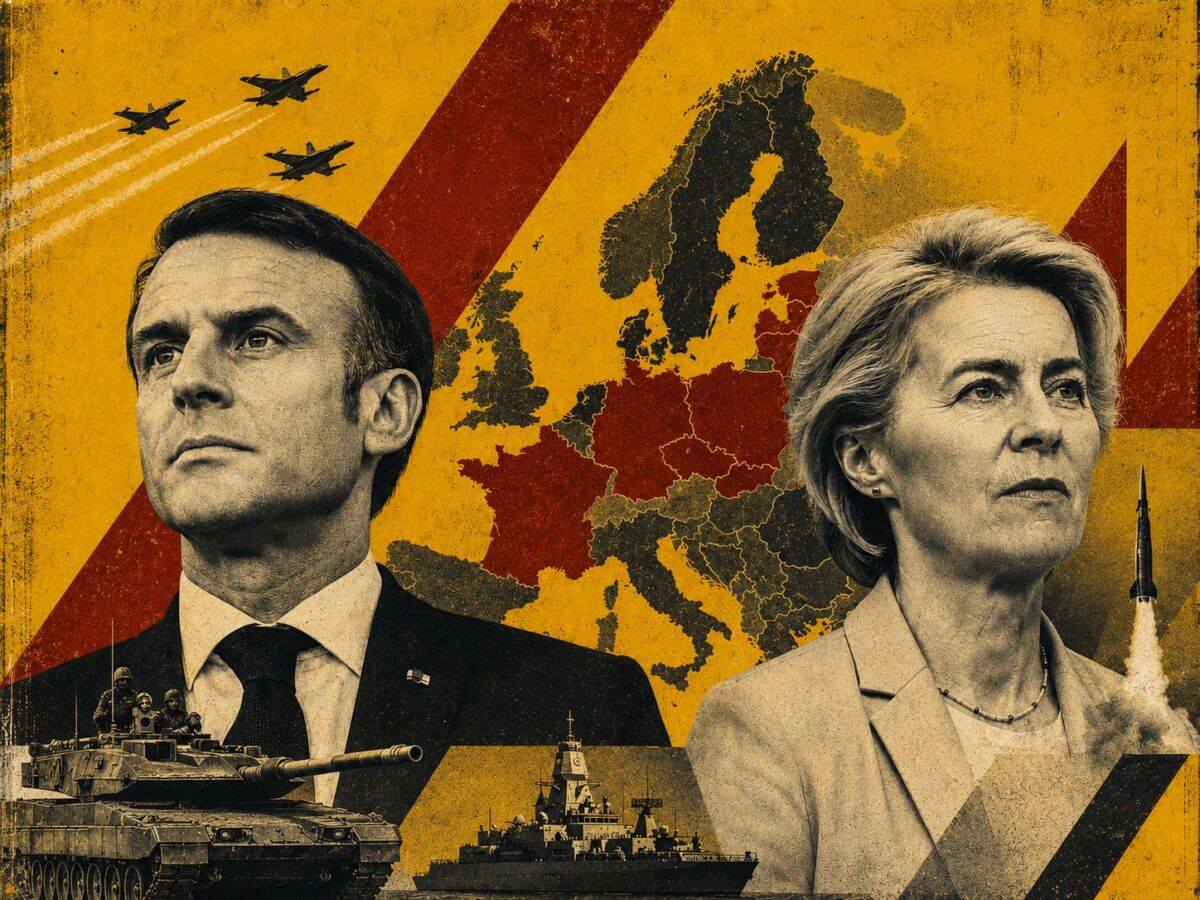
European rearmament has also acquired a discursive dimension. Emmanuel Macron has insisted that Europe cannot indefinitely delegate its security to the United States and has called on his counterparts to “believe in our sovereignty and in our strategic autonomy”[ii]. Along similar lines, European Commission President Ursula von der Leyen has described the current moment as one of “independence”, in which Europe must be able to “ensure its own defence and security” and possess the “freedom and the power to determine its own destiny”[iii].
However, neither increased spending nor rhetoric can, on their own, guarantee greater strategic autonomy. If that is the objective of European leaders, the challenge for these countries is to transform those resources into shared priorities, sustainable operational capabilities, and an industrial base less dependent on third parties. Rearmament may strengthen the strategic capabilities of these states, but the central question is what kind of autonomy it is producing and to what extent it modifies the existing transatlantic architecture.
2. STRATEGIC AUTONOMY: DIMENSIONS AND DEGREES
Rather than autarky or isolation, strategic autonomy is understood as the capacity of one or several states acting in coordination to set priorities, make decisions, and mobilize resources without significant dependence on external decisions or constraints [iv].
Strategic autonomy can be expressed across three dimensions. The first is decisional and institutional, and refers to the capacity of states to identify threats, agree on priorities, and translate them into executable decisions. The second is operational, and concerns the ability to plan, deploy, and sustain military action with sufficient means. The third is industrial and technological, and entails the capacity to produce, maintain, and upgrade those means without becoming dependent on critical external suppliers or technologies.

Alongside these dimensions, it is useful to distinguish three degrees of strategic autonomy, defined by the margin of control that states retain in relation to external support. Autonomy is full when states can set priorities, sustain operations, and maintain their means without being exposed to decisive vetoes or conditions imposed by third parties. It is partial when they retain their own capacity for decision and action but require external support in key functions, such as intelligence, strategic transport, or maintenance. At its lowest level, autonomy is restricted when third parties control indispensable resources and can limit, suspend, or condition their use.
3. THE OBSTACLES TO EUROPEAN REARMAMENT
The increase in spending on military and security needs opens the possibility of greater strategic autonomy for European states. However, for that progress to be fully realized, additional resources must be translated into common decisions and into capabilities that European states can employ with sufficient control. So far, this conversion continues to face political and material obstacles whose persistence is partly rooted in the historical trajectory of European sovereignty.
3.1. More Resources, but Decisions Still Fragmented
The first obstacle is political and institutional. Although the European Union has expanded its role through funds and incentives, the fundamental decisions on military priorities, procurement, and the use of force remain under national control. Nor has the recent increase in budgets been accompanied by an equivalent reform of the institutional architecture.
For example, the Common Security and Defence Policy (CSDP) continues to operate according to an intergovernmental logic. Its most sensitive decisions require unanimity in the Council. This rule becomes especially restrictive when it operates over divergent strategic preferences, while EU institutions lack the authority to impose a common direction. In this way, a single state can delay measures supported by the majority and force the other partners to seek alternative mechanisms. The blockages imposed by Viktor Orbán’s government in Hungary on various aid packages for Ukraine have shown the practical consequences of a rule that recent rearmament has not modified[v].
The instruments created to deepen cooperation do not substantially alter this structure either. Permanent Structured Cooperation (PESCO) rests on commitments without effective sanctions, while the Security Action for Europe instrument (SAFE) expands the Union’s financial capacity and encourages joint procurement, without establishing binding planning for national budgets. Thus, although the European Commission has gained influence over the industrial dimension of defence, military decisions remain in the hands of national governments.
This is compounded by the absence of a fully shared strategic vision. Countries on the eastern flank concentrate their attention on Russia, while several southern European states remain more concerned with the Mediterranean and the Sahel[vi]. Differences also persist over the relationship with the United States. France, for example, has defended a greater European capacity for action, while other governments, such as the British government, conceive rearmament as a way to strengthen their contribution to NATO.
The notion of a “European pillar” within NATO offers a point of convergence between these positions, although it leaves open the question of how much independent room for manoeuvre the continent is really seeking. The diversity of military procurement across countries reflects this ambiguity. Poland relies extensively on South Korean suppliers, Germany continues to incorporate U.S. systems[vii], and Spain has intensified its industrial cooperation with Turkey[viii]. When these acquisitions respond to uncoordinated national planning, they can multiply platforms and logistics chains, making integration at the European scale more difficult.
3.2. More Capabilities, but Still-Critical Dependencies
The second obstacle is material. Increased spending can strengthen European forces without necessarily reducing their dependence on the United States. After the Cold War, the specialisation of functions within NATO led European allies to entrust several critical capabilities to Washington.[ix] Current rearmament corrects part of these shortcomings, but it still does not replace the support required to sustain high-intensity operations.

These forms of support are concentrated especially in operational functions that are difficult to replace and indispensable for deploying and employing military forces effectively. European states continue to face deficits in strategic transport, air-to-air refuelling, target identification, and target acquisition.
In air and missile defence, although they possess the Franco-Italian SAMP/T system, a significant share of their capabilities remains based on U.S. systems[x]. These functions receive less attention than major platforms, but they determine whether a force can be deployed and sustained over time. Consequently, an increase in aircraft or ground units only expands European autonomy when it is accompanied by information, logistics, and operational support under European control.
Dependence also extends to the technologies embedded in military systems. Equipment developed or assembled in Europe may contain U.S. software and components. This exposure continues through maintenance, replacement parts, and upgrades. As a result, a capability may formally belong to a European state while remaining subject to decisions made outside the continent.
The field of intelligence offers a concrete example of this vulnerability. In March 2025, the United States temporarily suspended intelligence sharing with Ukraine, reducing Kyiv’s capacity to observe Russian movements and select targets[xi]. Although Ukraine is not institutionally equivalent to European allies, the episode illustrates the leverage retained by those who control an indispensable resource for another state’s operations.
In response to these dependencies, the European Union has adopted instruments designed to promote joint procurement and strengthen its industrial base. SAFE and the European Defence Industry Programme (EDIP), adopted in 2025, represent relevant advances in support of strategic autonomy, but they still operate on a limited scale relative to the volume of national rearmament. They also face a temporal difficulty, since consolidating an integrated industry takes years, while governments need to respond immediately to a strategic environment marked by greater threats.

3.3. The Persistence of National Sovereignty
The previous obstacles do not operate on empty ground. Rather than constituting a third independent obstacle, the historical trajectory of European states helps explain why decisional and industrial fragmentation has proven so resistant to change. War played a central role in the formation of European states. Studies in historical sociology have shown how military demands drove more effective tax systems and favoured the concentration of the means of coercion in the hands of state authority[xii]. Defence was therefore linked from early on to the exercise of sovereignty.
War also helped shape the continent’s political map. Competition among neighbouring units favoured those capable of sustaining fiscal and military effort[xiii]. Out of the medieval diversity of empires, city-states, and principalities, the territorial state ultimately consolidated itself as the dominant form. Control over force was therefore not a competence added later, but a constitutive dimension of the European state.
This trajectory helps explain why defence has advanced more slowly than other areas of integration. Sharing military capabilities requires governments to accept that part of their security will depend on decisions made by other states. It also requires specializing functions and relinquishing certain national means under the expectation that partners will maintain their support during a crisis. The political cost of such delegation is high because it affects a prerogative historically associated with state authority.
Over time, that association has been reproduced in defence bureaucracies, legal frameworks, and industries organized primarily at the national level. When European institutions promote common planning, governments retain final control over the use of force. When industrial integration requires concentrating production or distributing capabilities among countries, states tend to protect companies and forms of knowledge considered strategic.
Distrust matters within this mechanism, but not as a simple cultural residue of the past. It arises from the vulnerability involved in depending on another government to access an indispensable capability. This legacy does not prevent European cooperation, but it does raise the costs of delegation and helps explain why decisional and industrial fragmentation persists even when deeper integration would offer operational advantages. The trajectory that produced states capable of making war now complicates the construction of a common defence that requires sharing part of the sovereignty formed around it.
4. WHAT KIND OF AUTONOMY ARE EUROPEAN STATES BUILDING?
In the short term, European rearmament is producing partial and uneven strategic autonomy, falling short of the aspirations expressed by some of its main leaders. Resources are increasing faster than the political capacity to direct them jointly. European states have larger budgets and are beginning to recover capabilities weakened after the Cold War. However, decisions remain fragmented, and several essential functions for high-intensity operations continue to depend on the United States.
This does not mean that the current process is without effect. The strengthening of Europe’s industrial base and joint procurement can reduce dependencies and expand the continent’s capacity to assume greater responsibility in its surrounding environment. Their impact will depend on whether the new instruments modify national decisions, rather than merely finance parallel programmes.
The most likely outcome is not a European defence separate from the transatlantic architecture, but a stronger European pillar within it. Against this backdrop, European states would gain greater room for manoeuvre to act and sustain certain operations, while preserving the U.S. security guarantee and access to critical capabilities. Autonomy would therefore advance as a more balanced management of interdependence, not as a break with NATO.
In the medium and long term, the decisive question will be whether rearmament allows European states to better complement and control their vulnerabilities, or whether it consolidates a burden-sharing arrangement in which they spend more but continue to depend on Washington to fully employ those capabilities.
5. IMPLICATIONS FOR LATIN AMERICA
European rearmament poses a relevant challenge for the strategic interests of Latin American countries. The rapid increase in demand on a concentrated industrial base that expands only slowly is putting pressure on prices in the defence industry and extending delivery timelines[xiv]. If strategic capabilities need to be renewed or acquired, Latin America competes for the same suppliers, from Saab for Gripen fighters and the United States for F-16s to France for submarines[xv]. Without a broad industrial base or regional mechanisms capable of aggregating orders, the region has limited room to absorb that pressure. The problem is already visible in Brazil, which, faced with fighter deliveries scheduled through 2032, is negotiating the temporary lease of up to fifteen used aircraft[xvi].
At the same time, the process also opens an industrial opportunity. The saturation of Europe’s productive base is pushing governments and companies to seek partners outside the continent to expand their supply chains. Latin America, and Chile in particular, can take advantage of this opening in three ways.
The first is to consolidate a national defence innovation ecosystem by linking technical training centres, universities, and strategic companies such as ENAER, ASMAR, and FAMAE. This would make it possible to transform specialised knowledge into technological solutions and move from procurement or assembly toward the provision of capabilities for an expanding market.
The second is to enter joint production programmes. The United Kingdom, for example, is promoting the local construction of frigates at ASMAR through licensing and technology transfer, following experiences developed in Poland and Indonesia[xvii]. These partnerships can attract investment, generate employment, and facilitate access to advanced technologies.
The third is to sell or exchange systems or capabilities currently in service which, according to press reports, some European countries may be considering reacquiring[xviii]. This alternative would make it possible to meet urgent needs and reduce incorporation timelines, although it would offer fewer industrial benefits.
The European experience also offers a possible institutional lesson. Its response to dependence on the United States shows that autonomy can be expanded through collective capabilities, without requiring a break with the allied power. Latin America continues to address much of its security needs through bilateral and weakly coordinated relationships, which accentuates asymmetry vis-à-vis Washington. In theory, the reactivation of regional frameworks capable of articulating diagnoses, adopting decisions, and developing shared capabilities could reduce that fragmentation. In this way, Latin American countries could expand their margin to defend their own priorities and engage with the United States from a less unequal position.
DIEGO SAZO
Head of research in International Relations
CARMEN GRESSE
Research Assistant
[i] NATO, “NATO Concludes Historic Summit in The Hague”, June 27, 2025, https://www.nato.int/en/news-and-events/articles/news/2025/06/27/nato-concludes-historic-summit-in-the-hague
[ii] Emmanuel Macron, “Déclaration de M. Emmanuel Macron, président de la République, sur les défis de la Communauté politique européenne”, Budapest, November 7, 2024, https://www.vie-publique.fr/discours/296075-emmanuel-macron-07112024-communaute-politique-europeenne
[iii] Comisión Europea, “2025 State of the Union Address by President von der Leyen”, Estrasburgo, September 10,
[iv] Barbara Lippert, Nicolai von Ondarza and Volker Perthes, eds., European Strategic Autonomy: Actors, Issues, Conflicts of Interests, SWP Research Paper 4/2019 (Stiftung Wissenschaft und Politik, German Institute for International and Security Affairs, March 2019), https://www.swp-berlin.org/10.18449/2019RP04
[v] BBC, “Hungary’s Orbán Accused of Disloyalty and Blackmail over Ukraine Loan Veto”, BBC News, March 20, 2026, https://www.bbc.com/news/articles/cq6jrvgqeejo
[vi] Andrea Gilli, Nicole Koenig, Margarita Šešelgytė y Ricarda Nierhaus, “European Cohesion for Security and Defense”, DGAP Policy Brief 1, German Council on Foreign Relations, February 4, 2026, https://doi.org/10.60823/DGAP-26-43232-en
[vii] Sophia Besch, Erik Brown and Rafaela Uzan, “Rebalancing the Transatlantic Defense-Industrial Relationship: Regional Pragmatism in Northeastern Europe”, Carnegie Endowment for International Peace, December 22, 2025, https://carnegieendowment.org/research/2025/12/rebalancing-the-transatlantic-defense-industrial-relationship-regional-pragmatism-in-northeastern-europe
[viii] Vozpópuli, “España abraza la pasión militar turca: un nuevo acuerdo naval tras comprar aviones para el Ejército del Aire”, April 14, 2026, https://www.vozpopuli.com/defensa/espana-abraza-la-pasion-militar-turca-un-nuevo-acuerdo-naval-tras-comprar-aviones-para-el-ejercito-del-aire.html
[ix] James Sperling and Mark Webber, “Understanding NATO”, en The Oxford Handbook of NATO, eds. James Sperling and Mark Webber (Oxford University Press, 2025), 3-23.
[x] Max Bergmann, Otto Svendsen y Jonathan Burchell, “Europe Needs an ASAP Program for Air Defense”, Center for Strategic and International Studies, March 23, 2026, https://www.csis.org/analysis/europe-needs-asap-program-air-defense
[xi] Warren P. Strobel, Siobhán O’Grady, Ellen Nakashima, Missy Ryan and Kostiantyn Khudov, “U.S. Pauses Intelligence Sharing with Ukraine Used to Target Russian Forces”, The Washington Post, March 5, 2025, https://www.washingtonpost.com/national-security/2025/03/05/us-ukraine-intelligence-sharing/
[xii] Charles Tilly, “War Making and State Making as Organized Crime”, en Bringing the State Back In, eds. Peter B. Evans, Dietrich Rueschemeyer y Theda Skocpol (Cambridge University Press, 1985), 169-191.
[xiii] Hendrik Spruyt, “War and State Formation: Amending the Bellicist Theory of State Making”, in Does War Make States? Investigations of Charles Tilly’s Historical Sociology, eds. Lars Bo Kaspersen y Jeppe Strandsbjerg (Cambridge University Press, 2017), 73-97.
[xiv] AthenaLab, “Los desafíos para la industria de defensa en el nuevo orden internacional: tres visiones comparadas”, December 20, 2024, https://www.athenalab.org/noticias/2024/12/11/documento-especial-los-desafio-para-la-industria-de-defensa-en-el-nuevo-orden-internacional-tres-visiones-comparadas/
[xv] Mathew George, Katarina Djokic, Zain Hussain, Pieter D. Wezeman y Siemon T. Wezeman, Trends in International Arms Transfers, 2025 (Stockholm: Stockholm International Peace Research Institute, marzo de 2026).
[xvi] Douglas Royce, “Saab and Embraer Unveil First Locally Manufactured Gripen E in Brazil”, Defense Security Monitor, March 20, 2026, https://dsm.forecastinternational.com/2026/03/30/saab-and-embraer-unveil-first-locally-manufactured-gripen-e-in-brazil/
[xvii] Zona Militar, “Reino Unido continúa posicionando a sus Tipo 31 para ser la futura fragata multirol de la Armada de Chile”, Noviembre 20, 2025, https://www.zona-militar.com/2025/11/27/reino-unido-continua-posicionando-sus-tipo-31-para-ser-la-futura-fragata-multirol-de-la-armada-de-chile/
[xviii] El Mostrador. “La secreta venta de carros blindados del Ejército chileno a Alemania”, November 20, 2025, https://www.elmostrador.cl/unidad-de-investigacion/2025/11/20/la-secreta-venta-de-carros-blindados-del-ejercito-chileno-a-alemania/