SEMINAR | Japan's New Strategic Posture
This article was translated automatically and may contain differences from the original. For reference, read the original.
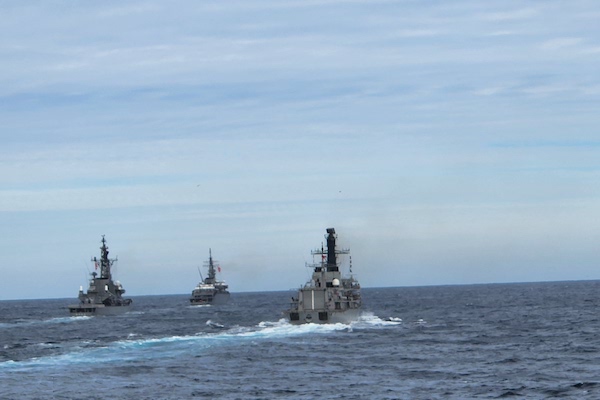
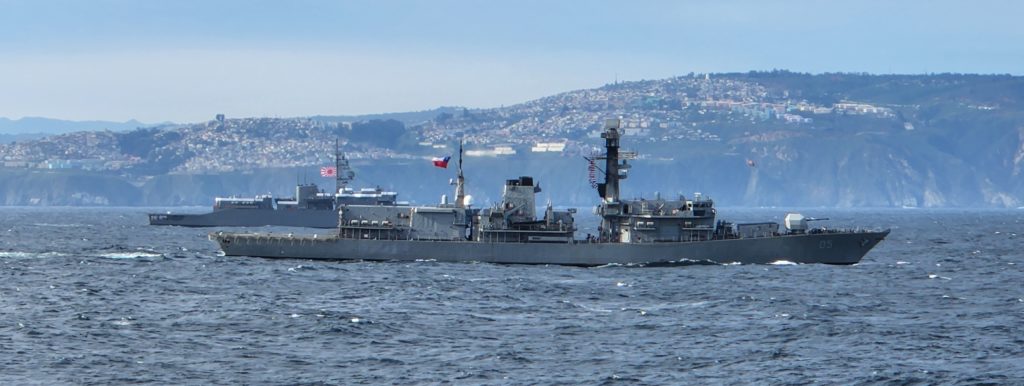
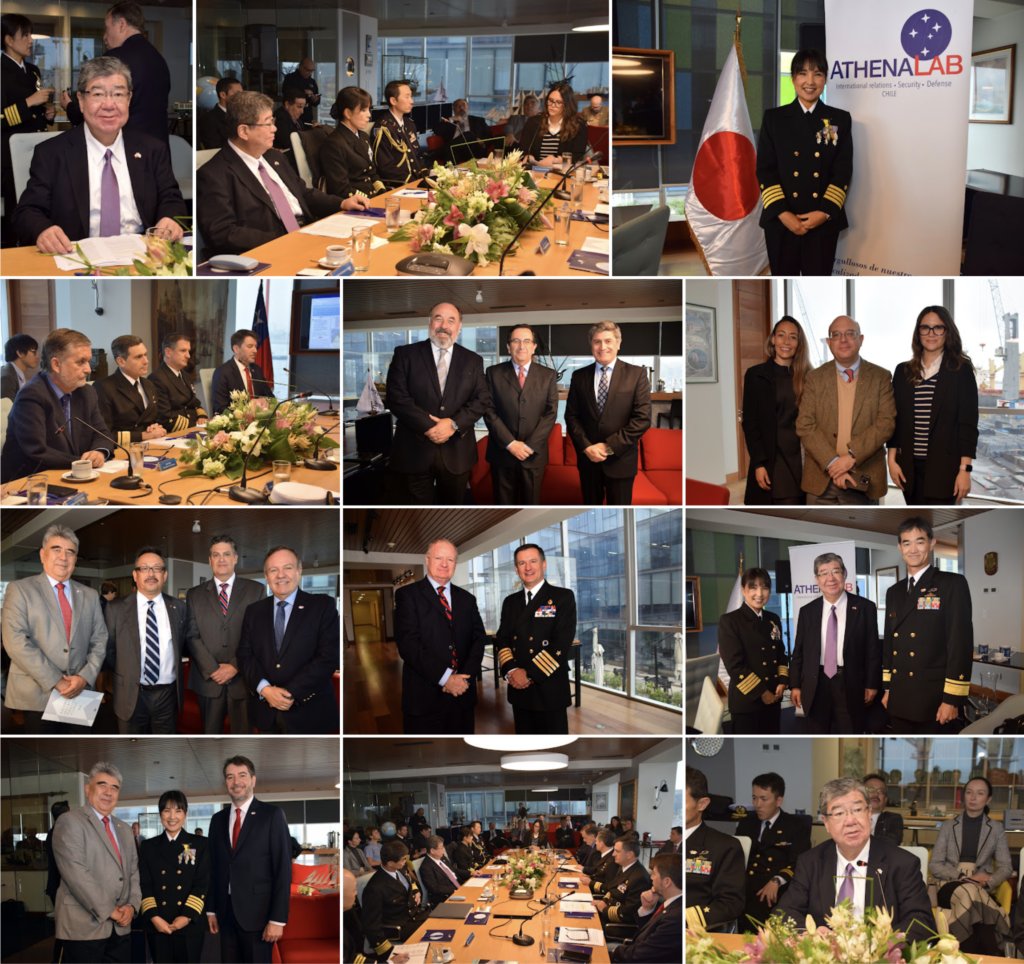
Against the backdrop of the ships “JS Kashima” and “JS Hatakaze,” Japanese Ambassador Shibuya Kazuhisa began his remarks by highlighting the importance of the Indo-Pacific as a unifying factor between two distant neighbors that depend on the stability of the oceans for trade and to bring prosperity to their inhabitants. He then emphasized our country’s incorporation into the Comprehensive and Progressive Agreement for Trans-Pacific Partnership (CPTPP) ) and the entry into force of a new scientific cooperation agreement.Ambassador of Japan to Chile, Shibuya KazuhisaIn search of new opportunities for bilateral cooperation in the field of security and defense, AthenaLab and the Embassy of Japan in Chile held a seminar in Valparaíso on Friday, July 21, taking advantage of the visit to the port by the Training Squadron of the Japan Maritime Self-Defense Force (JMSDF).
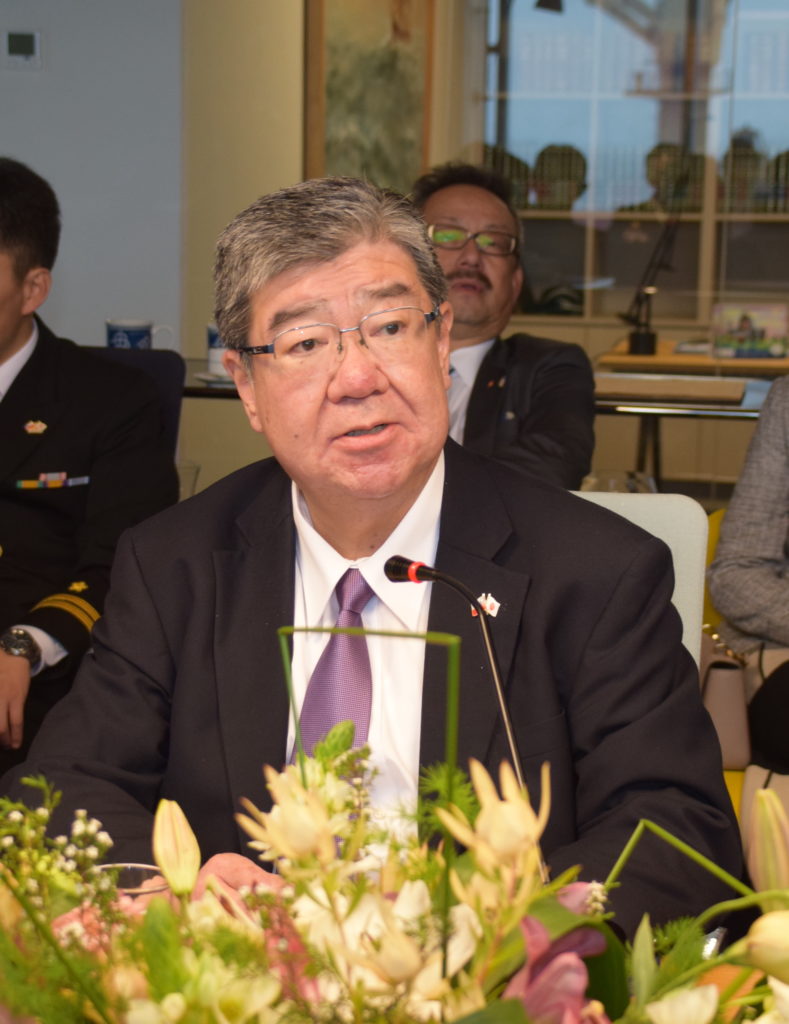
He detailed that the government of Prime Minister Kishida Fumio has defined that the backbone of a Free and Open Indo-Pacific is the defense of “peace” and the promotion of an international environment in which freedom, transparency, and the rule of law are upheld, so that solutions by force are not imposed on the weaker.
Juan Pablo Toro, Executive Director of AthenaLab
In turn, AthenaLab’s Executive Director, Juan Pablo Toro, stated that Japan provides one of the best examples of a middle power that has decided to expand its naval capabilities to reinforce regional order and the balance of power in the Indo-Pacific region. For this reason, he explained, the Japan Maritime Self-Defense Force is at the forefront of diverse activities such as humanitarian aid missions and military exercises, ranging from the Gulf of Aden to the coast of South America.
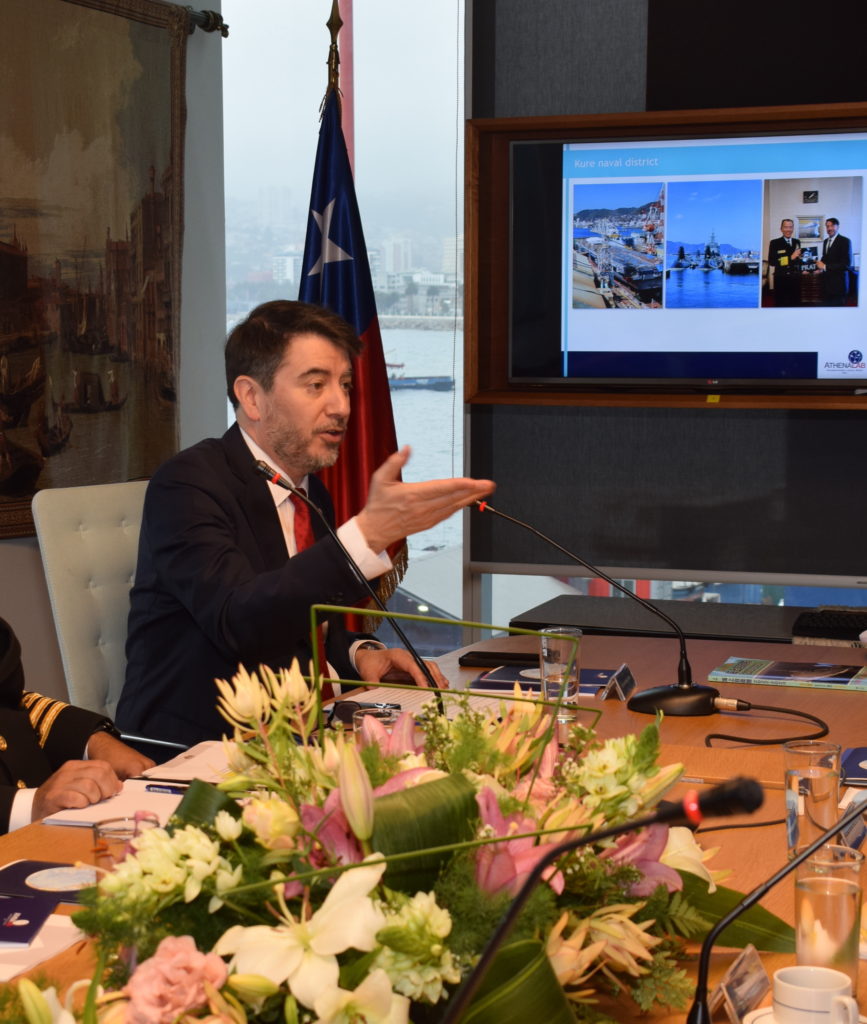
He emphasized that Japan’s dependence on maritime trade, like Chile’s, makes this field a natural area for cooperation between both democratic countries and their respective navies. Given the reality that we are living in the most “severe and complex” security environment since the end of World War II, as the NSS explains, it is plausible and necessary to seek alliances among naval forces to deny any potential competitor the opportunity to create de facto situations against freedom of navigation and also to manage the impacts of environmental degradation on ocean governance and national prosperity.
Rear Admiral Yasushige Konno, Commander of the Japanese Training Squadron
Rear Admiral Yasushige Konno, Commander of the Training Squadron, indicated that the NSS established a ten-year horizon, where Japan’s national interests were defined as maintaining and consolidating peace and security in Japan, and maintaining and protecting the international order based on universal values and rules.
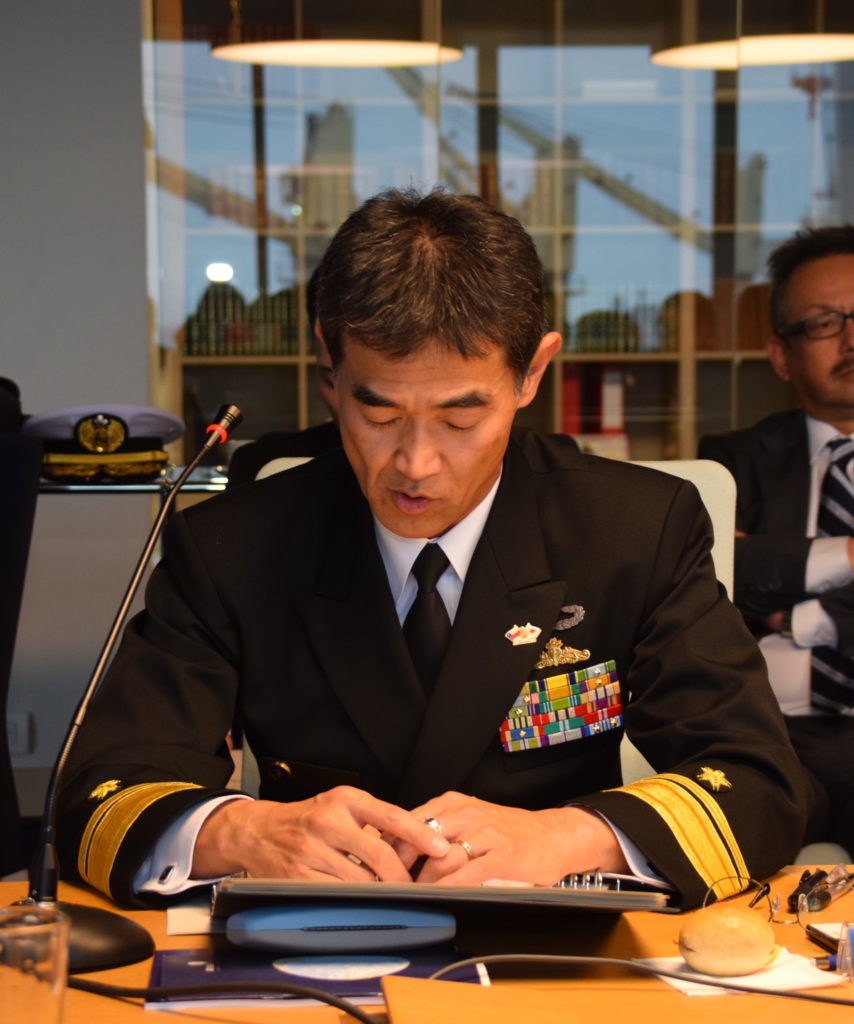
He then explained that Japan, which has decided to double its military budget to reach $320 billion by 2028 (the third largest in the world after the U.S. and China), will develop its future defense capabilities focused on countering the capabilities of its opponents and addressing the new dimensions of warfare, in order to demonstrate that its country “will not tolerate changes in the status quo through force.”
Director of the Naval War Academy, Captain Sergio Gómez
The discussion was concluded by the Director of the Naval War Academy, Captain Sergio Gómez, who argued that the Pacific is an area filled with risks and responsibilities that include protecting maritime trade routes, addressing piracy, monitoring illegal fishing, and responding to natural disasters associated with the so-called “Ring of Fire,” which includes volcanic eruptions, earthquakes, and tsunamis.
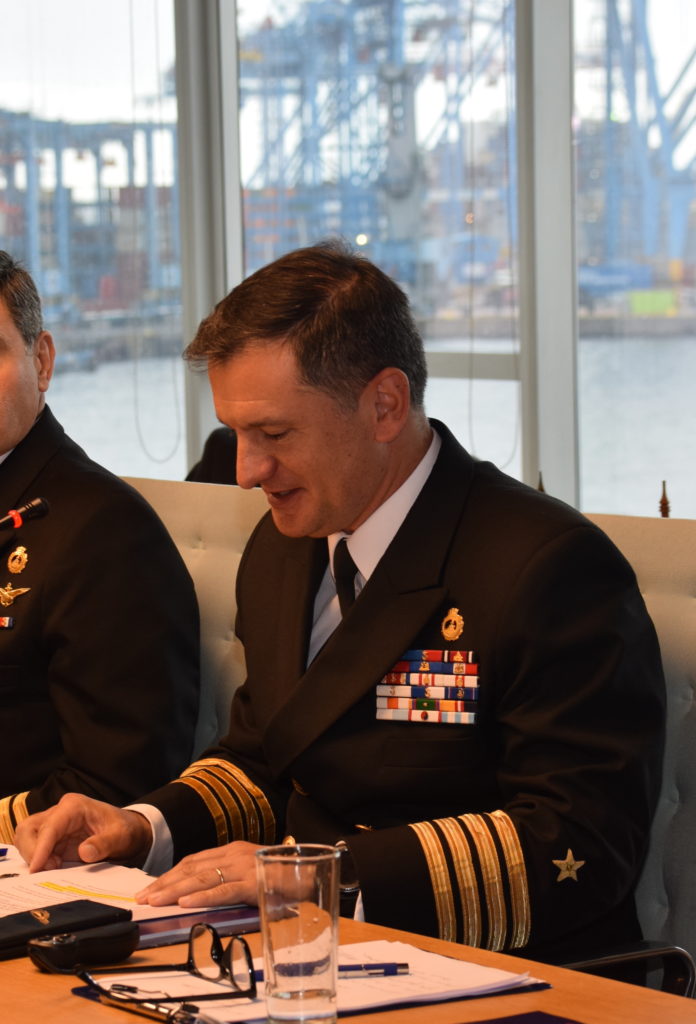
Subsequently, Commander Gómez mentioned the participation of the Chilean Navy in the Rimpac naval exercise, where they have interacted with the JMSDF for years with great success.
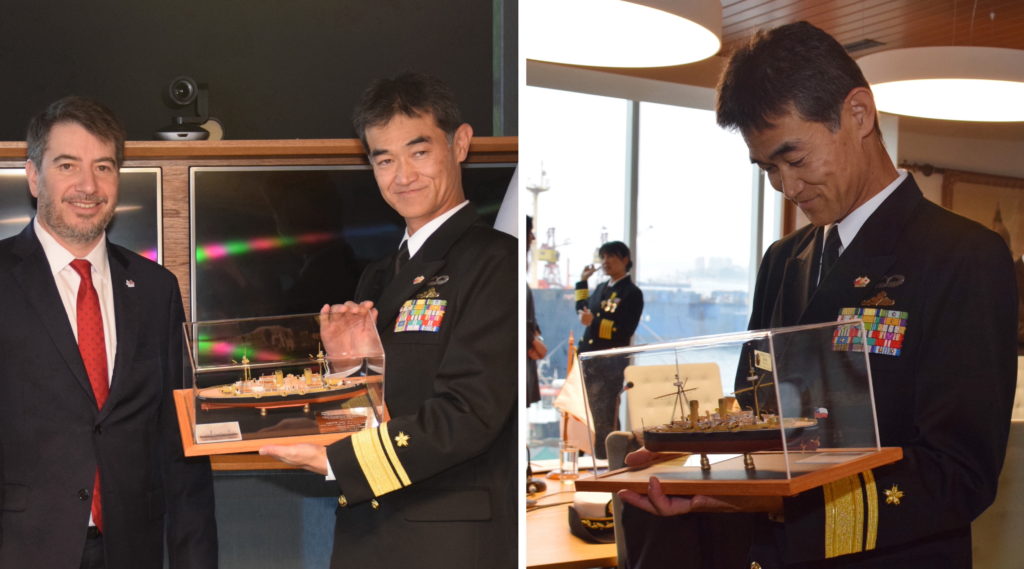
The seminar concluded with an exchange of gifts, which included the presentation by AthenaLab of a model of the cruiser “Esmeralda” to Rear Admiral Konno. This ship was sold by the Chilean Navy to the Imperial Japanese Navy and played a prominent role in the Russo-Japanese War (1904-1905) under the name “Izumi.” Thus, the vessel is always cited as an example of a friendship that spans over a century between the countries.
AthenaLab Team
July 25, 2023
See more images from the seminar
➜