NATO 75 Years: Challenges and Projections of the Atlantic Alliance
This article was translated automatically and may contain differences from the original. For reference, read the original.

On April 4, the North Atlantic Treaty Organization (NATO) will celebrate its 75th anniversary, at a moment perhaps as critical as when it was founded. It is no coincidence that German Chancellor Olaf Scholz popularized the term “zeitenwende” to describe “the turning point” that has emerged following Russia’s invasion of Ukraine two years ago.
Created to protect Western Europe from the threat posed by the then-Soviet Union, the Atlantic Alliance has successfully faced multiple challenges over time, even becoming expeditionary to confront jihadist terrorism.
In its latest “Strategic Concept” released in 2022, Russia was identified as “the most significant and direct threat to the security of allies and to peace and stability in the Euro-Atlantic area.” This assessment was shared by Finland and Sweden, the last countries to join NATO’s collective defense system.
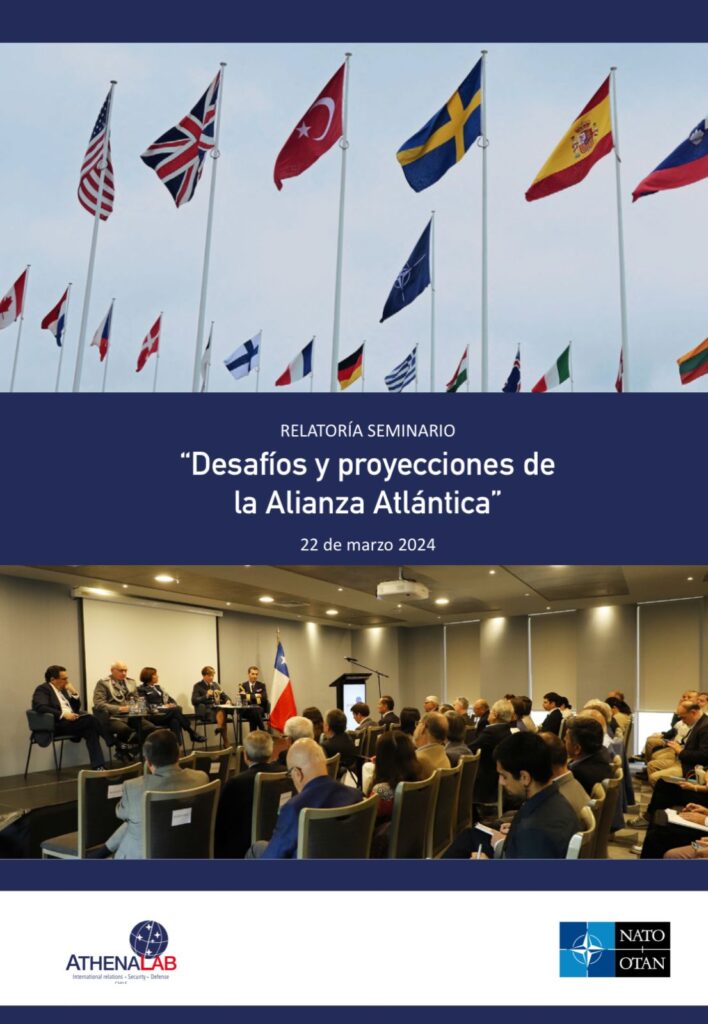
The recent seminar organized by AthenaLab addressed the future of the world’s largest military alliance, the contributions of its two new members, and the advisability for Latin American countries to strengthen ties with NATO, of which we provide a summary of the main contents.
CLICK ON THE IMAGE TO DOWNLOAD DOCUMENT
Video presentation by Alex Crowther
Photo gallery