The Soul of the Armed Forces and Their Use for Political Purposes
This article was translated automatically and may contain differences from the original. For reference, read the original.
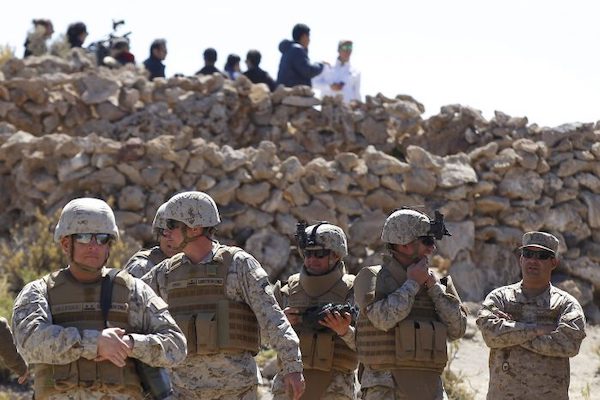
In the context of polarization and the pandemic that Chile is experiencing, there have been attempts to politicize the Armed Forces, taking advantage of their visible and extensive deployment due to the emergencies the country has faced.
In this regard, Deputy Jorge Brito Hasbún (Democratic Revolution), a member of the Defense Commission of the Lower House, in a recent column published in the online newspaper El Mostrador titled “The Military Chile Needs,” made a series of statements that demonstrate a profound misunderstanding of military function and its deep-rootedness in national identity.
Brito, who was removed from the presidency of the Defense Commission of the Chamber for his delaying maneuvers to put the Intelligence Law promoted by the Government on the agenda, stated among many things that “the Armed Forces do not live in Chilean reality.” This assertion is at least curious, considering they are among the most highly regarded institutions in the country, according to the latest Bicentennial UC Survey.
He also added that “it is necessary to reposition the military as a citizen, who has rights and duties to the Republic, but who wears a uniform, as they have voluntarily decided to restrict their political rights to be among those who bear arms in defense of their family, neighborhood, and nation.”
Such arguments and others were dismantled one by one in the response sent to the same medium by Richard Kouyoumdjian Inglis, vice president of AthenaLab.
Below is a summary of Richard Kouyoumdjian’s response to Deputy Brito:
1) Deputy Brito asserts that countries that have gone through dictatorships or wars subsequently agree democratically on the type of Armed Forces they need.
What is observed as a common factor are the defeats in a war that lead to a review of the purpose and organization of armed institutions, not the end of dictatorships as he claims. Budgetary redesigns should not be confused with supposed democratizing debates about the essence of the Armed Forces.
2) It is not good to ask for their opinion on current political issues. I believe the general consensus and constitutional definition is that the Armed Forces should be apolitical, as possessing the power of arms could significantly influence the development of political events. We have historical experience in this regard.
Some politicians seek to attract the attention of institutions to tilt the balance in their favor, disregarding the depth that the concept of apolitical, constitutional, non-partisan, and human rights-respecting has acquired in the Armed Forces.
3) The decision on the economic model of the late 1970s was not a decision made by the military. It was a recommendation from economists that was decided to be implemented as it was the only way, at that time, to grow the country. The military, which is criticized, were the ones who demanded during the 1982 crisis to moderate the implementation of the liberal economic model.
4) Many—if not most—members of the institutions are concerned about the problems of their compatriots, but they also understand that their solution is a matter that politicians and experts should address, and it is not something that should involve the power of arms.
5) Members of the Armed Forces are Chileans from all social, ethnic, and religious backgrounds. They come from the far north to the extreme south. They are people from the mountains, the central valley, the deserts, the coast, and the insular Chile. Discrimination is not practiced in the Armed Forces, and everyone has a place within them. Only a vocation for service to Chile is needed.
6) Regarding the historical examples of 1830 and 1891, some clarifications are necessary. Given the concentration of political power at the time, these events cannot be framed as cases where the rich clashed with the poor or the aristocracy against the people, even though they are often represented that way to suggest that the military acted on behalf of one group or another.
7) Regarding the participation of the Armed Forces in Constitutional States of Exception, including the current State of Catastrophe, as good hierarchical, non-deliberative, and obedient organizations, they follow orders from the Executive, orders that they do not question and carry out in accordance with current laws and regulations.
8) Chile is integrated into the world, and its Armed Forces are part of the instruments of the State intended to support its foreign policy. If they participate in United Nations peace missions, in international exercises, or train with third countries, it is to support the management of the Foreign Ministry or to acquire operational capabilities that can only be obtained through that route, which have allowed them to achieve levels of excellence comparable to NATO countries. These exchanges occur with many Latin American, Asian, and European countries, in addition to the U.S. Ninety-five percent of Chile’s foreign trade is conducted by sea, so it is logical for the Navy to ensure the opening of maritime routes.
9) Undoubtedly, we cannot exclude the Armed Forces from defining the type of Defense that Chile needs for the future, particularly in light of modern, non-traditional threats that are emerging. However, we must involve them in the appropriate technical instances, not as part of a political party discussion that responds to partial ideological projects.
“The Military Chile Needs”
El Mostrador, 1September 9, 2020,
Countries that have faced dictatorships or wars and sought to move forward have had to democratically agree on what Armed Forces they need for the future. From uniforms, songs, and symbols to doctrine and weapon systems, all are part of the military defense policy that countries develop. Today, in light of the extensive military presence on the streets due to the Constitutional State of Exception, some people have expressed interest in discussing this, a matter that seems urgent and necessary but has been absent in traditional public conversation spaces.
To comment on the profound general crisis facing our country, the media have seen a parade of businessmen and politicians, both new and old, representatives of the public and capital, but what do the military think? What have the military been doing?
The military, like much of the country, have been working in prolonged contact with the population; those who could have studied and observed the people. With different nuances and motivations, each institution of the Armed Forces has been involved in national events as had not occurred since the early 1990s.
For older military personnel, this is not new. A large part of the current high command entered the institution during the dictatorship. While to date we do not know of any being prosecuted for human rights violations, most of them were part of the illegitimate force used to confront protests in the 1980s and dismantle the State, handing over 700 state-owned companies, water, and civilian pensions to large economic groups, in addition to committing terrible and multiple crimes that still cause suffering in much of the country and especially in thousands of Chilean families.
Some young officers possess a different social sensitivity. Although some were born and continue to live in a military villa without knowing an average Chilean neighborhood, for many, the evident abuses of the system do not go unnoticed. While they may not be directly affected by the misery of pensions generated by the AFP business, they could see it in their family or close environment, along with the various abuses that most Chileans experience: collusion of pharmacies, healthcare costs, low wages, even with a government seeking a 0% adjustment, security issues in our neighborhoods, educational gaps, among many other aspects, are situations that should cause concern for the new generations in uniform. That is what we hope and want to believe.
The non-commissioned officers, or “class” as the officers call them, are the backbone of the operational effort that technology has not been able to replace. They are mostly young peasants and workers, from rural and urban backgrounds, from the northern and southern corners, Chileans of varied ancestry who constitute the uniformed people.
Thus, military personnel, some civilians, and history books reclaim the figure of the Army as “the ever victorious and never defeated.” However, those who exercise healthy critical thinking know that the reality is different, and there are many times when the Army has been defeated by mercenary armies paid for by the elite of Santiago (1830, 1891) or when they have been used to kill and thus defend the private interests of a few, harming many.
It seems that some want history to repeat itself. The old fortunes may have different surnames today, but they operate in the same way: they want the Armed Forces and the State to protect their business, even when it threatens the lives of their own people. After all, in Quintero, in the post-explosion mobilizations, and in Wallmapu, for example, the State has been present with more military personnel and rifles than health, education, or social support personnel.
The harsh contradictions can be seen in the streets of Chile, but also in the tasks that the Chilean Armed Forces perform in the world. For example, through the close relationship maintained with the U.S. Southern Command, aligning the operational capacity of the force so that our Armed Forces are able to follow orders from the Americans and thus collaborate and jointly protect the commercial routes that allow exporting companies of commodities to deliver hundreds of millions of dollars in food and minerals on time, which— for example—our country sends to the northern hemisphere or other parts of the globe. In the shared defense of our commercial routes with a foreign power, new powers have been added with which the Government has sought to involve the Armed Forces in internal matters. However, it is known that no Armed Forces can resolve conflicts widely recognized as being of social and political origin. The explosion of October 18 and the political crisis require an effort from the Government and politics, not just the military. This is a social crisis of proportions never before seen in the country that, if well addressed and aligned with the majority will of Chile, could bring Armed Forces with a broad understanding, respect, and even mutual affection with the people of which they are a part, as you have the right to participate in this debate.
In this reflection, I do not seek to judge whether it is correct or not for the Navy to be a tool for foreign policy in a sign of global dependence and to operate under the direction of the northern country, especially considering the current president leading the U.S. Rather, I seek to recognize that over these three decades, the Defense of Chile has taken a series of directions that are not necessarily oriented toward the interests of the national project, which has not been discussed with society, and in which the people have not been informed, consulted, or expressed their opinion regarding what Armed Forces Chile needs.
This debate must take place. With this, we do not seek to exclude the Armed Forces; quite the opposite, we seek to incorporate them into national reality, to understand ourselves as compatriots, and to be able to define for the first time what kind of military Chile needs to protect the country in which we want to live. It is likely that the military Chile needs is different from what the United States needs and, therefore, requires its own doctrine or, perhaps, is different from what the Luksic or Angelini groups need, as there are situations where protecting the country may involve affecting and harming the interests of these groups. So, who will the Armed Forces of Chile protect in the 21st century?
From this mountainous corner by the sea, the country already knows that it can plan a common future of just progress, where patriotism is understood as the defense of territory, the people, and their dignity against all that affects and threatens it, as currently done by corruption, tax evasion, or the devastation that capitalism brings against nature and life on the planet.
This is unattainable with Armed Forces that do not live in Chilean reality. It is necessary to reposition the military as a citizen, who has rights and duties to the Republic, but who wears a uniform, as they have voluntarily decided to restrict their political rights to be among those who bear arms in defense of their family, neighborhood, and nation.
A citizen in uniform should not seek enemies among those attending a march; a citizen in uniform feels the pain of transnational abuses by the AFP against our working class; a citizen in uniform understands that the communities protesting against a thermoelectric plant are as concerned, if not more so, than he is about the present and future of the country. A citizen in uniform understands that the hypocrisy of the Chilean State in Wallmapu cannot be sustained and seeks only to learn from its indigenous peoples and their wisdom, especially that which has defended life and land in the south for so many centuries, something he swore to do as a principal link in his military career.
By associating personal purpose with the collective and, therefore, with the professional purpose of the citizen in uniform, only then could it be possible to avoid the tragedies of which history already knows enough.
We are not enemies; let us prove it. We need the Armed Forces to know and empathize with the pains of their people to position them as part of society, the same society that must choose whether to approve a new system or maintain the imposed system and that will have for the first time in history the opportunity to respond: what military does Chile need?
Source:
El Mostrador
Response to “The Military Chile Needs” El Mostrador, September 25, 2020
By
Richard
Kouyoumdjian Inglis I appreciate the opinion column by Deputy Jorge Brito Hasbún from September 19, 2020. It reminded me of the efforts of Carlos Altamirano and others to get the Armed Forces to support the socialist revolution they sought to implement in 1973, which they had longed for since Fidel and his Marxist revolution became the fashionable model to follow in the 1960s and 1970s in Latin America. Deputy Brito makes a monumental strategic error by making public his efforts to try to get the Armed Forces and/or their members to adhere to his political ideology. He does this in a very subtle way, so as not to appear to be directly calling on the institutions or their members to rise up against democratically elected powers, but he makes the mistake of showing his cards and intentions, unless that was what he intended as part of a political action that goes beyond what is specifically addressed in his column, or directly to achieve a total and absolute rejection of the participation of institutions in politics, as a result of the reading of his opinion column.
In an effort to be brief, here are some clarifications to the words of the honorable deputy:
1) He asserts that countries that have gone through dictatorships or wars subsequently agree democratically on the type of Armed Forces they need. Worldwide, the only cases that come to mind are Germany after the defeat of Nazism, Japan with its defeat in World War II, and to some extent, Argentina after the defeat in the Falklands or Malvinas, but where the exercise did not involve a democratic process as the deputy indicates, but rather mainly budgetary actions by the Executive to shape them as desired. What is observed as a common factor is that more than dictatorships, it is the defeats in war that lead to a review of the purpose and organization of armed institutions.
2) Regarding what the military think, I do not believe it is good to ask for their opinion on current political issues. Without the possibility of being greatly mistaken, it seems to me that the general consensus and constitutional definition is that they should be apolitical, as possessing the power of arms could significantly influence the development of political events. We already have enough past experience on the subject, and it is not something we want to see repeated.
That said, I find it hard to understand why from time to time some politicians seek to attract the attention of institutions to tilt the balance in their favor, disregarding the depth that the concept of apolitical, constitutional, non-partisan, and human rights-respecting has acquired in the Armed Forces.
3) The decision on the economic model of the late 1970s was not a decision made by the military. It was a recommendation from economists that was decided to be implemented as it was the only way, at that time, to grow the country. The military, which is criticized, were the ones who demanded during the 1982 crisis to moderate the implementation of the liberal economic model, and only in the mid-1980s did they relax their position to give dynamism to Chile’s economic activity. At this point, it is worth noting that most of the economic groups mentioned were of recent creation, as almost all that existed at the end of the 1960s did not survive Salvador Allende’s government and that several of them did not successfully navigate the crisis of the early 1980s.
4) I am sure that many—if not most—members of the institutions are concerned about the problems of their compatriots, but they also understand that their solution is a matter that politicians and experts should address, and it is not something that should involve the power of arms. Can you imagine a country where things would be handled that way? It may be legitimate in Cuba, Venezuela, North Korea, and others, where there are dictatorships supported by armed institutions.
5) Members of the Armed Forces are Chileans from all social, ethnic, and religious backgrounds. They come from the far north to the extreme south. They are people from the mountains, the central valley, the deserts, the coast, and insular Chile. Discrimination is not practiced in the Armed Forces, and everyone has a place within them. Only a vocation for service that Chile requires and the ability to swear or promise to give their life for the homeland if necessary is needed. Therefore, I do not understand their eagerness to indicate that they do not know the reality of Chileans and to constantly seek to artificially insert the concept of class struggle where it does not exist and is not relevant.
6) Regarding the historical examples of 1830 and 1891, some clarifications are necessary. 1830, more than a revolution, was a confrontation between the pipiolos or liberals and the conservatives; both groups had their own armies, including independence heroes under their command, and both groups had members of the aristocracy and economic power to sustain a military effort. I find it hard to frame that conflict as one between the rich and the poor or the aristocracy against the people. Similarly, the revolution of 1891 was more of a faction among members of the elite fighting for the implementation of a political model than anything else. In 1891, something similar happens. It was not the people against foreign capital; it was Balmaceda—a landowning aristocrat—willing to govern as a dictator, who was facing a hostile parliament that would not allow him to govern and was supported by northern nitrate interests. Again, I do not see it as a case of the rich against the poor or the aristocracy against the people, even though it is often represented that way.
7) Regarding the participation of institutions in Constitutional States of Exception, including the current State of Catastrophe, as good hierarchical, non-deliberative, and obedient organizations, they follow orders from the Executive, orders that they do not question and carry out in accordance with current laws and regulations.
8) Chile is integrated into the world, and its Armed Forces are part of the instruments of the State intended to support its foreign policy. If they participate in United Nations peace missions, in international exercises, or train with third countries, it is to support the management of the Foreign Ministry or to acquire operational capabilities that can only be obtained through that route, which have allowed them to achieve levels of excellence comparable to NATO countries.
The Army and the Air Force do this not only with the United States but also with many other Latin American, Asian, and European countries. A special mention is warranted for the Navy, which seeks and safeguards the free transit of Chile’s exports and imports, a country whose foreign trade is primarily with the Asia-Pacific and not with northern countries, as Deputy Brito indicates. The Chilean Navy seeks to work with all those who aim to ensure free transit and stability of the seas and does not integrate coalitions aimed against a specific country. We are the closest thing to an island that trades with the rest of the world and has a vital dependence on what it exports and imports.
9) Undoubtedly, we cannot exclude the Armed Forces from defining the type of Defense that Chile needs for the future, particularly in light of modern, non-traditional threats that are emerging. However, we must involve them in the appropriate technical instances, not as part of a political party discussion or under the auspices of a political economic project with a strong ideological component. The Armed Forces belong to Chile and all Chileans; they have clear purposes and roles, but above all, they are clear that they are apolitical and owe allegiance to the Constitution. They understand the power they hold, and it is for this reason, along with the lessons of the recent past, that now more than ever they will not lend themselves to partial ideological political projects.
Like Deputy Brito, I leave the readers with the question of what Armed Forces Chile needs, which can clearly be different from what the honorable member of the Chamber desires.
Source: El Mostrador.
Source: El Mostrador.


