The Southern Agenda of President Boric during his visit to Argentina
This article was translated automatically and may contain differences from the original. For reference, read the original.
- by Jorge Guzmán
- Opinion
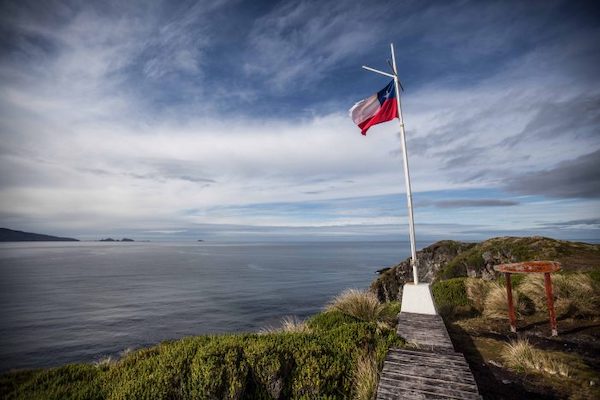
This first official visit should also serve to clarify that – contrary to what was stated by the Argentine national defense policy in July 2021 – neither the Strait of Magellan, nor the Cape Horn sector, nor the maritime space adjacent to Diego Ramírez can, under any circumstances, be considered “shared spaces” with Argentina. These are Chilean internal waters and territorial sea: the President understands the legal significance of both entities.
The Government has confirmed that on April 5 – the 204th anniversary of the Battle of Maipú – Gabriel Boric will visit Buenos Aires, marking the first official visit of his term. It is understood that this activity will take place within the framework of the friendship that, as noted by Argentine President Alberto Fernández, exists between the two leaders.
If this is correct, then the conditions are set for the presidents and their respective teams to engage in dialogue not only on matters of consensus and coordination but also on pending issues that remain regarding boundaries in the southern border.
This is especially relevant considering that, when invited to define himself, President Boric has declared himself “Magallánico.” As he knows – having served as a deputy for Magallanes and Chilean Antarctica and being part of the Extreme Zones Commission – there are several very complex pending issues with Argentina in his own region.
The first of these is the Southern Ice Field, which, although the official Argentine cartography assumes that the boundary is agreed upon according to its own claims, is, in legal terms, by no means “closed.” It is true that rumors about a supposed “secret agreement” confirming the assertion of the official Argentine cartography circulate frequently in the country. However, the fact is that Chile’s international boundaries – with their respective effect on our Domestic Law – are not established by agreements that have not been previously approved by the citizenry through the National Congress.
Gabriel Boric himself has visited the Southern Ice Field and, as a good “Magallánico,” understands the significance that this space holds not only for the environment of the Patagonian fjords but also for the ethos regional. The President is also aware of the importance that this space has for the future of Chile as a reservoir of fresh water.
As a side note, this official visit to Buenos Aires could serve for former president and current vice president of Argentina, Cristina Fernández, to explain to Gabriel Boric and his delegation what exactly she means when she repeatedly states that “Argentina must have a sovereign port in the Pacific Ocean.” Is she referring to a port in the Southern Ice Field sector?
Perhaps this is the opportunity for – within the framework of the friendship announced by Alberto Fernández himself – both countries to begin to address a serious and complex issue, opened in 1991 by Argentina, despite Chile understanding (and Argentina having understood for almost a century) that the boundary in that sector of Patagonia had been established by mutual agreement between 1898-1902, and that all that remained was to “demarcate” (“not delimit”).
This may also be the occasion for both countries to discuss the situation created by Chile’s presentation of its continental shelf beyond 200 nautical miles in the sector of the Bellingshausen Sea, Chilean Antarctica, as well as the update of the projection of the continental shelf of the Cape Horn and Diego Ramírez archipelagos.
This projection includes underwater territories east of the meridian of Cape Horn, “beyond” Point F of the Treaty of Peace and Friendship of 1984. The Government of Alberto Fernández has claimed that this update constitutes an exercise of “Chilean expansionism towards the Atlantic.” President Boric could take the opportunity of his visit to explain to Mr. Fernández that this is not the case, as Chile’s actions comply with the provisions of the United Nations Convention on the Law of the Sea.
Regardless, it is worth noting that, regarding the continental shelf in the Southern Ocean and Antarctica, only at the end of the Piñera II Government did Chile manage to respond to a situation of fact and law imposed by the now well-known Argentine claim of an extended continental shelf beyond 200 nautical miles from 2009.
This “claim” – made according to an Argentine interpretation of the Law of the Sea – included extensive areas of Chilean continental shelf in Antarctica and the Southern Ocean, as, in its legal and scientific logic, this territorial claim links – in a single geopolitical concept – its projection from the Patagonian and Fuegian coasts towards the Falkland/Malvinas Islands, South Georgia, South Sandwich, South Orkney, South Shetland, and the Antarctic Peninsula.
Applying that same geolegal formula, in its Fuegian sector, Buenos Aires’ claim includes territories where – under a literal interpretation of the Treaty of Peace and Friendship – both countries were to refrain from making new claims. In 2009, Argentina omitted that limitation, forcing Chile to do the same in August 2021.
As a good “Magallánico,” President Gabriel Boric is aware of these circumstances and, for that reason, must remember how, for years, the community in his own region demanded that a reluctant Chilean Foreign Ministry address a boundary dispute of fact and law imposed by Argentina, which, from 2009 until May 2020, successive governments and foreign ministers assigned “no importance.”
For this reason, it is entirely necessary that, before the joint statement to be issued at the end of Boric’s visit, Chilean diplomacy reflects on the advisability of continuing to endorse a territorial claim that includes “adjacent maritime spaces” to various peri-Antarctic and Antarctic archipelagos that, in the context of the “phrasing” of a basic text (used ritually since the 1990s and “updated” with the “cut and paste” method), ultimately leads our country to provide grounds for an Argentine geopolitical projection that, in its final stretch, includes Chilean territory.
From merely observing a map of the Argentine continental shelf claim of 2009, the Chilean Government and Foreign Ministry must – once and for all – realize that, in Buenos Aires’ interpretation, this formal Chilean support regarding “adjacent maritime spaces” is politically and legally instrumental to validate the Argentine geolegal method upon which not only the essence of the claim over the Falkland/Malvinas Islands rests but also, with the elements of Art. 76 of the Convention on the Law of the Sea, the 3.0 version of the Argentine Antarctic thesis ends up consolidating over millions of square kilometers that belong to the Magallanes Region and Chilean Antarctica. This, in addition to a “crescent” of thousands of square kilometers of underwater territories south of Cape Horn, which obstructs Chile’s natural projection towards Antarctica. This is the harsh reality.
President Boric has a clear opportunity to prevent this threat to the integrity of the country (and his own region) from perpetuating.
This first official visit should also serve to clarify that – contrary to what was stated by the Argentine national defense policy in July 2021 – neither the Strait of Magellan, nor the Cape Horn sector, nor the maritime space adjacent to Diego Ramírez can, under any circumstances, be considered “shared spaces” with Argentina. These are Chilean internal waters and territorial sea: the President understands the legal significance of both entities.
Notwithstanding the subsequent “clarifications,” the naivety with which this official document from the Government of Alberto Fernández aspires to co-govern Chilean territories illustrates a new Argentine geopolitical thesis, likely motivated by the relative isolation of its province of Tierra del Fuego and the navigation restrictions imposed by the Treaty of Peace and Friendship of 1984.
President Boric should remember that – far from being due to a supposed “bad faith of Chile” – these restrictions seek to safeguard the security and development potential of our territories south of the Beagle Channel, and are the counterpart to the limitation imposed by the same treaty on the projection of the exclusive economic zone of 200 nautical miles from the islands of Nueva, Evout, Barnevelt, Cape Horn, and Diego Ramírez, that is, in exchange for Chile’s renunciation of hundreds of thousands of square kilometers of fishing resources in the Southern Ocean.
The restrictions on Argentine navigation in Chilean internal waters south of the Beagle Channel constitute one aspect of the “price of peace” achieved during the papal mediation that, as is still remembered in Punta Arenas, was conducted under the constant threat of the use of force by Argentina. All indications are that, less than forty years later, that country understands that, in territorial matters, “things have changed.”
This is not the case. The limitation on the projection of the 200 nautical mile exclusive economic zone of our southern islands is, according to what was agreed in 1984, permanent. For this reason, all the limitations that the same treaty imposes on Argentine navigation in Chilean internal waters (both arms of the Beagle Channel, Murray Channel, Nassau Bay, and Cape Horn National Park) must also be permanent.
Moreover, access to Chilean waters south of the Beagle Channel can only benefit Ushuaia (to the detriment of Punta Arenas, the city of President Boric), since, in that sector of the border, Argentina has nothing of interest to offer in exchange for Chile. Mother Nature has left all the main attractions for navigation, fishing, and tourism on the Chilean side.
Argentina may argue that, through the Cardenal Samoré and Integración Austral border crossings, Chile can supply Punta Arenas. This is as correct as recalling that Argentina can supply Río Grande and Ushuaia thanks to Chilean cooperation at the latter of those border crossings and through the San Sebastián crossing in Tierra del Fuego. What happens is that, south of the Beagle Channel, lies the Circumpolar Southern Ocean and Antarctica. In those spaces, Chile not only has better titles than Argentina but also enjoys a geoscientific and geolegal continuity that enables it to demonstrate its continuity between its South American territories and its polar spaces using 21st-century Law of the Sea. To achieve equivalence, Argentina needs to validate its territorial claim over the Falkland/Malvinas Islands, etc.
Chile must remain vigilant and begin to understand the enormous importance that its southern and polar spaces represent for future generations.
In this context, his first visit abroad offers the first Magallánico President of Chile the opportunity to address issues of structural importance for the country, and of essentially material and spiritual significance for his own region. This latter will be attentive to the results of his visit to Buenos Aires and will evaluate it accordingly.
Source: El Mostrador