What is the strategic significance of Milei's election for Chile?
This article was translated automatically and may contain differences from the original. For reference, read the original.
It seems that Milei is not only a libertarian but also a nationalist like most Argentines, and he wants to make Argentina great again, which should not be indifferent to us.
On Sunday, November 19, around 9 PM, much of the right and the business community celebrated Milei as if he were the President of Chile, forgetting that he is the new President of Argentina, and that Milei dreams of a powerful Argentina, something that can have various interpretations on this side of the Andes, not all of them positive.
Regardless of Milei’s opinions about Boric or vice versa, which are well represented in an article in this medium and other outlets that focus on the ideological differences between the two, or the absence of a Chilean ambassador in Buenos Aires, as Barbara Figueroa has yet to be replaced, or the imminent departure of the Argentine ambassador in Santiago due to Bielsa’s political appointment, the relations between Chile and Argentina have much more strategic aspects that define the relationship between the two countries and do not vary significantly with changes in government on either side of the Andes.
That said, Boric should indeed be invited to the change of command and should accept the invitation. Argentina, along with Peru, represents neighborhood relations that we must navigate, and it is important that we are present at republican events such as a transfer of power. These are important relationships, similar to those any of us have with our neighbors, and we must ensure they are not complicated by personal passions or preferences, which applies to both leaders.
To begin with, we have a very long border that has been a subject of discussion and even near conflict on more than one occasion, which is not surprising given its extent and the fact that the original definition of it was not very clear from the Kingdom of Spain, with a boundary issue still pending in the Southern Ice Fields area and other new ones that have emerged in recent years.
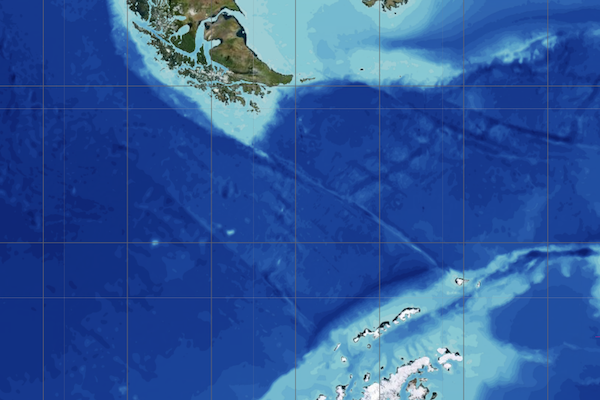
On the other hand, Argentina has a fascination with the South, the South Atlantic, Antarctica, and anything that is or smells Chilean, operating under the concept that they are the masters of the Atlantic and that we can only be in the Pacific, a mistaken or deceptive definition that seeks to eliminate Chilean rights over the white continent. This is compounded by what they consider to be their extended continental shelf, which encroaches on much of what is Chile, and the territories of His Majesty, King Charles III, in the southern part of the Atlantic and Antarctic claims.
The above is a long-standing state policy of Argentina that did not change one bit during Macri’s government, so there is no reason to expect a change under Milei, especially considering that his government program aims to strengthen National Defense by increasing defense spending and safeguarding what they consider to be their sovereignty, something that their elected vice president has emphasized in the media. It seems that Milei is not only a libertarian but also a nationalist like most Argentines, and that, as we mentioned earlier, he wants to make Argentina great again, which should not be indifferent to us, as it is precisely when they have been at their best that relations have been at their worst.
We will see if they relax decrees such as 256/2010 that prevent vessels from traveling from Punta Arenas to the Falklands/Malvinas that arrive to navigate Argentine jurisdictional waters, which in practice stifles trade between those locations if they exit or enter through the eastern mouth of the Strait of Magellan.
The same can be said regarding Argentina’s restrictions on Chilean flights to Stanley or the docking of Royal Navy ships at Chilean ports, both issues that Fernández’s administration complicated more than they already were under Macri’s presidency, which had an obvious impact on Chile’s relations with the British, as we appeared to be subjected to trans-Andean pressures, with the consequent impact on the strategic relations with the Royal Navy.
The most complicated aspect of relations between the countries is the existing differences we have regarding where the border should be in the Southern Ice Fields, and the overlaps that arise between our continental shelves (including the extended one generated by Chilean Antarctica) and theirs, the latter with representatives appointed under what is established by the TPA of 1984 for the reconciliation of differences, a mechanism that will be used this time to settle disputes. This poorly managed southern boundary issue could become as complex as the Beagle dispute, which nearly led to war 45 years ago.
Adding to the previous issues, there is also the question of the Mapuche insurgency, which affects both countries as the leaders of the insurgent movements speak of a Wallmapu that encompasses territories on both sides of the Andes. The elected vice president, Deputy Villaruel has already made it clear that this is a concern for her and it seems she holds us responsible for the problem, suggesting that we Chileans should take charge of its solution.
Evidently, if we had deeper economic relations, the relations between our countries would be more fluid, but they are not, and it is difficult for them to be due to the nature of the similar export-oriented productive matrices we have. We are more competitors than complementary, and the truth is that the only thing Chileans are interested in regarding Argentina is visiting Buenos Aires, and for a few, the investments they have had since the 90s, which have caused several headaches due to the way Argentine governments manage access to the dollar and the rules for capital repatriation, an issue that could change if Milei manages to implement his government program.
In summary, I do not see Milei’s election changing the fundamental nature of Chilean-Argentine relations, which has over 200 years of history and is characterized by the fact that we are neighbors with a long border, with aspects still under dispute, and that when Argentina has felt powerful, it immediately confronts us, or takes advantage when it perceives us as weak, as was the case during the Pacific War.
Milei is Argentine, with all the good and bad that implies for Chile, but let us not fall into the trap of lighting candles for someone who may bring us more problems than benefits, even though for now he has brought joy and hope to a good part of Chile, and the fact that his election reconfirms the departure of Ambassador Bielsa, the leader of Chileans who support the Malvinas, and someone who tended to involve himself in local issues beyond what his credentials allowed.
Richard Kouyoumdjian
Vice President of AthenaLab
Source: El Líbero
The opinions expressed in this article are those of the author and do not necessarily reflect the opinions of AthenaLab.