COLUMN | Peace is not free
This article was translated automatically and may contain differences from the original. For reference, read the original.
- by Pilar Lizana
- Opinion
It is not surprising that the government has proposed to postpone those funds, especially when it is clear that a sector of the ruling party has an evident discomfort with military force.
The last war Chile fought was the War of the Pacific at the end of the 19th century; since then, it has been close to conflict but has not engaged in military action. The reason for this, in part, is due to the deterrent power the country possesses. And that deterrence is not free. To maintain it requires a prepared force, with modern and cutting-edge capabilities, interoperable with its partners, and superior in strength and power to its competitors.
The Military Parade, the May 21st parade, Fidae, and Exponaval—all of these are pure deterrence. The Armed Forces possess strategic weapons not just for the sake of having them, but because through them they manage to maintain peace.Peace, which requires a budget, a budget that, for the second consecutive year, has postponed the allocation of resources for the Strategic Contingency Fund.
The metaphor of guns and butter, used to analyze the budgetary discussion regarding Defense, seeks to simplify a decision that is fundamental for the survival of the nation, and it comes to mind for those of us following the debate.
The political decision to postpone the contingency fund for the second time can have only one effect: leaving Chile without the necessary resources to maintain the strategic capabilities that allow it to have the deterrent power that has kept it free from wars for over a century. The only outcome of that decision is to make the precious peace more expensive.
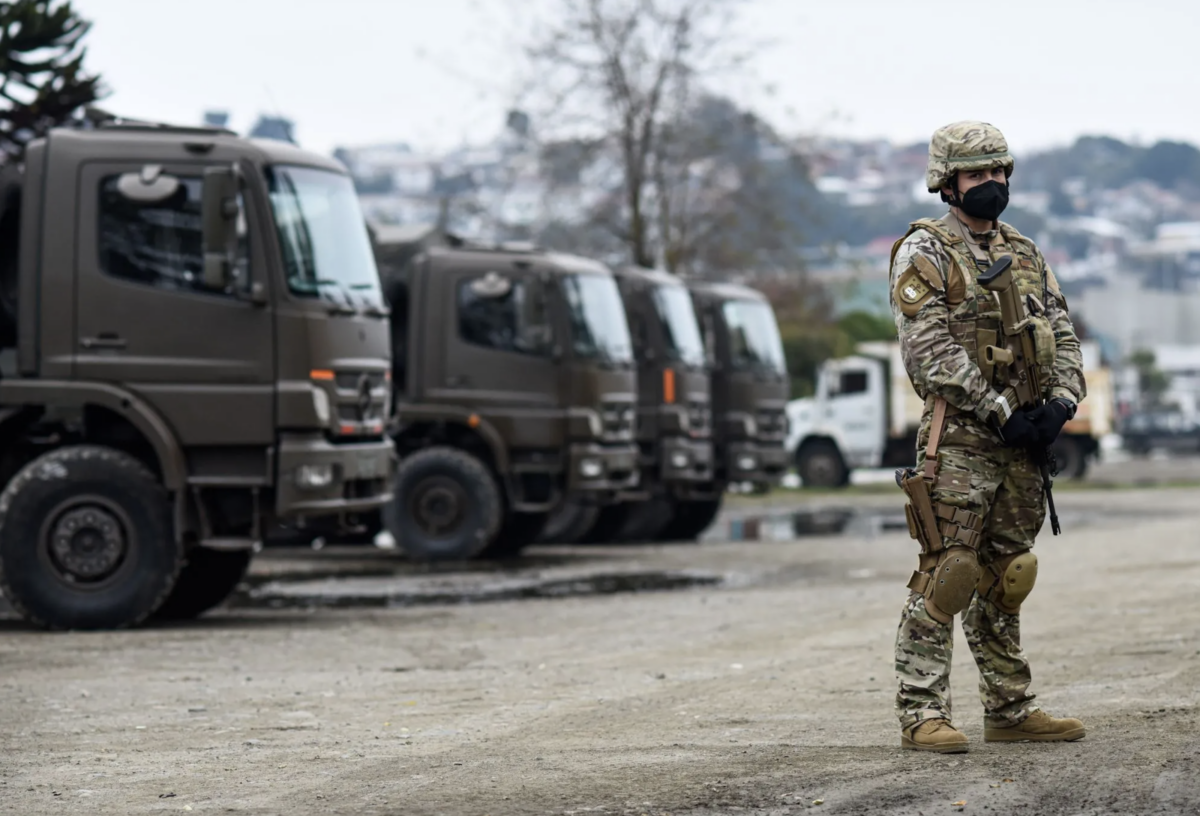
This situation is paradoxical because, considering that in the context of urban violence, military personnel are being deployed to guard the border and even some mayors have requested their deployment in cities, it would be logical to provide them with the necessary resources to fulfill their primary functions and the new roles assigned to them.
However, it is not surprising that the government has proposed to postpone those funds, especially when it is clear that a sector of the ruling party has an evident discomfort with military force. The problem is that when a decision like this is simplified without the necessary weight and analysis, the risk is very high, especially if our neighbors are increasing their own strategic capabilities.
What is cheap can be costly, and in this case, it could be very costly. The obsolescence of the systems and capabilities to which Chile is exposed will not only diminish its deterrent capacity but will also make future updates more expensive.
The fact that Chile does not have wars on the near horizon is not a sufficient reason to withhold those funds. The reason for having modern and cutting-edge Armed Forces is not related to the possibility of facing a war; it is about the cost that must be paid for peace.
What is not paid today will be paid tomorrow. And it is to be hoped that this second postponement does not cost Chile too dearly.