COLUMN | Steel and National Power: The Geopolitics of Shipyards
This article was translated automatically and may contain differences from the original. For reference, read the original.
- by Juan Pablo Toro
- Opinion
Acero y poder nacional: geopolítica de los astilleros
How much weight does a country carry in the world? This question dates back to the early 20th century when European powers embarked on a frantic race to build immense Dreadnought-class battleships. At that time, the power of nations was measured by the specific tonnage of their warships, which implied the capacity to construct them.
Subsequently, nuclear weapons displaced ships as a measure of power, despite the fact that they have not been used offensively since the attacks on Hiroshima and Nagasaki in 1945. While their use should never be ruled out — as Russian President Vladimir Putin reminds us daily — the disincentive to launch them lies in the expected retaliation that could erase the aggressor from the map. In other words, they exist, but they do not count until someone presses the button.
We then jump to the 21st century, where oceans and their shores once again become the space where powers are engaged in fierce competition for military preeminence and economic dominance, from the Arctic to the Pacific. An equation that includes ships, shipping companies, and port facilities.
Take the case of China, which last year built half of all merchant vessels in the world, totaling 33 million gross tons, according to figures from the United Nations Conference on Trade and Development, and also possesses the largest number of warships, just over 1,000 between the Navy and the Coast Guard. This is a fitting expression of the symbiotic relationship between trade and military power.
The United States, on the other hand, recently ranked 14th in cargo ship construction, but its navy totals 3.6 million tons, nearly double the combined Chinese fleets, according to The Military Balance from the International Institute for Strategic Studies. In other words, it lags in commercial aspects, but in naval power, it possesses larger and more powerful vessels.
Now, when we enter the realm of shipping companies, Europeans appear particularly strong with Mediterranean Shipping Company (Italy), Maersk (Denmark), CMA CGM (France), and Hapag-Lloyd (Germany), only challenged by Cosco from China.
Of the 20 largest ports in the world by cargo movement, 15 are located in Asia, most of them in China, although Los Angeles in the United States, Rotterdam in the Netherlands, and Antwerp in Belgium also appear. India has none, demonstrating that it has yet to fully open its economy to the world.
Despite being historically a land power, it can be asserted that China is also on its way to becoming a maritime power due to its capacity to build cargo ships, the expansion of its naval fleet, the possession of a significant shipping company, and control over ports that are essential for the global economy. A Copernican shift in the orientation of this country.
Meanwhile, the United States, which remains the largest naval power due to its capabilities housed in 11 aircraft carriers, nuclear attack submarines, and Aegis destroyers, is rapidly losing the conditions to be considered a maritime power. And while its European partners contribute to the construction of merchant vessels (Italy, Germany, France, and Finland), they seem more content to manage cargo movements.
All of the above highlights the central importance of shipyards today for constructing the commercial and military fleets that allow countries to connect advantageously with the world, as well as the need for competitive shipping and port sectors. Ultimately, it is the floating steel that determines a nation’s weight in times of peace and war within a globalized economy.
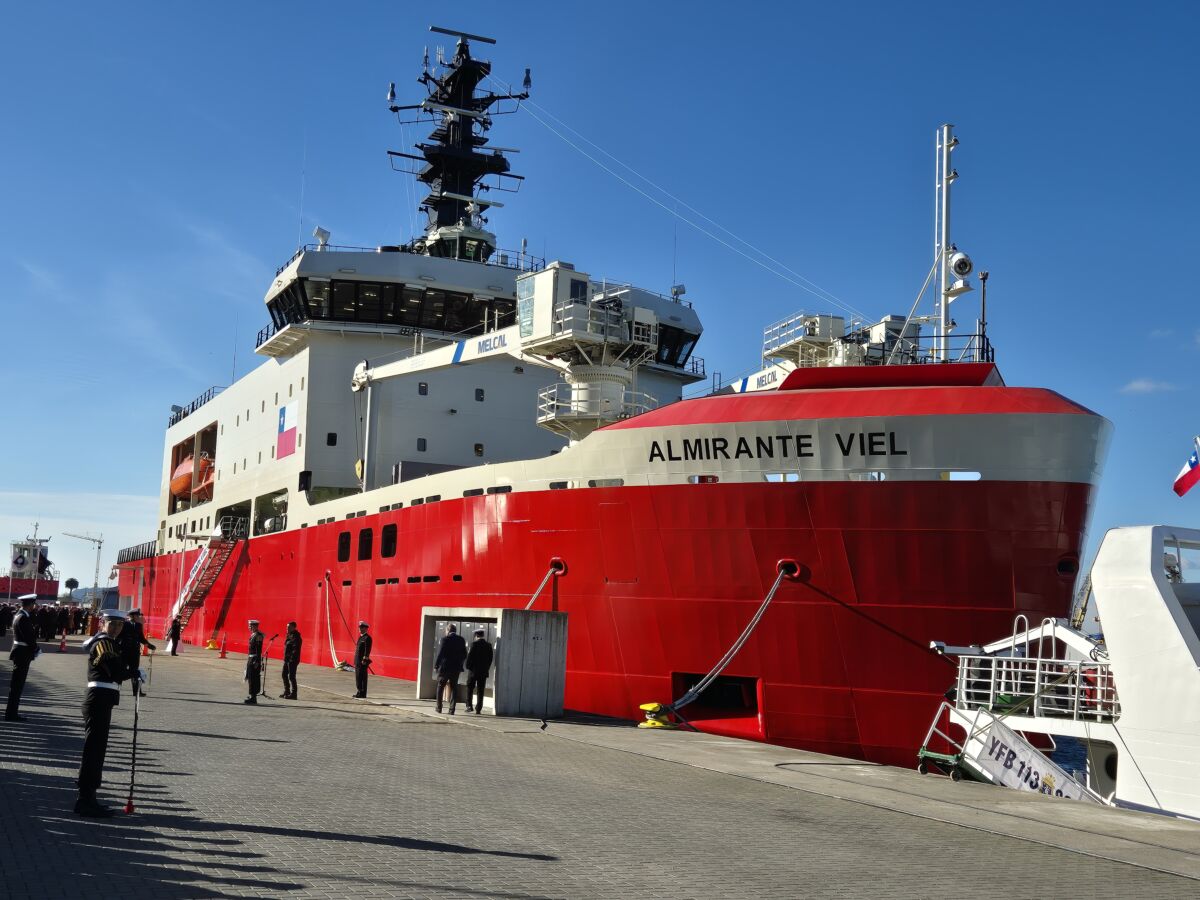
In this sense, having the capabilities to build one’s own vessels is a strategic asset and every effort should be made to develop them; shipping companies and ports also deserve support. Especially when living in a nation — like Chile — that must be maritime, but has yet to decide to unleash its full potential to become so.
Juan Pablo Toro is the executive director of AthenaLab.


