COLUMN | Greenland, Panama, and the South Pole
This article was translated automatically and may contain differences from the original. For reference, read the original.
- by Juan Pablo Toro
- Opinion
One may completely disagree with the substance and form of the elected President of the United States, Donald Trump’s, manifest interest in taking control of Greenland (an autonomous Danish territory) and the Panama Canal, but it is impossible to dissent regarding the renewed importance of strategic oceanic routes and the control of disputed spaces.
During that period of hyper-globalization from 1991, with the dissolution of the Soviet Union, to 2014, with Russia’s annexation of Crimea, the idea emerged that borders were not as important, nor was the possession of territories, whether small islands or large relatively empty areas. Trade and technology were integrative forces that were flattening the world. An incessant flow of goods, capital, data, and people was daily erasing the political boundaries that appear on maps drawn with thick lines.
However, while liberal democracies allowed their geography manuals to gather dust, powers like Russia, China, and Iran did not lose sight of the importance of territory, which can be transformed into power by the resources it contains (both human and natural) and by its location. Controlling the Crimean Peninsula is as crucial in the Black Sea as having militarized islands in the South China Sea or the means to disrupt traffic in the Strait of Hormuz.
As Trump’s desires seem more like part of his provocative rhetoric, it is important to look at what lies behind them. In the case of Panama, the concern over China’s increased presence in the interoceanic passage is evident, both in the operation of its ports and in the use of the route. It is part of his trade war, more than anything else, and a recognition that this passage between the Atlantic and the Pacific is fundamental for his country. One of the reasons for its construction was to allow the rapid movement of its fleets between those oceans.
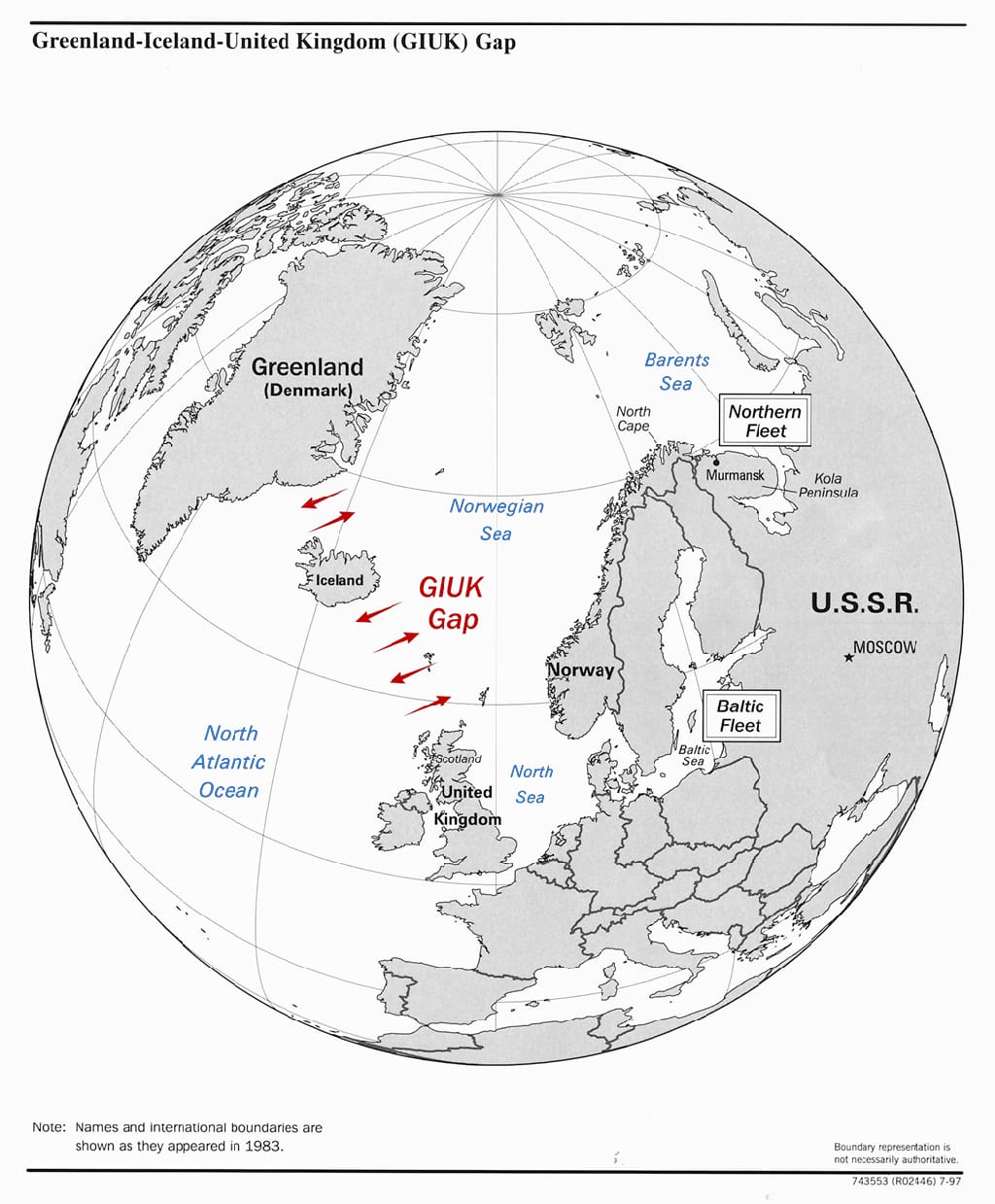
In the case of Greenland, the island is undoubtedly an important repository of mineral resources, but above all, it has a strategic location. Together with Iceland and the United Kingdom,United Kingdom, it describes an arc known as the GIUK gap (from the English acronym), from where the passage of Russian submarines between the Atlantic and the Arctic is controlled. Its surveillance was permanent and intense during the Cold War.
As for the Arctic itself, its majority control is in the hands of Russia and Canada. The new U.S. Arctic strategy expresses concern over the permanent Russian military deployment, and there is also an increased commercial use by China of polar routes.
If we continue reviewing the atlas, we now arrive at Antarctica. The recent visit of President Gabriel Boric to the South Pole, as part of a tradition of Chilean leaders initiated by Gabriel González Videla to visit the continent, serves to assert sovereignty over remote territories, particularly if there are overlapping claims.
All of the above simply proves the influence of geography on political decisions, or rather, it simply explains why we are once again talking about… geopolitics.


