COLUMN | Minister Marcel and Public Security
This article was translated automatically and may contain differences from the original. For reference, read the original.
- by Richard Kouyoumdjian
- Opinion
We are facing a security crisis that could very well require doubling the budget for the police and all public agencies involved in that process, but this becomes impossible without a profound reengineering of the State.
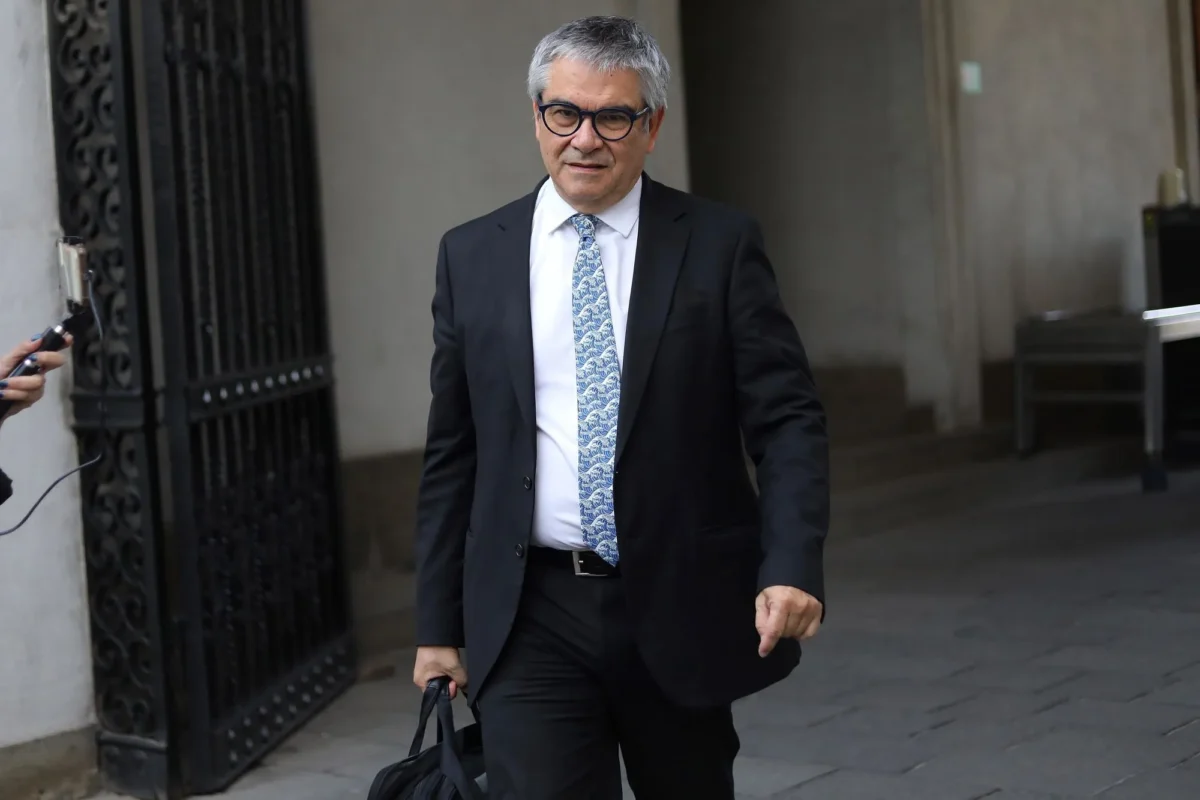
I understand Minister Marcel when he has to confront budget issues. The Minister of Finance is the government’s financial manager and therefore has to be the bad guy when it comes to making budget cuts, something necessary when the state is overweight, the economy is not growing, and there is no way to finance spending, no matter how many fanciful formulas are tried that please those who do not want to face the reality that the State has reached a size that does not align with our economic capacity, nor does it fulfill its most fundamental obligations to its citizens.
Where I disagree is in the way the recently announced budget adjustment of $544 billion, which, although in theory does not affect Carabineros de Chile, the PDI, and Gendarmería in the subtitles 21 and 22* does affect the Public Ministry, courts, SII, UAF, Customs, Armed Forces, and other public agencies that are part of the public security system, as well as those that were supposedly untouchable through the Interior budget or other subtitles.
It affects them because public security is a system, despite the fact that many find it difficult to understand it that way. It is an interconnected system, where affecting one part of the process renders it ineffective and inefficient. If I affect the Public Ministry and its budget, I will be impacting the work done by Carabineros de Chile and the PDI. The same applies if I cut the budget of the courts. In both instances, through budget adjustments, I am affecting the capabilities of the process, as I am reducing the outcomes they are capable of delivering, regardless of what happens upstream with Carabineros or what is asked of the PDI. The pursuit of criminals is affected if I impact any of those involved in the anti-crime or anti-criminal process.
It is also complex that the budget reduction was carried out in such a way that left some unaffected, while applying a uniform percentage cut to the rest, disregarding that there are processes or activities that are more critical than others, or that there are things the State must provide, such as public security and national defense, which today includes, among other things, deployed units safeguarding borders, maintaining peace, security, and order in the Southern Macrozone, or combating fires, which will now have to be done with less or do less if costs cannot be modified.
The underlying problem is that the State has become overly bloated, performing many more functions than the basic primary ones it should provide, which leads it to neglect issues such as public security, national defense, foreign relations, disaster prevention and management services, and intelligence and counterintelligence services.
The original budget for 2025 and its subsequent adjustment are flawed, as were those of previous years. We have a security crisis that could very well require doubling the budget for the police and all public agencies involved in that process, but this becomes impossible without a profound reengineering of the State as a whole, something that Milei did in Argentina, and which we hope Trump will do in the U.S.
Evelyn Matthei, Johannes Kaiser, José Antonio Kast, and Rodolfo Carter all understand that a structural adjustment of the State must be made, both to reduce spending and public debt, and to ensure that we can spend and invest where it is necessary, starting with public security and national defense, which are not well served by the current budgets, failing to provide a safe country for Chileans in the first case, and ensuring that our Armed Forces are adequately equipped and trained in the second.
Chile started as an independent republic with only three ministries, one dedicated to foreign affairs, another to internal affairs, and a third to matters related to war and the navy. Today we are approaching 25 ministries, with a social-democratic model that has us nearly bankrupt, which does nothing well, highlighted by the examples of education and health, and even less well in the fundamental tasks related to security and defense.
Continuing to manage budgets as we do is part of the problem we currently face. The way Minister Marcel and Dipres manage finances does not help public security, reflecting an outdated way of viewing things, needing to be through integrated processes and systems, with clear strategies, defined objectives, means, and ways of working, which would help demonstrate that when I affect one element of the process, I affect the overall result in a much greater proportion than expected when viewed independently.
It is unlikely that Minister Marcel will follow this columnist’s recommendations, but I would consider it a success if any of the right-wing candidates or members of their teams do so, and understand that we not only need a lighter and more efficient State, but primarily a more effective one. The security and defense of Chile will require more resources, which must necessarily come from budget reallocations, taking from the less critical and assigning it to the fundamental, as the only way to sustain the current level of spending is to grow above 5% annually in a sustained manner, rather than the poor 2% that Chile currently delivers. If we maintain something close to 2%, we must necessarily adjust and focus spending and investments.
*Subtitle 21: Includes expenses for salaries, employer contributions, and other personnel-related expenses.
*Subtitle 22: Includes expenses for the acquisition of consumable goods and non-personal services necessary for the fulfillment of an institution’s functions.