Budget Adjustments to the Armed Forces and Their Impact on Public Security
This article was translated automatically and may contain differences from the original. For reference, read the original.
- by Richard Kouyoumdjian
- Interviews
Making adjustments is normal, but applying them to institutions dedicated to national defense and security is not advisable, as they fulfill some of the primary duties and obligations of the State.
One of the concerns for those involved in security and defense issues is the budget adjustments that the Government will implement for the Armed Forces within the announced adjustment of $544 billion, which I indicate will have consequences for both national security and public security.
The adjustment in question, from which Carabineros, the PDI, and Gendarmería are excluded, but not the Armed Forces or the Public Ministry, the courts, and other public agencies involved in the public security system, is poorly conceived. While it excludes the police and Gendarmería, it does not view public security as a system or process, as it fails to understand that a $7 billion adjustment in the Public Ministry undermines the effectiveness of Carabineros and the PDI, since they are the ones who process criminals and direct the investigative work they carry out. The same applies to the courts.
The Public Ministry is fortunate to be an autonomous entity that does not report to the Executive and can confront it in case of budgetary differences, something the Armed Forces cannot do due to their obedient and disciplined nature, being under the command of the Government, and can only potentially represent their differences if the Constitution is not upheld. This means we will not see the commanders-in-chief speaking to the press about the adjustments in question; they will surely represent the Minister of National Defense and the President of the Republic if necessary.
Some involved in political fiction suggest that the summons to Senator Allende and Minister Fernández is the way the Public Ministry is showing its teeth to the Government. I do not believe this is the case, but they certainly have the power and autonomy to do so, and they may have done it in the past.
That said, the adjustments will primarily impact the Army and the Navy, and to a lesser extent the Air Force. They will affect operational capacity because they will be on subtitles 21 and 22, which are the lines for salaries and general expenses. I estimate we are talking about at least $19 billion for the Army and $13 billion for the Navy, including in my calculation all the agencies associated with both institutions.
While the adjustments should be around 2% for salaries and 5% for general expenses, which do not sound very significant percentage-wise, they add to adjustments made during Sebastián Piñera’s second government, when a pseudo-zero base was established, or those that occurred due to the so-called “Social Outburst,” or those made due to reallocations during the pandemic.
Before that, there were operational budgets that provided some flexibility and implied budgets that could easily be 25% higher, if not more. However, the intended adjustment no longer eliminates budgetary reserves that the Armed Forces must always have on hand, but rather eliminates operational capabilities and the maintenance of strategic capacities.
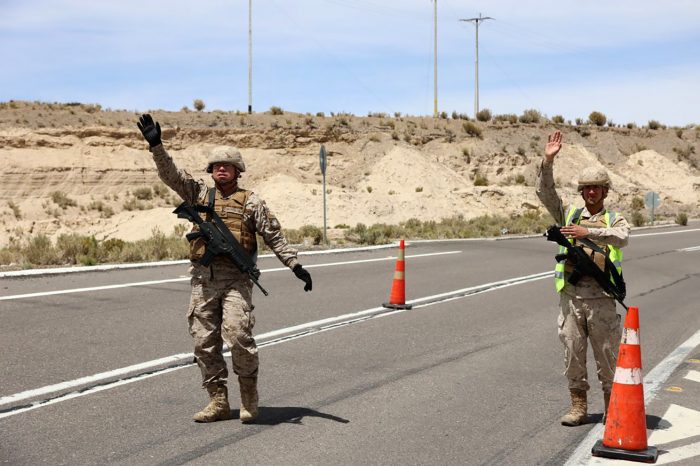
By “operational capabilities,” I refer to the ability to assist people affected by natural disasters or climatic events, as well as to extinguish forest fires, deploy personnel to cover states of emergency, or secure the northern border. In naval matters—which I know best—I would expect a reduction in Antarctic efforts, maritime patrols of the exclusive economic zone, and support for extreme areas, forgetting that the Navy performs the function of maritime police and that our ports and seas are used for criminal purposes.
In terms of strategic capabilities, we are talking about fewer hours of training, navigation, maintenance, or flight. We are discussing that this cut makes it difficult to implement improvements to Military Service, as well as to complete the staffing of conscripts and professional soldiers. We are also talking about reducing contracted personnel, which is normal in administrative and educational positions, whose effects may not be seen now but will be felt in the future, representing bread for today and hunger for tomorrow.
Having been a financial director for a significant part of my life, I understand the difficult task of the Minister of Finance, who must align income with expenses, something that is not clearly balanced in Chile. I understand that adjustments must be made, but there should also be efforts to reduce the size of the State, contrary to what has been done recently, where we only see initiatives aimed at expanding it, such as the creation of new ministries without optimization actions, as would occur if the Interior, the General Secretariat of Government, and the General Secretariat of the Presidency were merged.
Before concluding, I want to make it clear that making adjustments is normal, but applying them to institutions dedicated to national defense and security is not advisable, as they fulfill some of the primary duties and obligations of the State, as outlined in Article 1 of the Constitution. Therefore, if we are going to adjust the budget because there are no revenues or we have reached our borrowing capacity, let us do so on non-essential and non-critical ministries and agencies, while also being serious about the size of the State we can have and finance, without ideological perspectives, but rather financial ones, and seeking to fulfill what the Constitution requires the State to accomplish and provide.
If we do not understand the above, forget about being able to launch the Ministry of Public Security, the construction of new prisons, more protected borders, implementing the organization and staffing proposed by the new intelligence law, or having military personnel available in significant numbers for public security functions. This is why candidates like Evelyn Matthei know that for their government programs to be successful, they require profound adjustments to the size of the State to free up the resources that their public security programs will need.
Doing the same with less does not exist, just as it is obviously not possible to do more with less. If it were, I would assume that until now they have not been efficient, which I hope I have made clear is not the case. Adjustments like those mentioned will imply a reduction in the level of activity concerning the Armed Forces and, consequently, since they are involved in security tasks in the Macrozona Sur and at the borders with Peru and Bolivia, there will be an impact on public security. Their constitutional tasks in these areas may not change, but they will be carried out with fewer personnel and, therefore, less effectively.