COLUMN | The Aragua Train and The Pirates: What is at Stake?
This article was translated automatically and may contain differences from the original. For reference, read the original.
- by Pilar Lizana
- Opinion
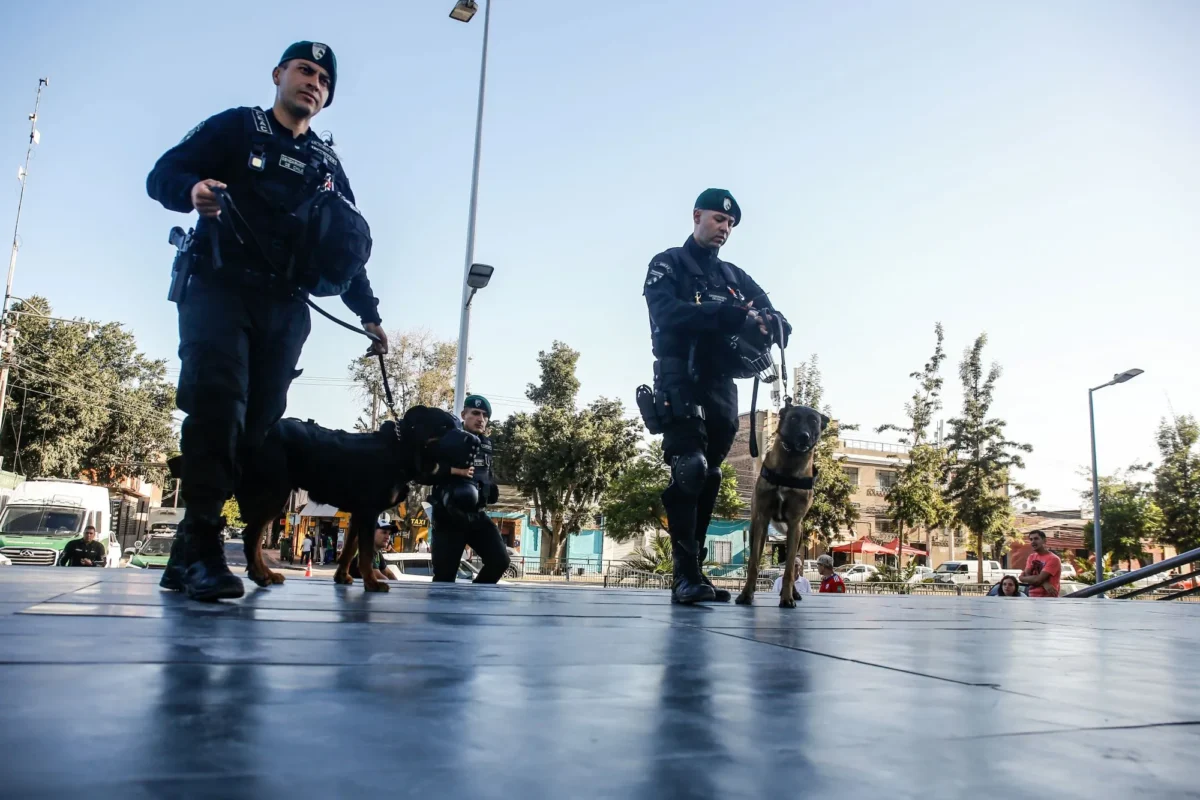
Seguridad en el Centro de Justicia por el segundo día de formalización de “Los Piratas" Credit: Agencia Uno
Organized crime has various facets, but the one that has reached the country is the one that needs prisons to expand. Arresting the leaders only shifts their operations.
The formalization of The Pirates has left violent images of how transnational organized crime is operating in Chile, but let us not forget what is at stake due to the cinematic nature of their crimes. It is the survival of the State that is on the table, the Social Contract of Rousseau that we could lose.
These types of groups start slowly. They manage to take control of a sector, of some neighborhood organization, then they reach local government, and thus, they escalate within the State until they reach the political elites.
For Chile, the warning light must come from the origin of these groups. In South America, the largest have emerged from the penitentiary system and from there they control everything, just as the Aragua Train has done from the Tocorón prison. Although today their leaders have escaped from that facility, the truth is that their way of operating is from within the prisons.
In the country, we already have a significant number of members of this criminal group within our prisons, and we are waiting for the extradition of Larry Changa, one of the top leaders of the group. This, in a context of corruption and weakness of the Gendarmería, should be the utmost concern for our authorities.
The arrest of members of the Aragua Train shows an opportunity: We have functioning institutions that achieve successes. However, at the same time, the lack of space and a prison policy that addresses the problem is our greatest weakness.
Brazil has demonstrated that mere incarceration does not solve the problem; in fact, it exacerbates it. What could happen in Chile if we continue to incarcerate members of this gang in the same facilities is that, being aware of their leader’s arrival, they could be waiting to reorganize and receive new instructions.
Controlling crime on the streets necessarily requires controlling the prison. A group that is born and grows within it needs to have members inside the penitentiary facilities of the country to which it arrives. It has been said that the prison in Chile is controlled, but reality shows the opposite. Only the organized riot last year in the REPAS (Special High-Security Penitentiary Facility) is proof of this.
Organized crime has various facets, but the one that has reached the country is the one that needs prisons to expand. Arresting the leaders only shifts their operations. For people like Larry Changa, the only thing that changes is the country; they already know how to control the prison and how to communicate from within it.
This week, the creation of the new Ministry of Security has been celebrated, but nothing has been said about Gendarmería. It remains in the Ministry of Justice, but it is the last link in public security, which could become the first considering the nature of the threat.
Protecting the Social Contract requires understanding the threat and its behavior; only then will plans for violence-free streets hit the mark, and Chileans will regain trust in their authorities.


