COLUMN | What Should a Program in International Relations, National Security, and Defense Include?
This article was translated automatically and may contain differences from the original. For reference, read the original.
- por Richard Kouyoumdjian
- Columnas
If we want better security and defense, we must invest in them, as well as in the necessary laws to make that investment effective. If I were an advisor to any candidate, the first thing I would do is look at where the budgets will come from to implement the respective programs.
Between May and June of last year, I published a series of three columns directed at right-wing parties and those seeking to represent them in the presidential race. The columns cover the areas of national security, public safety, defense, international relations, and related topics.That said, the truth is that this column and the previous ones serve any candidate, regardless of their political affiliation, in the aforementioned matters.
The objective of this column is to update them to February 2025, having passed almost 8 months, a period during which much has happened or changed, making it necessary to bring them up to date. Everything indicates that something similar should be done in the second half of this year, as we will surely have a clearer idea of who the right-wing candidates will be, as well as the developments that the topics covered in this particular column have undergone.
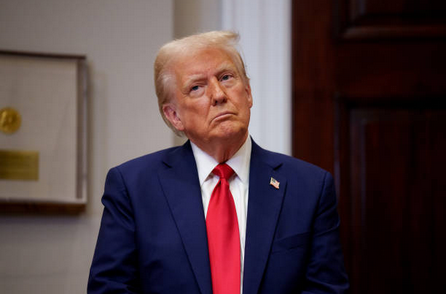
Starting from the outside in, by mid-2024, Trump was a possibility, and now it is a reality. As you may have noticed, he does not mince words, and in just over a month, he is making a reality of much of what he promised during his campaign. The world of Donald Trump is one of black and white, and it demands to know whether one is with him or against him.
For a country like Chile, which values itself as part of the West, and which is strategically aligned with the U.S., everything would be fine if our trade were primarily related to them, but the figures indicate otherwise. We mainly trade with Asian countries, and more specifically with China, which accounts for over 30% of our exports, putting us in a very difficult position if we are pressured to lean one way or the other.It is unlikely that China will pressure us in that regard, butit is not out of the question that the current U.S. administration will begin to order the world based on those who are against or in favor of them.
They are already doing this with the Europeans, and I estimate that the next will be the Asians. For us, it works in our favor that Trump and his team have not shown much interest in South America, except for Argentina under Milei, with whom he has shown affinity, unlike Brazil, Colombia, and Venezuela. It is incomprehensible that our President publicly expresses his differences of opinion with President Trump. It would be better to keep them to himself, as going against the most powerful country on the planet is not a good strategy, especially considering that he does not have a good temperament. We all know that copper, lithium, and rare earths have value, but it would be unwise to assign them more value than they deserve.
Before this new reality, we were mainly concerned about our neighboring scenario and the fact that we were importing undocumented immigrants from Peru and Bolivia, some of whom were or are criminals. Our concern was the porosity of our border and how easy it is to enter Chile despite our efforts to prevent it. This reality has not changed, but it adds to what Trump, Xi, and Putin have brought us: a world where multilateralism has lost value and resembles the ‘Wild West,’where the law of the strongest prevails, and where feudal lords are back, in the process of choosing their vassals.
Milei’s Argentina is not yet a danger to us, but it could be if we fall into misfortune and they continue to enjoy the favors of the northern country, which were already evident under Biden, but have become dangerous to say the least under Trump. Changing the subject, public safety remains the main issue that occupies us, both due to the incapacity or lack of character of the Executive to defend and apply the rule of law, and due to the level of activity that criminals continue to demonstrate. We do not have enough police for all the municipalities, which means that municipal security forces are overburdened and also performing pseudo-police duties, despite lacking the necessary legal authority.The issue of the lack of personnel in Carabineros de Chile is perhaps the most important topic that should be addressed in the security agenda of any candidate.
The new anti-terrorism law is certainly helpful, but we can expect little from the new Ministry of Public Security, as they are basically the same as before and with the same resources, so it seems unlikely to be the silver bullet promised by the current government. If we add to that a restrictive budgetary scenario, its future looks bleak. Whoever is appointed Minister of Public Security will face a problem, and it will not be easy to find someone willing to take on the role.
We cannot continue with our eyes closed. More than needing a new intelligence law, we need a functioning intelligence system that alerts us to the bad actors and their intentions. Like other national security systems, the effectiveness of intelligence largely depends on the resources we allocate to them. If they are as few as the current ones, we will continue to have poor and irrelevant intelligence.
Not having a national security system is one of the deficiencies that makes us more susceptible to suffering harms like those that affect us. When national security is viewed as a system where public safety, intelligence, and national defense are treated systematically, along with other aspects that impact our security, such as international relations and economic security, everything becomes easier to manage. This includes generating prospective scenarios that would facilitate decision-making, rather than having to convene public-private committees to see what we do if the U.S. raises tariffs and kills the free trade agreement with the northern countries of America.
Perhaps the most significant change since June 2024 is the reality of public finances. We have a very large state that we cannot finance, and which is also not providing the services required in security or the national defense we need to prevent someone from getting too enthusiastic about us. The recent budget cuts, and those that may come, have left the Chilean Army and Navy in dire straits.They were already lean after the cuts made by Briones in the second government of President Piñera, but now they face the fact that they will have to stop doing things unless they receive supplemental or reallocated funds.
Forget about covering the military service positions or the professional soldiers in the army, or the equivalent in the Navy. The adjustments made to subtitle 21, salaries, or subtitle 22, general expenses, reduce the operational capabilities of the institutions, which are already deployed in the Southern Macrozone and at the northern and northeastern borders. Anyone who wants to consider using the armed forces for public security tasks will need to reallocate budgets, obviously taking them from non-critical areas, something that Milei has demonstrated is possible and that Elon Musk is now applying to the U.S. government.
When Milei took office, the defense and security forces were among the few that were not affected by cuts. Their budgets were adjusted upward, something that has also occurred in countries like El Salvador. If we want better security and defense, we must invest in them, as well as in the necessary laws to make that investment effective. If I were an advisor to any candidate on the aforementioned matters, the first thing I would do is look at where the budgets will come from to implement the respective programs. With the soldiers, sailors, aviators, and police we have, we will not achieve much more than what they are already providing. The same applies to the ANI.
In conclusion, I would be satisfied if you reflect on what Trump means for Chile, and how the programs for security and defense that we need to live safely will be financed.