COLUMN | The Difficult Reconstruction of European Defense
This article was translated automatically and may contain differences from the original. For reference, read the original.
- by Juan Pablo Toro
- Opinion
If there were any doubts about the chasm opening between the United States and Europe, these deepened further on Monday when the Trump administration sided with Russia and North Korea to reject a resolution from its Old World partners at the United Nations, which blames Moscow for invading Ukraine, coinciding with the third anniversary of that illegal and unprovoked aggression.
Hence the importance of the words of the almost certain German Chancellor Friedrich Merz, who, following the victory of the Christian Democrats in the recent elections, stated that his “absolute priority will be to strengthen Europe as quickly as possible so that, step by step, we can truly achieve its independence from the U.S.”
However, the European Union (EU) has been insisting for years on the need for “strategic autonomy,” but this has not been achievable to the extent that its energy depended until recently on Russian gas, its security on the American nuclear umbrella, and its trade only deepened with China.
A recent report from the Bruegel Institute was damning in assessing whether Europe could defend itself without the United States. According to its calculations, an additional 300,000 troops and an annual increase in defense spending of at least 250 billion euros in the short term would be needed to deter Russian aggression.
During a recent visit to Madrid, a sharp Spanish official commented with some frustration that even if governments suddenly increased their military spending to 2.5% of GDP, the industry would not be able to process the new demands, nor could the forces expand at the required speed (recruitment problems are universal these days).
Therefore, it is worth pausing to consider the case of Germany, emblematic in a context where war is back and the future of the conflict in Ukraine seems to depend more on what Washington and Moscow decide than on the opinions of Brussels and Kyiv.
As a result of its traumatic past, the country that emerged from reunification decided to become a “peaceful power” that sought to civilize international behavior by promoting norms and leveraging the weight of its economy, now the third largest in the world.
Based on this approach, it renounced the use of military force as an instrument of state power, while maintaining limited contributions in theaters such as Afghanistan, Mali, and the Red Sea. However, within this anomalous combination of economic assertiveness and military abstinence, Berlin underestimated the threat posed by authoritarian regimes like Russia and China.
While former Social Democratic Chancellor Gerhard Schröder (1998-2005) worked for two decades for Russian companies—from which he distanced himself after the invasion of Ukraine—Christian Democrat Angela Merkel, who governed until 2021, promoted the construction of gas pipelines to import Russian fuel, despite warnings from Washington. During her long tenure, the armed forces were also underfunded, and significant renewal processes for equipment, such as fighter jets and submarines, were postponed.
German researchers Maximillian Terhalle and Bastian Giegerich criticized Merkel’s defense management, asserting that she left her country’s military poorly positioned to conduct conventional operations in protection of the country, its allies, and the West as a whole (values included). While not ignoring the recent past, they warned that this pacifist attitude was not only immoral but also dangerous.
In other words, the case of Germany well explains the current situation in Europe. With the exception of France (a nuclear power) and to a lesser extent Italy and Spain, many countries in the Old Continent lost their strategic mindset after the end of the Cold War, which began with considering the use of armed forces as a legitimate and necessary state tool to advance national interests, even if it was not the first resource at hand.
Those of us who have witnessed European Union security missions in the Gulf of Aden or the Mediterranean have noted the rather police-like character of the deployments. Likewise, in Brussels forums dedicated to defense, it is rare to hear discussions about tanks, frigates, and bombers, while there is an insistence on resolving internal conflicts or the danger of disinformation campaigns. An example of the collective attitude toward the use of force is the EU’s Aspides mission, where ships are limited to defending merchant vessels from attacks by Houthi rebels in the Red Sea, but do not generate a response on land, where the problem lies.
Fortunately, Merz is advocating for an additional injection of 200 billion euros into defense and committing to the military reinforcement of Ukraine, unlike the cautious Olaf Scholz, who refused to send long-range missiles to Kyiv. But it is somewhat late; armies do not expand overnight without a direct threat to the country, nor is a strategic mindset developed in the short term.
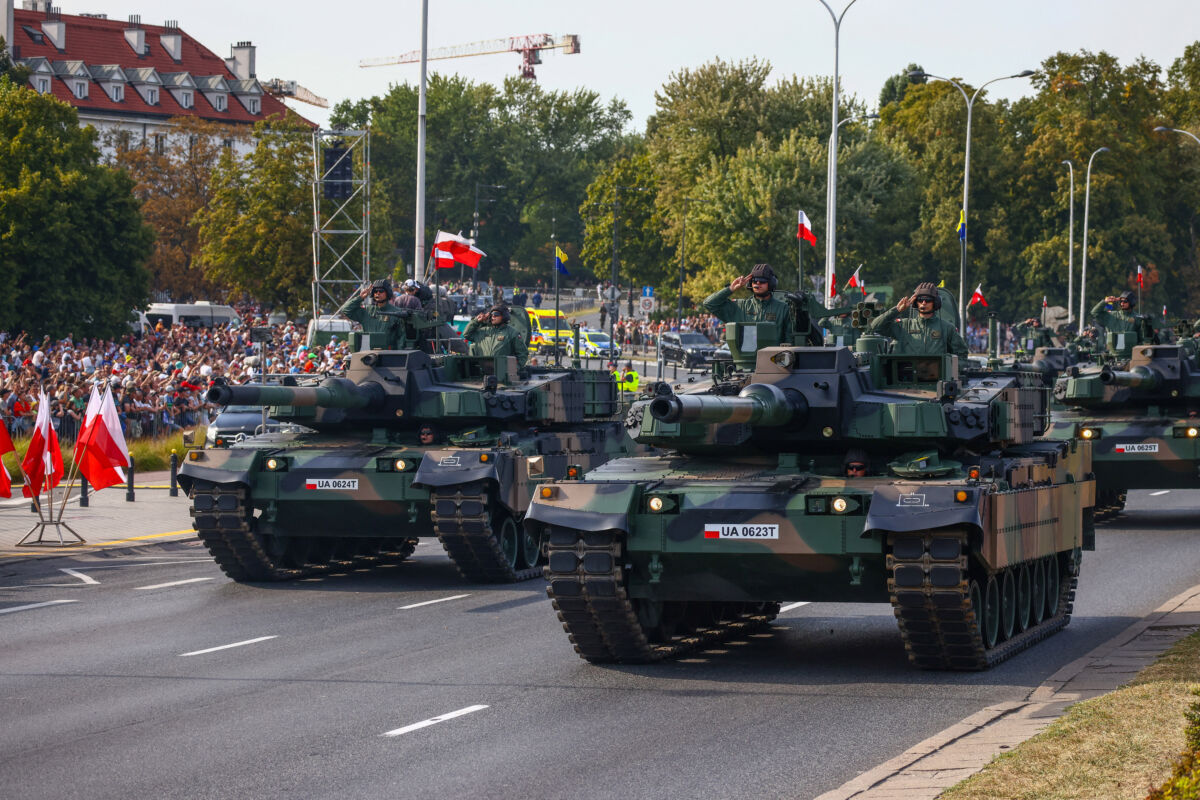
Today, Poland is probably best positioned to become the main land military power in the EU, with a sector spending of 4.7% of GDP, which has allowed for the purchase of South Korean tanks, American fighter jets and attack helicopters, and British frigates for its 200,000 troops (which are to reach 300,000). It is not the richest or most populous country in the Old Continent, but it is proving that if there is political determination, defense can be rebuilt.
Juan Pablo Toro V. is the executive director of AthenaLab.