COLUMN | Chileans, rejoice, the generals and admirals are back
This article was translated automatically and may contain differences from the original. For reference, read the original.
- by Richard Kouyoumdjian
- Opinion
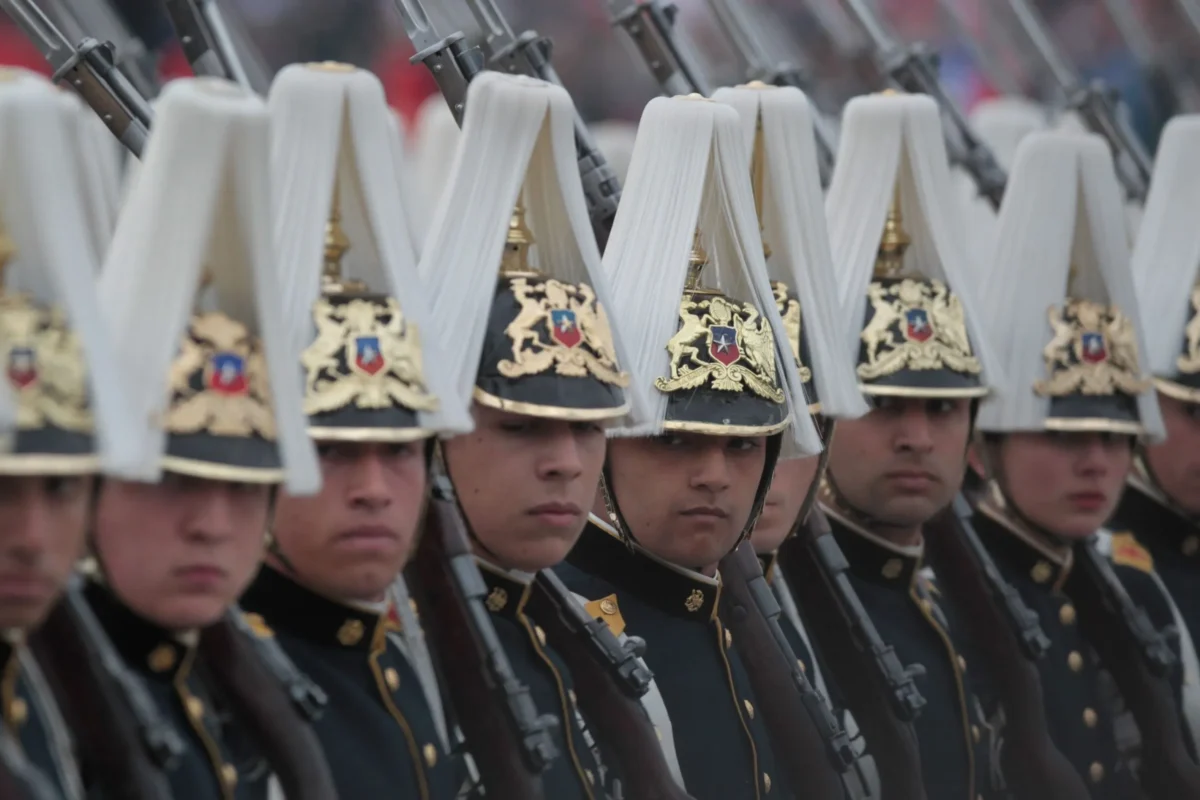
In present-day Chile, it would be highly desirable for retired general officers not only to be faces and campaign advisors but to occupy the positions of Minister of National Defense, Public Security, and National Security Advisor.
In what is already a trend at the municipal level and in the private sector, the three main right-wing candidates are incorporating retired Army and Carabineros generals into their teams, and surely more than one admiral will appear later. It is not surprising that this happens due to the problems of public security that we are experiencing, which government programs capture in their content, and which, due to their gravity and importance, require experts in the field for their proper implementation and execution—something that can be abundantly found among retired general and senior officers.
Some may find these incorporations surprising or inappropriate, but retired generals and admirals have the freedom to act in politics since their retirement is effective. They cease to be uniformed and are, for all civil purposes, civilians from the moment they leave their institutions, and their incorporation into various teams does not correspond to a militarization of politics, as I mentioned earlier, they are civilians who no longer have responsibilities in Chile’s armed institutions, and they are sought for their skills and experiences, something that Chile urgently needs.
There is always the temptation to use them more as faces than for their experience and knowledge. Unlike some current authorities, a general or an admiral conveys security and confidence to the population, but they are not necessarily politically inclined, which at some point may create conflict with the leadership of the teams they join, as they are not purveyors of smoke or illusions. They are strategists, they are staff officers or their equivalent in Carabineros.
If they see that promises are being made that are not viable without a budget, or that are outside the bounds of the rule of law, or for which there are no capabilities, they will say so and do not care if they come across as unpolitical or heavy-handed. Nothing is further from military ethics than committing to solutions that are not viable, that may border on illegality, or that may place troops in unnecessary danger. There are aspects of public insecurity that require legal frameworks that must be provided by the National Congress, with the rest of the solutions depending on available budgets, military, and police capabilities.
Retired generals and admirals will not compromise their comrades in arms who are in service with solutions that could lead them to prison. They will be the first to demand sound and logical rules of engagement, as well as laws that protect or exempt them when they must use force under presidential orders or simply when it is necessary to restore the rule of law when it has been lost.
I would also expect that retired generals and admirals would be the first not to recommend eternal states of exception like those in the Southern Macrozone, where the Armed Forces seem more like scarecrows that will never stop fulfilling that role, rather than forces aimed at neutralizing or eliminating the insurgency, terrorism, and crime that plague the provinces of Biobío, Arauco, Cautín, and Malleco. I would expect the same regarding their use on the northern and northeastern borders, where they do not fulfill relevant roles apart from receiving those who wish to enter the country illegally.
In present-day Chile, it would be highly desirable for retired general officers not only to be faces and campaign advisors but to occupy the positions of Minister of National Defense, Public Security, and National Security Advisor; the latter position does not exist, but it would be highly advisable to create it given the multisystemic and multitematic complexity we face.
If a presidential candidate who has already decided to include general officers in their team wants to score some additional points, indicating that generals and admirals will be ministers or undersecretaries will surely achieve that. Dare to be innovative. The situation is critical and requires experienced professionals in high management. They will not regret the results they can deliver.
To conclude, and this is for the general officers who get involved in the matter, make sure to form teams that include financial and legal advisors, as if you are tasked with solutions to security issues, please consider how they are financed, and more importantly, the respective legal and regulatory aspects. Civilians will trust what you say blindly, so you cannot and must not fail. It is well known that successive budget cuts have left the Armed Forces in dire straits, and we are very short on police and gendarmes.
Finally, gentlemen generals and admirals, there are those in the past who sought to protect themselves or sought to protect democracy as a higher good, even at the expense of the rule of law. They run no risk if they are guided by what we swore to the flag, if they protect their soldiers and Carabineros, and if they give a correct, effective, and efficient use of force, in accordance with the Constitution, laws, and regulations in force.
Best wishes to those who seek to continue serving the homeland, but do not forget that you are not politicians, and that, although you are retired, you are fundamentally still military and police, and it will be these last ones who will pay you honors the day you die, at your military or police funerals.
Chileans, rejoice, 35 years later, the military and Carabineros, with their generals and admirals, are back and available to help Chile and Chileans.


