INTERVIEW | Why Germany Decided to Rearm Against an Potential War (and How It Relates to Russia)
This article was translated automatically and may contain differences from the original. For reference, read the original.
- por Marcelo Masalleras
- Entrevistas
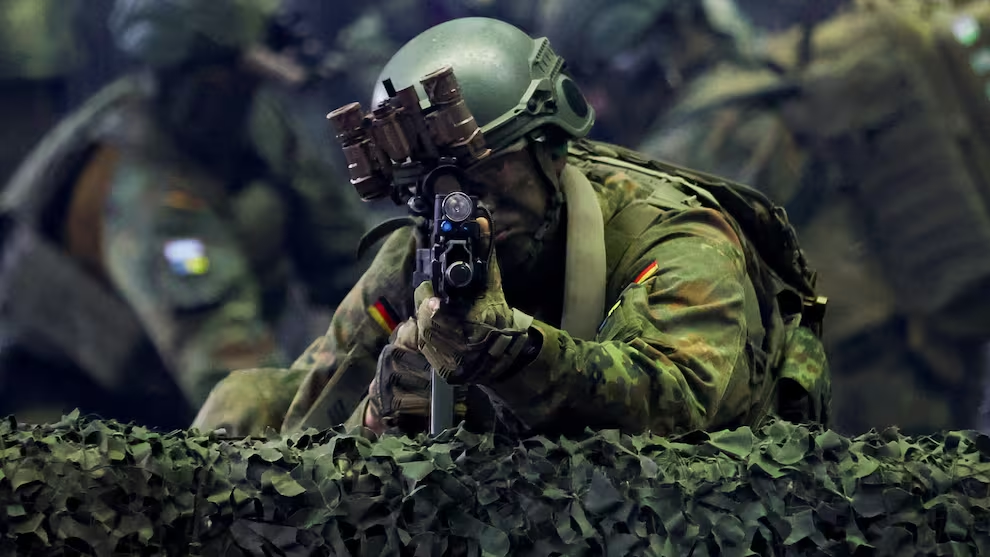
German authorities have taken steps to increase military spending. However, the European country faces a series of challenges.
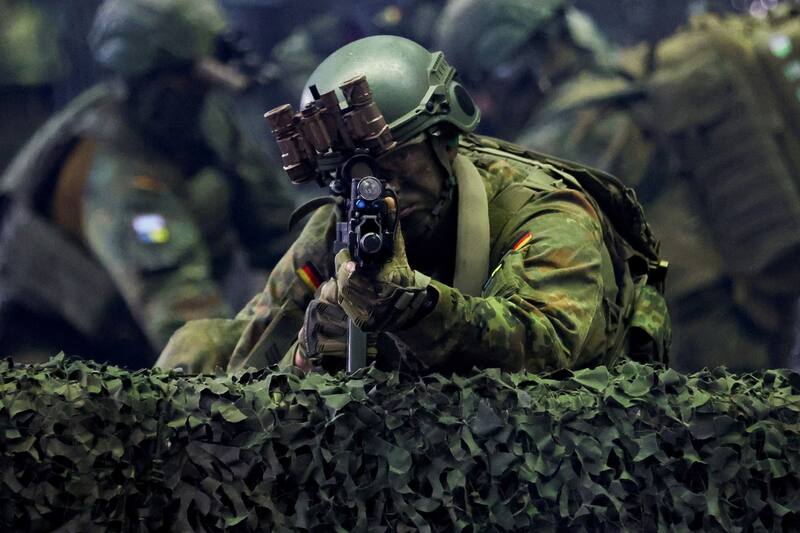
In March, Germany approved an exemption for military spending from strict federal debt rules. This measure facilitates the investment of billions of dollars in its Armed Forces.
The initiative aimed to ensure that defense spending is no longer subject to the “debt brake,” a constitutional rule that limits federal government borrowing to only 0.35% of GDP.
The motion was approved by a two-thirds majority of Bundestag legislators—513 votes in favor and 207 against—while the Federal Council, representing the 16 states, gave its final approval.
Although the “debt brake” was implemented in 2009 in the context of the global economic crisis, German military spending began to decline substantially after the end of the Cold War.
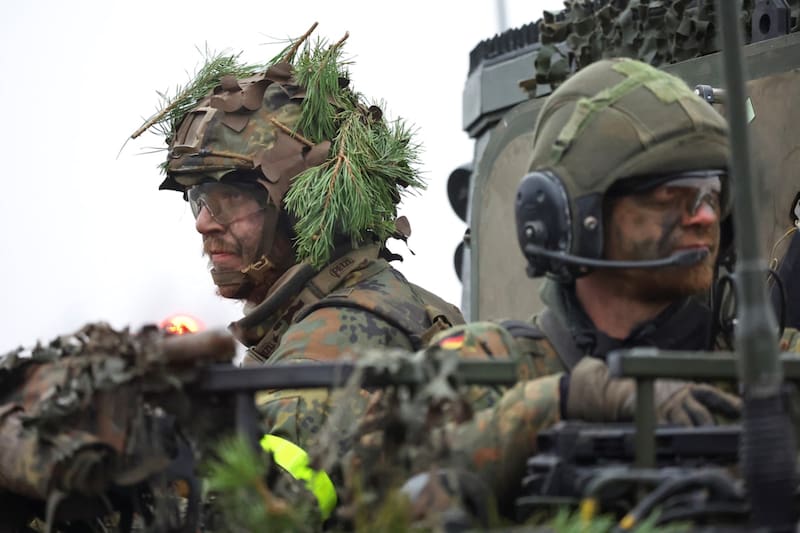
It fell from 2.53% of GDP in 1989—the year of the fall of the Berlin Wall—to 1.32% in 2021.
However, the outbreak of the large-scale invasion of Russia in Ukraine marked a shift in the landscape.
A few days after Russian troops began the offensive on February 24, 2022, German Chancellor Olaf Scholz announced an investment of 100 billion euros in defense.
In an extraordinary meeting held in the Bundestag, he declared that the world had entered “a new era” with Russia’s large-scale invasion of Ukrainian territory.
He also warned of the need to “put limits on warmongers like (Russian leader) Vladimir Putin.
The anticipated successor to Scholz, Friedrich Merz, was the one who pushed for the historic measure in March 2025.
In a speech, the conservative leader asserted that Germany had felt “a false sense of security” over the past decade and anticipated that the decision made by Parliament “cannot be anything less than the first major step toward a new European defense community,” which will also include countries that “are not members of the European Union.
After the measure was approved, the country’s highest-ranking military officer, General Carsten Breuer, stated to the BBC that the increase in the defense budget is essential for Germany, as they presume that Russian aggression will not stop in Ukraine.
“We are threatened by Russia. We are threatened by Putin. We must do whatever is necessary to prevent that,” said the military authority, adding that NATO should prepare for a possible attack within four years. In this regard, Breuer added: “It is not about how much time I need, but rather how much time Putin will give us to prepare.”
“And the sooner we prepare, the better.”
Russia’s extensive investment in weapons and equipment, as well as its capacity to carry out cyberattacks and acts of sabotage, along with the Kremlin’s rhetoric, form part of “a truly dangerous combination,” Breuer stated.
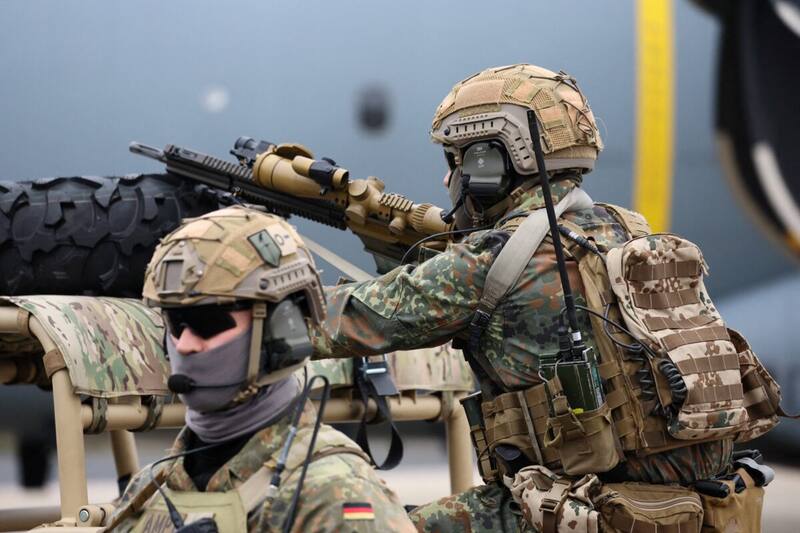
“Unlike the Western world, Russia does not think in boxes. It is not about peace and war; it is a continuum: we start with hybrid, then escalate, then return. This is what makes me think we are facing a real threat.”
But in addition to the Russian invasion, the return of
Donald Trump to the presidency of the United States is also a factor that raises concerns. According to a survey by the data analysis firm YouGov, 79% of Germans consider Putin to be “very” or “somewhat” dangerous to European peace and security, while 74% say the same about Trump.
This survey was conducted after U.S. Vice President
JD Vance gave a speech at the Munich Security Conference, in which he criticized European democracies and accused them of suppressing freedom of expression. In an interview conducted in March, Merz referred to the fear that the United States might abandon its historical commitment to contribute to the defense of its European allies.
He emphasized that international tensions have increased recently and highlighted that “this is why we need to act quickly.”
In the early months of his administration, the Trump administration has strongly criticized its allies for not investing more in defense, while also showing a rather conciliatory stance toward Russia.
Despite Germany taking steps to rearm, its military leaders maintain that current efforts are insufficient.
When and Why Germany Started Reducing Its Defense Spending
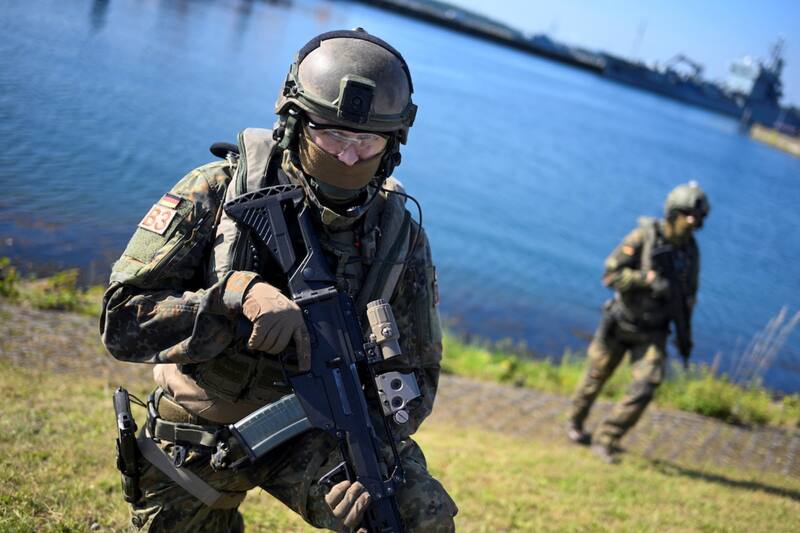
The researcher from
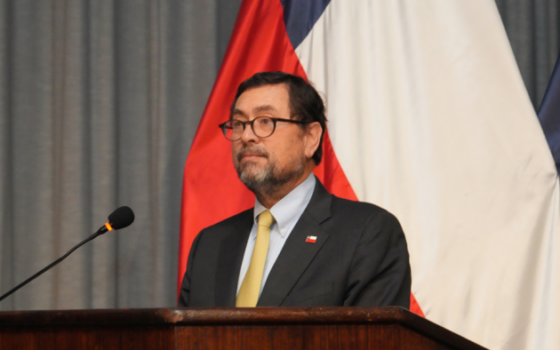
AthenaLab and former officer of the Chilean Army, Marcelo Masalleras , tellsLa Tercera that Germany entered a dynamic of demilitarization after World War II. “Its society was deeply impacted by what happened in both World War I and World War II. Additionally, the country was occupied on one side by the Soviets and on the other by the Allies. Furthermore,
West Germany became part of NATO. Thus, there was a very strong incentive for demilitarization, even though the communist Soviet threat was still present.” “When the Berlin Wall fell and the
Soviet Union disintegrated, the sense of relief was tremendous, but it also led to a continuation of the idea of demilitarization.”Over the years, Germany’s defense spending began to decrease progressively. In 1963, it accounted for 4.9% of its GDP, while in 2005 it dropped to 1.1%, according to data from the
World Bank .From that last year until 2021, then-Chancellor
Angela Merkel focused her leadership primarily on trade relations and diplomacy. The country relied on the security guarantees provided by its NATO membership. However, despite its trade ties, Russia launched its large-scale invasion of Ukraine on February 24, 2022, a process that continued from the annexation of Crimea that had occurred eight years earlier.
“The economic relationship on which Angela Merkel’s foreign policy rested collapsed” that day, comments Masalleras.
This led to an intensified perception of insecurity in Germany towards Russia and the Kremlin.
“The Baltic states and
Poland particularly had this perception for a long time, but German leaders did not perceive it in the same way. They were under the impression that economic relations and interests would prevail over other issues in their relationship with Russia and Putin.” “Putin is not reliable for the
German establishment today. He was five years ago, but now he is not at all,” adds the former officer. Why Germany Decided to Rearm
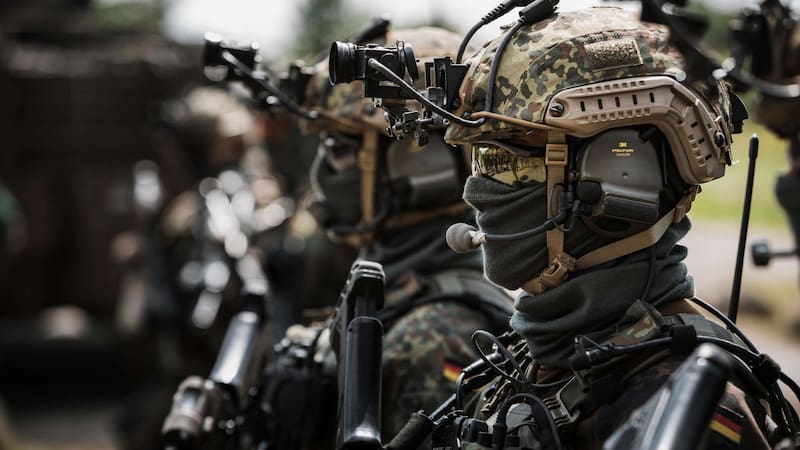
The large-scale invasion of Russia in Ukraine is one of the main factors why Germany has opted to take new measures to increase its defense spending.
“For Europe in general, and in this case Germany, Russia will not stop in Ukraine (…) There is a sense that this was a first step and that they want to expand their borders or areas of influence,” explains Masalleras.
“Because for Germans and Europeans in general, Russia is already in confrontation with them. What happens is that it is not direct and military, but rather in other spheres, such as cyberspace. They have indicated that there are acts of sabotage and espionage affecting Germany’s interests.”
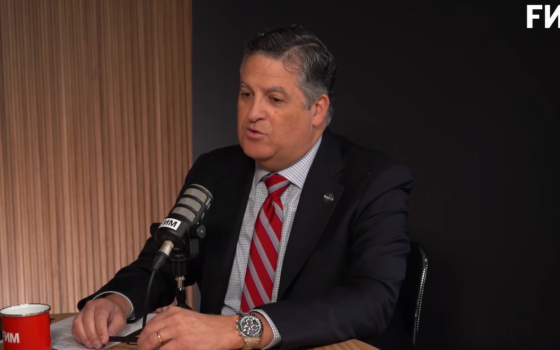
One of the cases in which Russian agents have been accused is organizing a plot to attack
Armin Papperger , the CEO ofRheinmetall , a German company that manufactures weapons and has provided equipment to Ukraine.Russia is also accused of intervening in German elections and affecting its economic systems.
Many of these actions could fall into what the AthenaLab researcher describes as a “gray zone below the threshold of military force.”
However, despite the measures Germany has taken to increase its defense spending, the country faces a series of challenges.
A report presented in March by the Commissioner for the Armed Forces,
Eva Högl , established that theBundeswehr —the German forces— had “very little of everything,” from ammunition to personnel. Additionally, it determined that it had barracks in poor condition. The document, which was presented to Parliament, estimated that approximately 72 billion dollars would be required just for renovations.
According to data retrieved by
Deutsche Welle , the Bundeswehr has about 181,000 soldiers, which is considerably lower than the target of reaching 203,000.Still, General Breuer has greater ambitions. He stated that the country needs to have 100,000 more personnel to optimally defend itself and NATO’s eastern flank. This would translate to a total of 460,000 including reservists.
He said that achieving this without a conscription model will be a more than complex task.
“We do not need to define now what model will recruit them. For me, it only matters that we recruit soldiers,” he stated to the
BBC .International analyst and academic at the University of Valparaíso,
Guillermo Holzmann , tellsLa Tercera that “Germany’s position is quite delicate, as it has been losing predominance in its role as the great articulator of Europe’s economic and financial capabilities.” “And it must maintain that recovery capacity, but also prepare for something of which they are not entirely convinced will happen in relation to Russia in confrontational terms.”
What Challenges the Trump Administration Poses for Germany and European Allies
In the early months since returning to the White House, Trump has criticized his European allies for not investing enough in defense, while his “America First” foreign policy has raised doubts about the level of involvement the North American country would have in a potential conflict.
Additionally, he has shown a rather conciliatory stance toward the Kremlin regarding the war in Ukraine.
The AthenaLab researcher comments: “Within the norms that NATO has for member countries, ideally, they should have a defense spending of around 2% of their GDP. And many European countries, in the first two decades of this century, were far from that.”
“That is why the forces had been reduced, deteriorated, and were investing little in innovation. They were under the umbrella of the United States. And there are areas of military systems that rely almost fundamentally on the United States, such as some capabilities for the Air Forces and missile defense.”
Under that premise, the Trump administration and its senior officials have accused Europe of obtaining security—and being able to invest in social benefits—at the expense of American taxpayers’ money.
From the perspective of the Republican standard-bearer, European allies have relied on U.S. efforts.
“This disruption by Donald Trump has forced NATO countries to increase defense spending, pushed them (…) The message is: ‘I am focusing on China, which is my main adversary. You, Europeans, take care of your security.'”
So far, he has not abandoned them, says Masalleras, as the United States is still a member of NATO.
However, his stance has indeed “changed priorities” in Europe.
“This has been visible in the United Kingdom. In France, which has tried to take a greater leadership role and has committed its nuclear capability (…) And in Germany, which has increased its military spending,” exemplifies the former officer.