COLUMN | Rules for the Use of Force
This article was translated automatically and may contain differences from the original. For reference, read the original.
- by Richard Kouyoumdjian
- Opinion
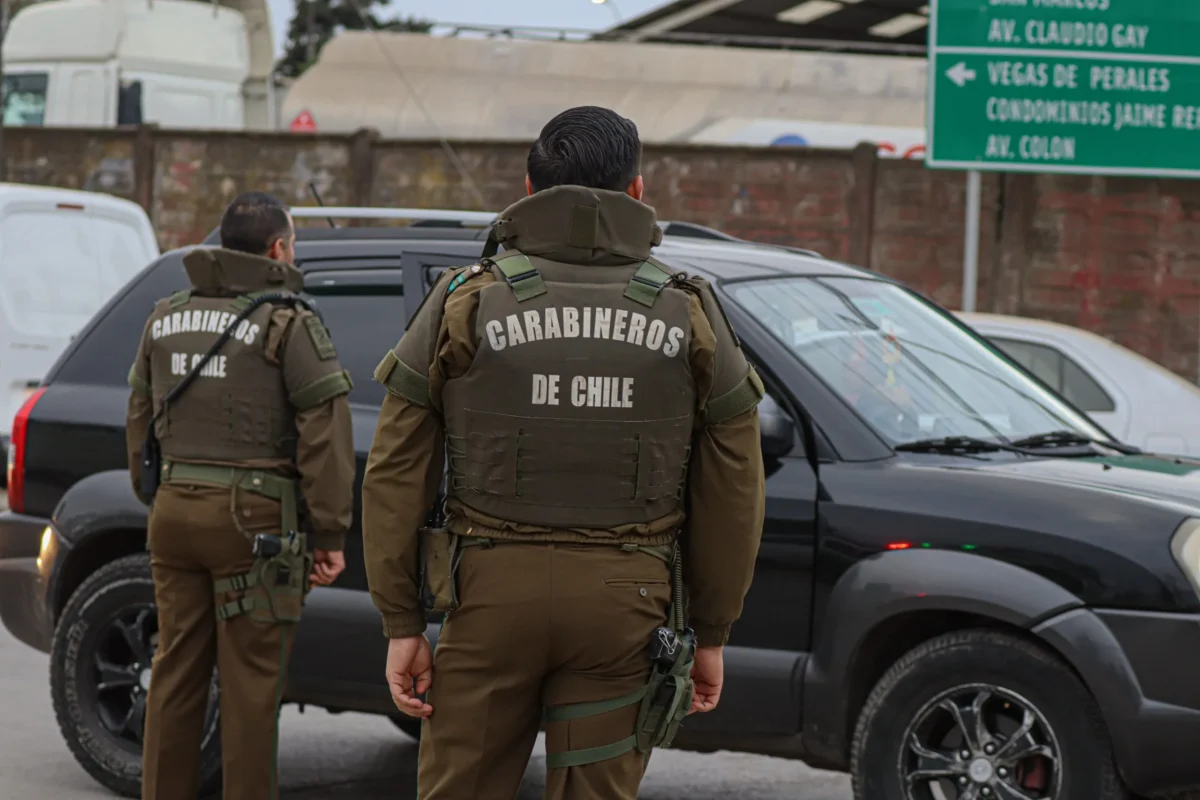
I only ask the honorable members of Congress to consider the police and military whom they ask to apply force when it is necessary to restore the rule of law.
It is obvious that the use of force by the police in their daily operations, and by the Armed Forces when they act exceptionally in internal security tasks, must be regulated. Just as there are rules for its use in war, there must be rules when the monopoly that the State has over the use of force is applied to its own citizens and nationals who have delegated their right to use it to the State, but who expect it to be used in a controlled and legitimate manner in return.
Unfortunately, the point made above, which is obvious and self-evident, becomes complicated when political positions and personal experiences are involved, or when the history of the State’s use of force is forgotten.
The current right views the problem from the perspective of more recent history, in which the left and anarchist groups, accompanied by criminals, take to the streets to cause disorder and destruction. This becomes difficult to control due to the restrictions imposed on the police and military by the political elite, and the judicial persecution that those who had to enforce the law subsequently face, which obviously makes them think twice about their future willingness to respond if they are ordered to restore the rule of law again.
But the right forgets that the left also illegitimately and uncontrollably applied the force of the State when it protested against the Marxist government of Salvador Allende. Not only did they unleash the police, but also the military and affiliated groups to attack women protesting against shortages and the imposition of a Marxist communist model of society.
The first rule to follow is the separation of powers of the State and absolute constitutional clarity regarding the role of the Armed Forces and the police. We must not forget when Carabineros was the praetorian guard of Carlos Ibáñez del Campo, or the case of General Carlos Prats, who, while in command of the Chilean Army, allowed himself and the institution he commanded to engage in tasks that clearly went beyond the military role.
The second rule refers to the exceptional use of the Armed Forces as part of the public force, something that is regulated both in the Constitution and in the respective constitutional organic laws, but that all politicians forget—whether from the right or the left—when they do not remember the reason for the existence of the Armed Forces, which is nothing other than the defense of sovereignty, territory, seas, outer space, and the national interest of Chile.
The third rule is that the police, and in particular Carabineros de Chile, must have sufficient resources to fulfill their constitutional role of guaranteeing order and security in the territory of the Republic of Chile. This is something that does not currently exist and has not been addressed by the political world, despite knowing that it has been a problem for over a decade, which forces us to consider the use of military personnel for tasks that should only be exceptional, very exceptional.
The fourth rule is that the Armed Forces should only be used under constitutional states of exception. States in which it is understood that the Government must resort to the National Defense institutions to reestablish the rule of law, whereby the constitutional guarantees that every citizen possesses are reduced. This is due to the circumstances that triggered both the exception and the use of the State’s Military Force.
Fifth, the use of military personnel to protect critical infrastructure, just like in states of exception, should only be exceptional. And because it is critical, it must be defended as if it were a military objective, following the rules of war and applying all available resources. This should not involve illogical principles such as proportionality, which some are interested in applying to cases like the one just mentioned. The same idea applies to combating insurgent forces operating in the Southern Macrozone.
Sixth, one should not take advantage of declaring critical infrastructure things like borders, which are clearly important for being borders, but have nothing to do with critical infrastructure. This does not mean that the Armed Forces do not have a role at the borders, which comes from their purpose of defending sovereignty and territory from military threats, but it is another matter to use them to stop illegal immigrants or for police-type tasks. Tasks that can be logistically supported, but leaving the main responsibility to those who correspond, the police.
Seventh,, the importance of having legal frameworks that adequately allow the use of force by the State is understood. But as important as this is the allocation of human, material, and financial resources to law enforcement and public security forces, as well as to the Armed Forces when they must act exceptionally in matters of internal security.
Today, the deficit of Carabineros is well-known and more than evident. It is also evident that we have an army with fewer soldiers, a situation that is becoming more critical over time. To the point that fewer than 5,000 people enter mandatory military service annually, or that we have fewer than 2,000 professional soldiers despite having an authorized strength of 7,000. Without Carabineros or soldiers, the entire discussion of rules for the use of force is irrelevant, as there is no force to apply.
In conclusion, I only ask the honorable members of Congress, most of whom have never had to go out into the street with a firearm in their hands, to think about the police and military whom they ask to apply force when it is necessary to restore the rule of law, something they have not requested, but which they understand they must do, some as part of their normal functions, and others exceptionally. Please make it easier for them and do not complicate something that is already difficult, unpleasant, and dangerous. They follow orders, so the concept of exoneration from responsibility must be applied. Do not worry, the military and police are rational and will know how to apply the necessary force to fulfill the mandate. Some will make mistakes, as they are human, but they should be judged either by military justice or in specialized courts. Those who will know, through their knowledge, to distinguish what is improper conduct from a mistake likely made due to the circumstances in which they must operate.


