INTERVIEW | Experts Warn of Impact on Chilean Military Capabilities Following Withdrawal of Attachés in Israel
This article was translated automatically and may contain differences from the original. For reference, read the original.
Missile systems and communication platforms of Israeli origin, among others, may face a lack of maintenance and updates, given the diplomatic signal sent by President Boric's government by ordering the return of Army and Air Force representatives from Tel Aviv.
Experts in defense consulted regarding the government’s decision to remove the Army and Air Force attachés from Chile in Israel (the naval attaché completed his term in January and was not renewed) foresee an impact on various systems used by the three branches of the Armed Forces.
Retired General and Head of Research at Athenalab, John Griffiths, stated that “withdrawing military attachés from a country, whether temporarily or permanently, clearly harms the bilateral relationship with any country.”
In this regard, he explained that “at the end of the day, countries have the legitimacy to make whatever decisions they want,” but this must be balanced with national interest, especially concerning defense, as he noted that there are many military systems of Israeli origin used by the three branches of the Chilean Armed Forces that require “maintenance, improvement, or enhancement,” all of which could be affected by the government’s decision.
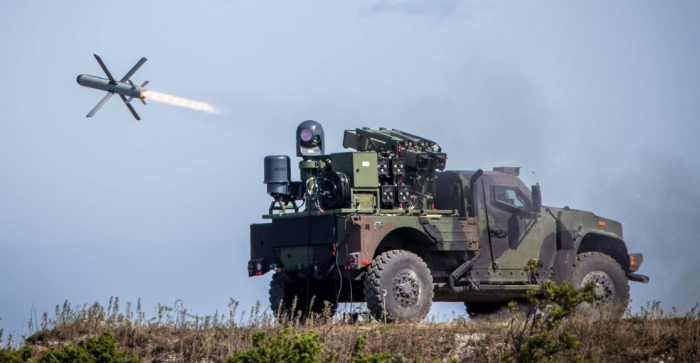
In this sense, he explained that national defense institutions have “to varying degrees of interdependence, military equipment and communication platforms that are of Israeli origin; this is no mystery,” detailing that “the most well-known are the ground platforms we have, in the area of communications, in the more control-oriented aspect, which are even published in Jane’s, and there are anti-armor capabilities that neighboring countries also possess, such as the anti-tank missile Spike”.
In this regard, the expert explained that “due to their stability, these missiles require not only permanent testing at regular intervals but also special maintenance to maintain their capabilities, both short-range, four kilometers, and long-range, eight kilometers.”
In summary, Griffiths stated, “it is essential to carefully evaluate which aspects of national interest may be harmed and also how the relationship can be rebuilt afterward, because these crises pass, and the need to have the most efficient defense possible is something that is crucial not to harm.”
The director of the International Affairs Observatory at Finis Terrae University, Alberto Rojas, agrees, stating that “the government’s decision to withdraw military attachés from the Chilean Embassy in Israel once again strains diplomatic relations with this long-standing and close ally of our country. This decision adds to other episodes in which President Gabriel Boric’s government has had tensions with Israel, such as when Ambassador Gil Artzyeli went to La Moneda to present his credentials and was not received, or the exclusion of Israel from FIDAE 2024, among others.”
In the same vein, he added that in addition to diplomatic ties, Chile’s connections with Israel “include relationships with private companies, the purchase and updating of military equipment, training, and intelligence information exchange, and this could be compromised if such measures adopted by La Moneda continue.”
In line with Griffiths’ comments, he pointed out that “while the President is the one who primarily manages the country’s relations, it is important to be clear that this has consequences for our bilateral relationship with Israel, but it also affects our image with other countries. For example, President Trump’s government is a close ally of Israel, and President Boric’s decisions could generate tension with Washington.”
Indeed, another analyst, who requested anonymity, specified that “regardless of the moral argument underpinning this decision, like any decision, it carries consequences, and we are looking at Israel to understand the effects of the measure, when we should be looking at the United States, as that is where they are analyzing this, understanding that they are allied countries,” adding that it should not be surprising if, in the short term, Chile’s access to the visa Waiver program is definitively suspended.