INTERVIEW | Iran in Latin America: Countries with Diplomatic Ties and the Controversial Agreement with Bolivia
This article was translated automatically and may contain differences from the original. For reference, read the original.
- by John Griffiths
- Interviews
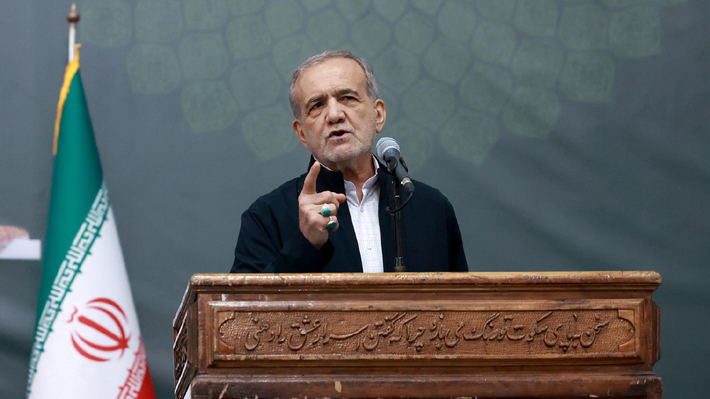
For a couple of decades, Iran has been strengthening its ties with several Latin American countries, many of which oppose U.S. policies, including Cuba and Venezuela.
Following the U.S. joining Israel in attacking Iranian nuclear facilities on Saturday, the conflict has not only intensified but has also opened a series of possible scenarios regarding the response from the Islamic nation.
The options are numerous and cover various fronts: on Sunday, the Iranian Parliament called for the closure of the Strait of Hormuz, through which 20% of the world’s oil and gas production is transported; this measure, which has not yet been approved, would have an economic impact on multiple economies.
Another option is for Iran to decide to attack the permanent bases that the United States maintains in Kuwait, Bahrain, Qatar, and the United Arab Emirates, countries located just across the Persian Gulf from Iran, and much closer than Israel.
Meanwhile, it could also activate its regional allies and even leverage its bilateral ties with Latin America. This is a significant issue for Chile, considering Tehran’s military agreements with Bolivia.
María José Mora, an expert on the Middle East and an academic at the Institute of History at U. Andes, comments that “the truth is that Iran has never been very interested in Latin America, but it begins to take an interest once the sanctions that the United States and the West are going to impose due to the nuclear plan start to close in. Thus, it seeks partners in Latin America to help it bypass isolation. This is where it will increase its political and economic connections with some countries in Latin America.”
Iran’s Ties with Latin America
Political analyst Guillermo Holzmann from PUCV notes that Iran maintains diplomatic ties with Venezuela and Bolivia, and there are approaches with other countries. “It is also worth remembering that, at one point, Iran was responsible for the attacks against the Israeli embassy in Buenos Aires, and consequently, there is a sort of alert regarding how that country might react,” he commented.
In detail, Gabriel Gaspar, former Undersecretary of Defense and former Ambassador of Chile, specifies that today Iran has a limited presence in Latin America, with its main ties being with the so-called Bolivarian countries: Cuba, Venezuela, Bolivia (countries with opposing stances to U.S. policies) and also maintains diplomatic relations with Brazil, Mexico, Colombia, Uruguay, and Chile among others.
“In the case of Venezuela, that collaboration includes defense agreements, which presumably could extend to Cuba and the other countries of the so-called 21st-century socialism,” he comments.
According to the analysis from the Strategic Studies Center of the Chilean Army War Academy, Iran’s relations with Venezuela strengthened during Hugo Chávez’s presidency (1999-2013), and in 2020, when that country faced fuel shortages, it turned to Tehran for energy supplies.
Influence in Bolivia
The ties between Iran and Bolivia have been tightening since 2007, but in recent years they have been reinforced, raising some alarms in the region. Bolivia shares borders with Argentina, Brazil, Paraguay, Peru, and Chile.
In July 2023, Bolivia and Iran signed a memorandum of understanding to deepen their ties in defense matters. The agreement was controversial, as the specific scope was not detailed, and it was only reported that it would be aimed at assisting Bolivia in its fight against drug trafficking and enhancing border surveillance.
However, as reported by the BBC at that time, Iran’s Defense Minister, Mohamad Reza Qarai, admitted that the pact included the sale of materials and training for the armed forces personnel.
The controversy surrounding the agreement led opposition legislators to request from Bolivia’s Defense Minister, Edmundo Novillo, a detailed account of the agreement’s scope. The same was done by the Argentine Foreign Ministry.
But far from calming the situation, Novillo confirmed during those days that Bolivia was interested in acquiring Iranian drones to protect its borders from smuggling and drug trafficking. With these devices, mountainous areas could be monitored and real-time images sent to the Armed Forces. Additionally, Bolivia expressed interest in technological transfer in military academic institutions.
In August 2024, Bolivia and Iran reinforced their bilateral relations, which occurred during the inauguration ceremony of the still-elected President of the Islamic Republic of Iran, Masoud Pazeschkian. There, the Bolivian Foreign Minister, Celinda Sosa, emphasized the importance of deepening diplomatic and cooperative relations, “within the framework of the principles of freedom and the pursuit of independence of both countries,” as detailed in a statement from that country’s Foreign Ministry.
For his part, President Pazeschkian expressed his interest in expanding economic and cultural ties with Bolivia, highlighting the opportunities that exist for both countries in strategic sectors. Furthermore, the Iranian leader praised the Bolivian government’s decision to sever relations with the Israeli regime and expressed his willingness to deepen and strengthen comprehensive cooperation between both countries in the new government.
The Opacity of the Agreement
John Griffiths, head of studies at AthenaLab, comments on the agreement between Bolivia and Iran that it is “evident” that this pact, established in terms of security and defense, “should be important to Chile, because what we know is that the agreement was signed, but there is no clarity about its content.”
Indeed, that opacity is one of the most concerning elements, “because an agreement in security and defense implies advisory services, technological transfer, and could involve a series of other things, such as training, construction of drones, and rocketry, which, moreover, is an area where the Iranians have more experience.”
The key question then is “to what extent what is written there affects, for example, the national security of Chile. That said, one could speculate and say that Iran was, until before the recent events, increasing its presence in Latin America. That is a fact, but after the recent events, Iran’s concern is not currently in Latin America.”
When asked whether Iran, in any of its reprisals or strategies, could attempt to leverage bilateral agreements with some Latin American countries, Griffiths emphasizes that there is a distinction between agreements that are government-to-government versus other “activities, like what happened in Argentina (in 1994).”
In that last case, there would be an action “by groups, using other tools at their disposal that may have a presence in Latin America, but that is not done through agreements, because it would leave a digital footprint. I see it as unlikely, nonetheless,” he concluded.


