COLUMN | The United States and Israel Against the World: Lessons from a 630-Day War
This article was translated automatically and may contain differences from the original. For reference, read the original.
- by Richard Kouyoumdjian
- Opinion
Lack of clarity regarding what follows the war, a plan for managing peace and reconstruction, can lead to years of instability and costs for the victors.
On October 11, 2023, I wrote a first column regarding how the Jewish people defend themselves against their enemies and the logic of their war. Approximately 630 days have passed since Hamas’s brutal attack on a sleeping Israel, and as of 3 PM on June 24, 2025, President Trump is still seeking to ensure that the ceasefire between Israel and Iran, announced the day before, which has not been strictly observed by either side, becomes definitive and that they cease hostilities.
These are the main conclusions and lessons that come to mind, which are obviously influenced by the most recent events, such as the attack by both Israel and the United States on Iran, which lasted 12 days and ended when the attackers decided it was time to conclude, having achieved their main objectives, leaving Iran on the ropes; a situation that is always dangerous, as it can provoke desperate reactions.
1. After overcoming the horror of the tragedy of October 7, 2023, the Israelis dedicated themselves to war, something they know how to do particularly well, first addressing the most urgent, immediate, and dangerous threat to them, namely Hamas in Gaza and the West Bank, before settling accounts with Hezbollah, the militias operating from Syria, and now it is Iran’s turn, the major promoter of their closest enemies who had vowed to eliminate them from the face of the earth. The Houthis remain, but surely their time will come sooner or later.
2. The recent experience of Israel confirms that for armies, it is much more difficult to deal with situations like those in Gaza, which involve non-combatant civilian populations used as human shields, than with enemy armies, even if this eventually means higher casualties in combat. In the case of Chile, it is comparable to when they are asked to engage in states of constitutional exception and must perform tasks that are more police-like.
3. The recent actions of Israeli intelligence and secret services, both in Lebanon, where they detonated personal pagers and walkie-talkies used by Hezbollah, and in the preparation of airstrikes carried out against Iran, a country where they were operating on the day of the attack, disabling weapon and surveillance systems, as well as destroying missile facilities via drones they assembled and operated in enemy territory.It is hard to understand why our politicians do not want to accept that Chilean intelligence has operational capabilities and can operate outside national territory.Having capabilities like those of Mossad provides an advantage in warfare, as well as in combating organized crime.4.The United States-Israel duo has proven to be unbeatable. In practice, they have been working together for over 50 years, with their first test being the Yom Kippur War, a war in which the northern country had to assist them with military supplies when they were struggling to fight on two fronts simultaneously, up to the most recent demonstration of effectiveness and efficiency seen in recent times, the attack both have carried out on Iran to destroy its nuclear and military capabilities, an exercise in which the art and science of war, training and doctrine, technologies, cyber warfare, and the massive use of artificial intelligence were perfectly combined. 5. Israel has once again demonstrated that it possesses one of the most capable military forces on the planet, but not only that, it has a defense industry that produces first-class weapon systems. Israeli systems intercepted between 80% and 90% of missiles and 100% of drones. Shooting down ballistic missiles is very complex due to their trajectory and angle of attack, with Israel being one of the few countries capable of demonstrating such capabilities, which, in my view, include the United States, the United Kingdom, and a couple of other countries. In that sense, it is hard to understand why we do not want to continue sourcing from Israel, which is frankly ridiculous. Having technologies proven in combat has a value that those in La Moneda and Defense are unable to appreciate.
6. The Israeli Air Force is second only to that of the United States. Both have unmatched capabilities in the world. What they did in the attack on Iran is something only they can accomplish. I find it difficult for the United Kingdom, France, and Germany to do something of that nature. Not only did they attack on Friday the 13th, but they also maintained an intense battle rhythm, taking control of Iranian airspace and operating freely to destroy pre-selected targets, leaving their enemy without initiative and on the defensive. It is clear that air power has its limitations; it does not replace ground forces, but it certainly helps if it is effective and efficient. They destroyed over 1,000 ballistic missiles and 65% of launchers on the ground, and 80% of air defenses, including 80 anti-aircraft batteries. All of this was achieved without losses and while exercising complete air dominance. 7. What North America did when it attacked the Fordow uranium enrichment plant is something only they can do and sends a very powerful message to the rest of the world. Surely China, Russia, and NATO are taking note. The United States reminds the rest that it is by far the main military power, with extraordinary capabilities compared to countries seeking to compete for global dominance. 8. The United States has possessed extraordinary capabilities for a long time, but the difference is that it previously lacked the political will to use those capabilities, something that changed with Trump’s second term.
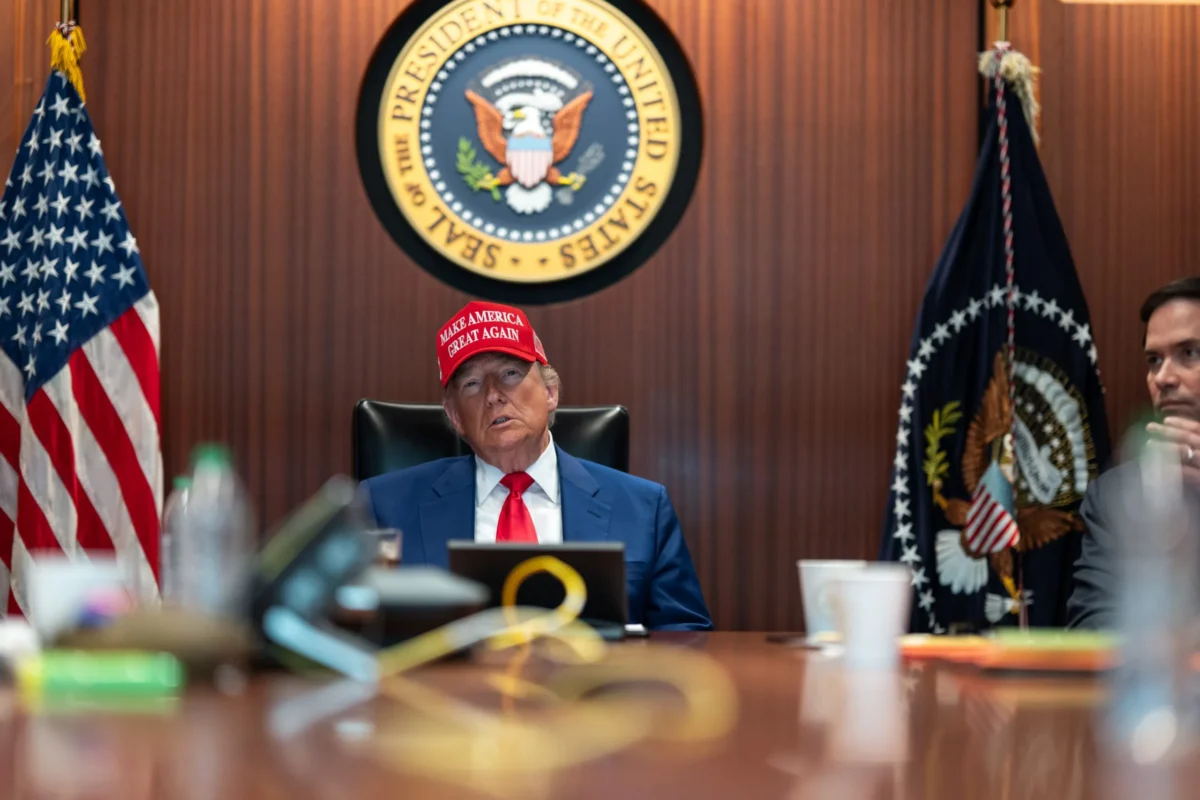
It is no longer a sleeping giant; it is MAGA, one that has learned to use all instruments of national power, masterfully articulated in a complete political maneuver, both national and international
, which, if it succeeds as expected, will reformat the international system for decades. One in which they dominate and no one else.
9. For those who like to source from Russia, perhaps it is time to realize that Russian weapon systems are not very effective, especially when facing technologies developed in Israel or the United States. Just ask the Iranians, who learned that cheap can be expensive.
10. We already know from the war in Ukraine the importance of drones, an area in which I believe Chile is not very strong, both in terms of attack systems and in defending against this type of threat. The same applies to the use of ballistic missiles, which by their nature are difficult to counter even for countries like Israel and the U.S., let alone for countries like Chile, which have SM-2 anti-aircraft missiles but lack the detection, tracking, and guidance systems that are necessary and are only available in a few countries. 11. Iran has discovered what it means to be alone. Neither the Russians nor the Chinese have come to its rescue, and, what is more, perhaps the Chinese would act against it if they ever decide to close the Strait of Hormuz, through which a significant portion of their oil transits.The lesson in this regard is that before going out to cause problems, one must ensure that someone will support them
, especially when facing the Americans and the Israelis. Russia is bogged down and complicated in Ukraine, and China is currently only a global power in economic terms, not in military terms, where they have only limited regional capabilities confined to nearby seas and their continental rear. It is also unwise to leave clerics in charge of national security decisions, especially when facing two impressive military powers. Similar situations occur in this part of the planet; they are not clerics, but they are equally blinded by their ideologies.
12. Recent events have proven that North America leads the world , that it is the global power, and that China, Russia, and the European Union do not weigh as much as we thought they did. The United States has outstanding military capabilities, very well adapted to the reality of competition among global powers. It is true that China is an economic power, and that Russia also matters in that part of the world, but to say that the Americans are finished is somewhat imprudent. In that sense,
we must try to navigate the stormy waters of the current global landscape, but we must be prepared to answer questions like those currently being posed to us , are we with the United States, or are we with Iran, President Boric; are we with China, or are we with the northern country?It is better to remain silent and seek to go unnoticed, recognizing that we are merely a regional power in South America and the Southeast Pacific.
Having a clear understanding of national interest is desirable and healthy for our future prosperity, something that some columnists in El Mercurio have forgotten to mention in their columns. 13. In wars, there are always winners; one of them is Saudi Arabia, which will replace Iran as the Muslim power in the Middle East, something Turkey sought but failed to capture this time, as it has its own problems to deal with, including defining which world it belongs to, east or west, secular or religious, NATO or non-NATO, and other matters, such as the personal interests of its president.14. In the local neighborhood, it is likely that Iran will cease to have influence in Venezuela and Bolivia, something that was complex for us, and that we will begin to notice a withdrawal of Russia, and to some extent of China, after the demonstration of American strength. Regardless of the benefits of the Silk Road, Latin America ultimately knows who rules in this part of the world. In conclusion, it remains to be seen whether Israel and the United States will commit the same mistakes made in Iraq and Afghanistan, where despite winning the war, they later lost in the pseudo-peace that follows a victory by arms.Lack of clarity regarding what follows the war, a plan for managing peace and reconstruction, can lead to years of instability and costs for the victors. Perhaps that is why they decided to leave the ayatollahs in charge, and if they fall, let it be for other reasons, and let their own people take charge.


