COLUMN | Headhunter Seeks Ministers for the Next Government
This article was translated automatically and may contain differences from the original. For reference, read the original.
- by Richard Kouyoumdjian
- Opinion
We cannot continue placing amateurs in positions of state secretaries and undersecretaries. The time has come for professionals, for merit, and to place Chile ahead of personal interests.
Last week, I dedicated my column, one on headhunting, to the search for a president for Chile. This week, I am dedicating it to the search for state ministers for the portfolios of Foreign Affairs, National Defense, Public Security, and additionally for a position that does not exist but should exist, and if it did, should have ministerial rank, that of National Security Advisor.
Others may seek ministers for the Interior, Finance, Economy, and the so-called sectoral ministries. There are many searches. The current state has 25 state secretaries and 40 undersecretaries, so the search for the executive team is no small effort, rather complex considering the offered salary levels, the little or no job security due to being positions of presidential trust, and because, perhaps, there will be a preference for individuals with political affiliation to the person occupying the presidency, or to maintain the famous balances among political parties, in addition to the various quotas that have become customary.
What cannot happen is that we have ministers like those the current government has had in the portfolios I mentioned in the first paragraph. Except for honorable exceptions at the undersecretary level, we have had ministers who either did not know the subject matter they were supposed to address, or lacked the personal characteristics that a person serving as a state secretary should have, which include, among other things, having the sufficient character to manage the youthful impulses of the President, or the irrational ideas that sometimes arise from the second floor.
Understanding that the conduct of foreign relations is a presidential prerogative, the Minister of Foreign Affairs (Chancellor) will be the direct and immediate collaborator of the President of the Republic responsible for leading the ministry in accordance with the policies and instructions that he imparts. The Ministry of Foreign Affairs is the state secretariat responsible for assisting the President of the Republic in the design, planning, prospecting, conduct, coordination, execution, control, and information of the foreign policy that he formulates, proposing and evaluating policies and plans aimed at strengthening the country’s international presence, and safeguarding Chile’s interests, with the purpose of enhancing the quality of development, security, and national well-being.
From the above, it follows that the Chancellor must not only know about foreign relations and have experience in the field, but more importantly, must have the capacity to lead the Foreign Ministry, and to collaborate with the President of the Republic in designing a foreign relations strategy that protects national interest, and that helps us to be more developed, secure, and with a better national well-being. If he is also able to adjust it to the needs of the 21st century, even better, since the modernization sought by Law 21.080 of March 7, 2018 was insufficient or poorly executed.
Many times, having diplomatic experience and knowledge of related matters, which are certainly very valuable and necessary to be a good diplomat and to become an ambassador, is confused with what is required and desirable to perform as a Minister of Foreign Affairs. Not every diplomat will be a good chancellor, but a good chancellor, in addition to being able to lead the Foreign Ministry, must master the art of diplomacy.
When I think of good examples from recent times, I think of Teodoro Ribera (regardless of his brief but effective tenure), Roberto Ampuero, Soledad Alvear, José Miguel Insulza, Hernán Felipe Errázuriz, and Hernán Cubillos. All of them demonstrated the ability to correctly manage the Foreign Ministry, to establish a foreign relations strategy, and most importantly, to protect Chile’s national interest.
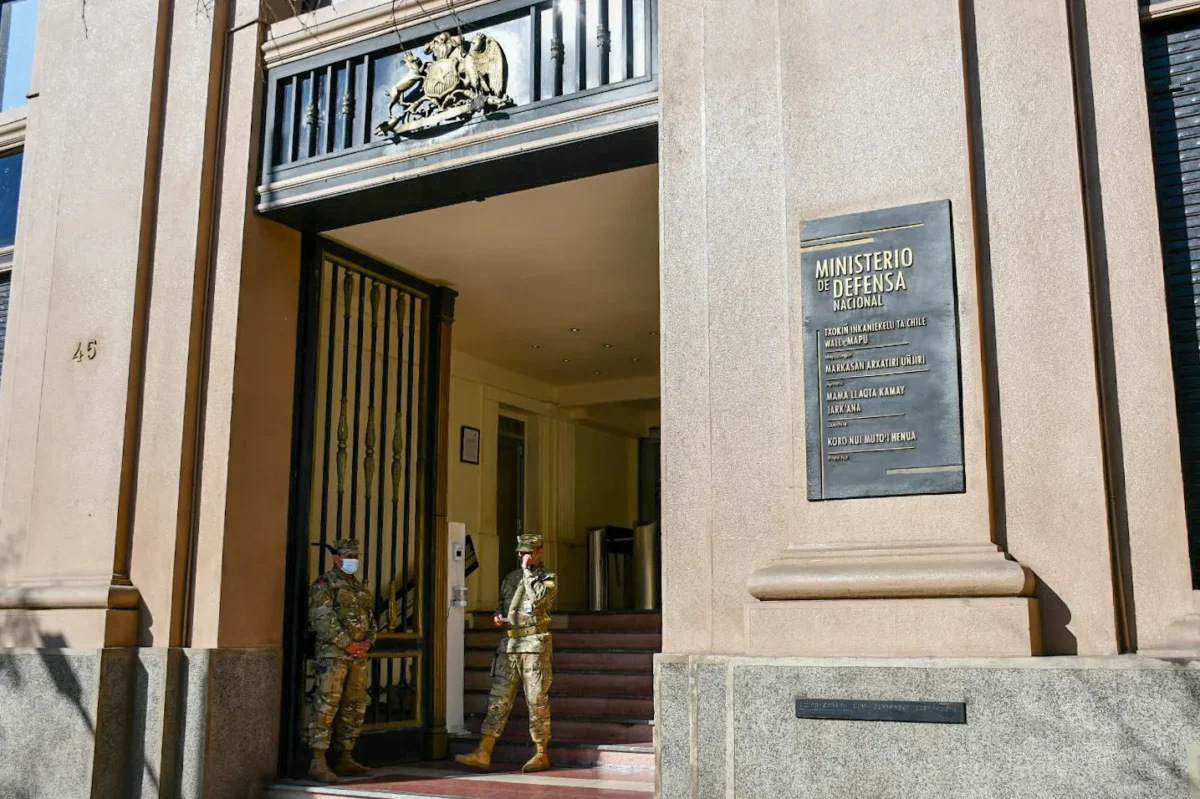
In the case of the Minister of National Defense, something similar occurs as in foreign relations; it is a matter in which the President of the Republic has the final say, to the point that, in the event of war, he assumes command of the Armed Forces. In particular, the minister will be responsible for: a) Proposing, for the knowledge and approval of the President of the Republic, the national defense policy, military policy, and the other public policies of the defense sector, as well as the documentation for the primary planning of national defense, b) Approving, in accordance with the instructions that the President of the Republic imparts for that purpose, the secondary planning of National Defense, c) Collaborating with the President of the Republic in conducting national defense in the event of external war or international crisis affecting the Republic’s external security, d) Collaborating with the President of the Republic in exercising supreme command of the Armed Forces and in the other special powers in matters of defense and external security established by Article 32 of the Political Constitution of the Republic, e) Proposing for the President of the Republic’s resolution the strategic objectives specific to the function of the Armed Forces and their priorities, f) Determining, in accordance with current legislation, the personnel, financial, and goods and services needs for the functioning of the ministry under his responsibility, g) Proposing for the approval of the President of the Republic the projects for the acquisition and investment of war material, when appropriate, h) Assuming, when the President of the Republic so decides, the coordination of the work of the different ministries in matters necessary for National Defense, and i) Approving the joint doctrine and regulations proposed by the Joint Chiefs of Staff.
It is clear from reading the previous paragraph that this minister has or should have knowledge of defense issues or those related to the armed forces, which makes it difficult to understand why they appoint people who do not understand these matters, whether they are former senators or deputies who have been in the respective defense committee, or coming from unrelated professions, a situation that sometimes repeats with the undersecretaries of the portfolio, all of which facilitates the independence of the Armed Forces from the executive power, since to be able to add value, command, or lead and be more than a decorative and ceremonial figure, one must know or have experience and knowledge of military matters. Can you imagine Finance or Economy being led by someone who does not understand finance or economics? Can you imagine Justice being led by someone who has not studied law?
Some good defense ministers that can be used as examples are Baldo Prokurica, José Antonio Gómez, Jaime Ravinet, and Mario Fernández. All of them were not professionals in the field and relied heavily on their advisors for matters specific to this portfolio, but they still earned the respect of the National Defense institutions and were accepted as valid interlocutors by the Armed Forces, avoiding the need to bypass them and go directly to the Presidency.
The Ministry of Public Security is a new one, and as such, there are no examples of ministers that can be used as references beyond Minister Cordero, the lawyer of President Gabriel Boric’s government who has to handle all the thorny issues and fix the messes caused by others.
This ministry was sold to the Chileans as the solution to public security problems, but the truth is that it is just a new state agency that takes on what previously occupied the time of the undersecretary of the Interior, with the same resources, and apparently filled with professionals who do not know or are not competent in matters of public security. It is in charge of the police, and will be responsible for the system, policies, and strategy of public security once they exist or have been developed.
From a legal perspective, the Ministry of Public Security is the state secretariat responsible for assisting the Presidency of the Republic in matters of safeguarding, maintaining, and promoting public security, public order, and crime prevention. This ministry is responsible for planning, designing, formulating, coordinating, sanctioning, supervising, and evaluating the policies, plans, and programs in its area and those related to the care and assistance of crime victims. Additionally, it must formulate strategies for crime prevention and combat, which must consider, among other things, the fight against organized crime and terrorism.
One would think that to lead the Ministry of Public Security, one would have a minister who not only knows the laws but primarily comes with executive experience in command or leadership of the police, knowledge and experience in combating organized crime and delinquency, maintaining public order, police intelligence, and everything related to crime prevention. It is understood that for now, Minister Cordero was the only one available in the government, but as we move forward or change governments, we should seek someone more appropriate.
The good news is that many are known to want to be ministers of Foreign Affairs, National Defense, and Public Security. It is not clear to me that all have the necessary experience and knowledge, but they are certainly eager. That said, unfortunately, we cannot continue placing amateurs in positions of state secretaries and undersecretaries. The time has come for professionals, for merit, and to place Chile ahead of personal interests.
To conclude, a national security advisor must be capable of managing and uniting all of the above, and it is advisable that he also be knowledgeable about budgetary issues, something key in a country financially stressed, where national security must be funded, whether with new resources or reallocated. In today’s Chile, due to the national and international insecurity we are experiencing, this becomes the President of the Republic’s main advisor. I can think of several names for this position and the previous ones, but as a good headhunter, I charge for that service.


