COLUMN | The Pending Issues of National Defense in Chile
This article was translated automatically and may contain differences from the original. For reference, read the original.
- by Richard Kouyoumdjian Inglis, vicepresidente de AthenaLab
- Opinion
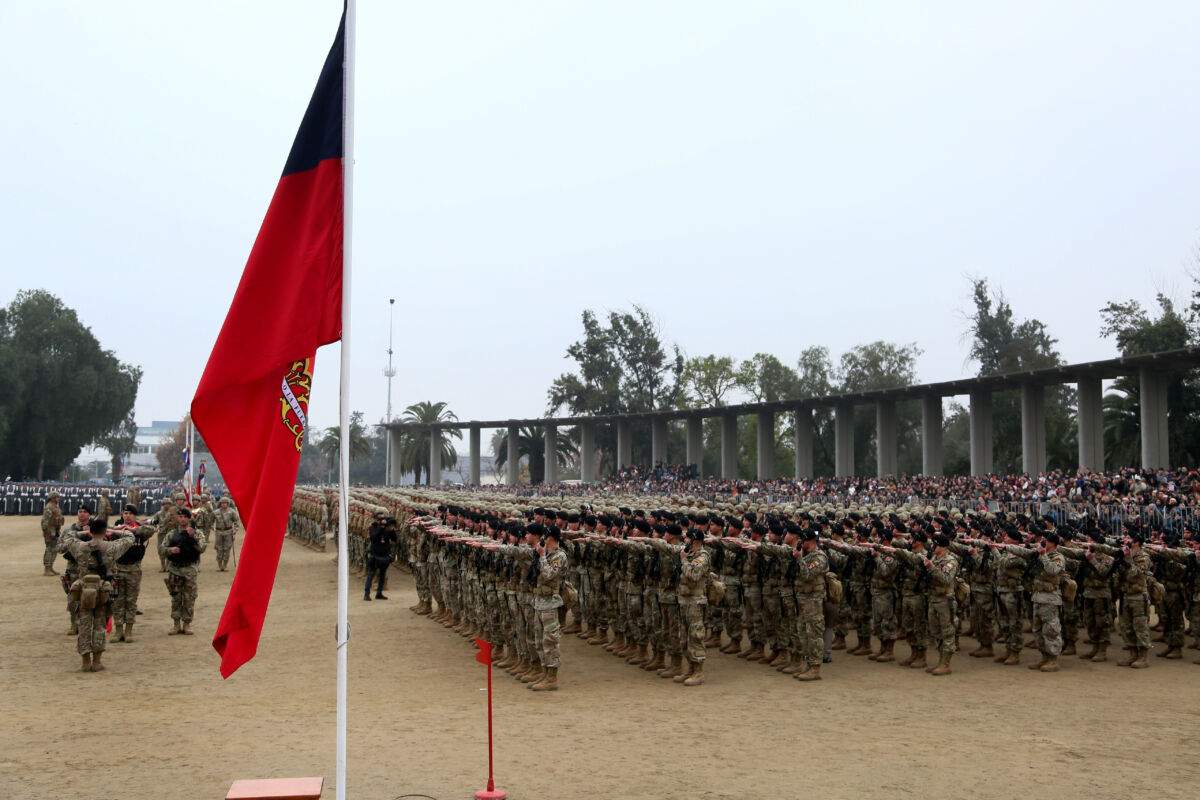
The real discussion will take place in the bill that seeks to complete the unfinished aspects of Law 20.424, because that is where we will delve into the core of the issue: what we understand by National Defense.
In her Public Account on July 24, held in Punta Arenas, the Minister of National Defense, Adriana Delpiano, announced—among other things—the upcoming update of the Defense Policy and the Military Policy, something that should have occurred some time ago. It is neither good nor reasonable for a government to publish these documents six months before the end of its term and three months before the presidential elections. This should have happened at the latest in 2023, one year after taking office, guiding its actions in this area during the term for which they were elected.
In addition to being late, the low level of engagement that both documents have had within the community of specialists is concerning. Approximately a little less than two years ago, the National Academy of Political and Strategic Studies (Anepe), on behalf of the Undersecretary of Defense, held a series of meetings on some (not all) of the topics that would be included in the Defense and Military Policy, but that was the only initiative; there were no further discussions, and not all specialists were invited.
We hope that what comes next is as good as the currently effective policy, which, despite being a subject of discussion among institutions at the time, ultimately generated something very positive that could continue as is, with only minor adjustments.
That said, it cannot be easy to produce documents like the ones just mentioned. The world is tumultuous and complicated, our strategic posture is unclear regarding China and the United States. Additionally, we are experiencing a public security crisis that we have not managed to address, and the National Budget is tight, unable to reasonably and fully finance the operational and investment needs required in both National Defense and Public Security.
Along with the announcement of the imminent publication of the policies, there is another that may be more complex, which refers to the submission of a bill aimed at strengthening the Joint General Staff of National Defense, known as EMCO, and it is on this topic that I want to focus.
The Ministry of Defense indicates that the bill seeks to improve the command and joint employment of the Armed Forces’ capabilities, without specifying why it needs to be improved or if there is something failing in its current organizational structure. At first glance, it is difficult to understand the Minister’s motivation regarding the improvements sought in the EMCO.
The current organization of the Ministry of National Defense, as well as the Undersecretaries of Defense and the Armed Forces and the EMCO, is detailed in Law 20.424, from February 2010, which basically maintains everything the same, except that it consolidates the Undersecretaries of War, Navy, and Aviation into one technical one (the Defense one) and the administrative one into the Armed Forces. The EMCO is practically the same as the former National Defense General Staff, but with more personnel and, therefore, more expensive.
The 2010 law partially advanced in unifying the Undersecretaries, but it does not achieve a joint National Defense organization in terms of command and control, as well as interoperability capabilities. The EMCO and its joint commands do not have resources under their command, which are only temporarily assigned to them for exercises or in very special cases. It is correct that they receive reports from forces operating in United Nations missions, but today these are the least, as there are no troops deployed abroad as occurred in Haiti.
On the other hand, the position of Minister of Defense has limited powers. While it is true that the Undersecretaries, the Chiefs of Staff, and the head of the EMCO report to them, these are all positions appointed by the President, which some institutions leverage to their advantage when they disagree with the ministry’s instructions or have poor relations with that authority.
In practice, the power of the person in charge of the ministry lies only in the approval of defense projects, as long as the Treasury provides the resources. In many respects, they are no more than an advisor to the President on defense matters, an advisor with significant influence, but without real command and authority over the organization of National Defense, which traditionally operates and has operated autonomously.
The lack of powers, authority, and influence of the head of the EMCO (Jemco) is merely a reflection of what happens with the Ministry of National Defense as a whole. We cannot expect much more from a ministry to which we have not provided the tools to perform its work.
Obviously, if we want to advance in that direction, we will encounter significant opposition. On one hand, from the political sphere that will not want to have a minister and a Jemco with extensive powers, with a real concentration of power, and, on the other hand, from the institutions of National Defense that will feel they are losing freedoms and independence, but—as the saying goes—if we want to move forward, to make an omelet, we must break eggs.
The situation in northern Chile demands a Northern Joint Command with resources, empowerment, and authority, just as it does for the conduct of National Defense.
We cannot continue to have three versions of what is needed for the defense of Chile, a reality that the current Defense Policy adequately recognizes, but that without political leaders who understand the matter and make it enforceable remains just a document, as the system tends to revert to its comfort zone, one that has not had to face a national-type external threat, but does face a transnational criminal threat that seriously endangers our sovereignty and territorial control, one in which we are losing and have not achieved real results, one where a truly joint organization with power could make a significant difference.
The issue of the Jemco is not resolved by giving four stars to the general or admiral chosen, or determining how the person who will hold the position is selected, or the rotation among institutions. It is resolved by determining their powers and authority over the Armed Forces, something that also applies, as I mentioned earlier, to their hierarchical superior, the Minister of National Defense, and the organization they theoretically direct.
We will see what surprises the team from the Ministry of National Defense has in store regarding Defense Policy and Military Policy, which in practice are worth nothing if not accompanied by secured funding, remaining merely academic exercises without practical application.
The current Law on Financing Strategic Capabilities has already demonstrated some weaknesses, which must be addressed as part of the review or publication of a new Defense Policy.
That said, the real discussion will take place in the bill that seeks to complete the unfinished aspects of Law 20.424, because that is where we will delve into the core of the issue: what we understand by National Defense, its financing, organization, and objectives.
We will see how far we are willing to advance in unification and in optimizing the way we operate. We will see if we will involve the Armed Forces more permanently and not in a theoretically exceptional manner in internal security tasks, reviving the concept of public force from the 1925 Constitution, and therefore, the changes to their personnel and equipment, which aim at defending against state threats and not against those of a transnational criminal nature and organization.
Richard Kouyoumdjian Inglis, Vice President of AthenaLab
August 13, 2025


