COLUMN | Netanyahu vs. the Generals of Israel
This article was translated automatically and may contain differences from the original. For reference, read the original.
- by Richard Kouyoumdjian
- Opinion
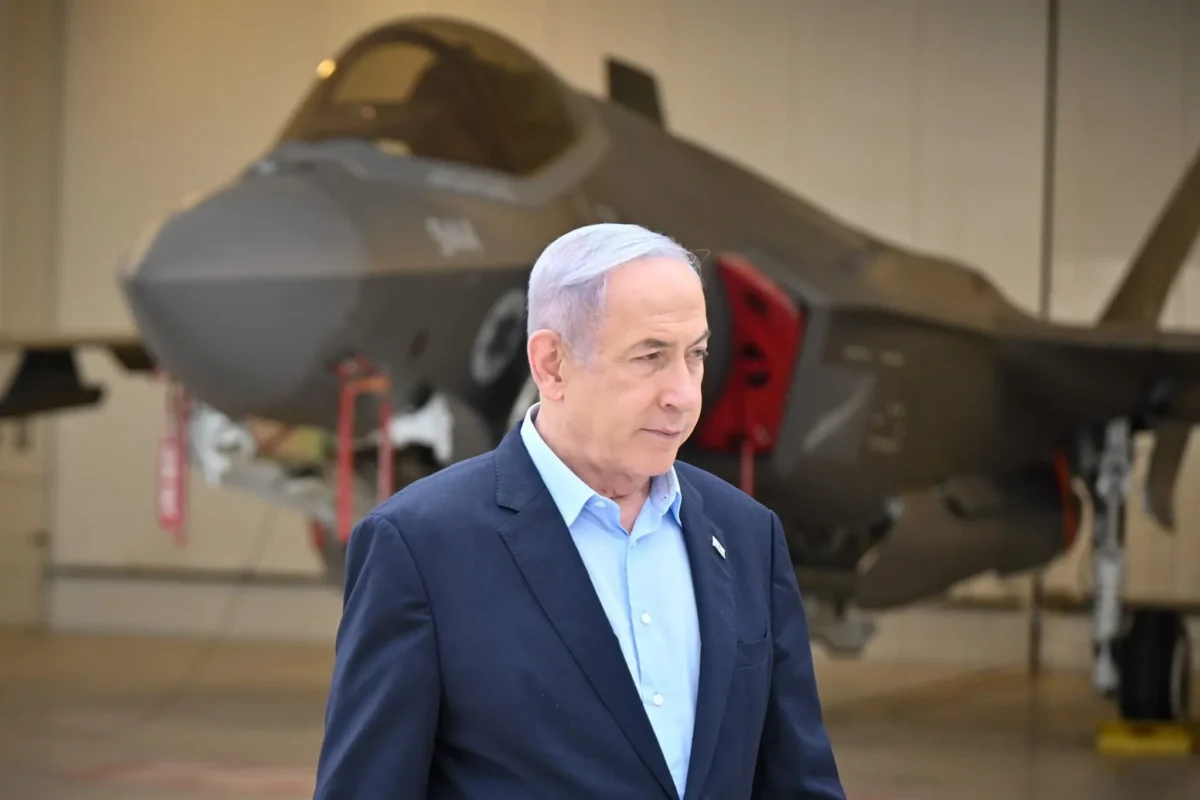
Netanyahu has been purging Israel's defense and security apparatus, assigning them the blame for the October 7 attack while claiming the victories achieved to date over Hamas, Hezbollah, and Iran for himself.
It has been some time since I wrote about the wars in which Israel is engaged, but a recent and serious impasse between the Prime Minister and the Chief of Staff of the Israel Defense Forces (IDF), Lieutenant General Eyal Zamir, regarding Netanyahu’s idea of taking total control of Gaza, the neutralization or definitive elimination of Hamas as a threat to the State of Israel, and the release of all living and deceased hostages still in their hands, prompted me to revisit the topic—one that is infinitely more complex than the war itself, one that pits the political against the military.
Eyal Zamir assumed command of the IDF on March 5, 2025, in a ceremony where he replaced Lieutenant General Herzi Halevi, who had been in command of the IDF since January 2023 and thus was held responsible for the fateful October 7 events. Nevertheless, he remained in command of the IDF and the operations conducted during that period for an additional 18 months, being one of the last related to that date to leave, a situation that had already occurred with the Minister of Defense, the head of intelligence, and lower-ranking generals.
Eyal Zamir, who had been Netanyahu’s military assistant over a decade ago and was considered very close to him, had also been a candidate for the position of IDF chief on two occasions: in 2018, when he was not selected and remained as deputy chief, and in 2021, when Herzi Halevi was chosen. After not being elected, he retired and took on the role of Director General of the Ministry of Defense, a very important but essentially administrative position, which led some to find it strange that he was called to lead the IDF while out of uniform and away from the front lines. Regardless, he has over 40 years of military experience and, as a good Israeli general, possesses extensive combat experience and education from prestigious institutions.
What is the problem that led Eyal Zamir to have differences of opinion with Netanyahu and the current Minister of Defense, Israel Katz, despite supposedly being close to the Prime Minister? A typical problem faced by military personnel when confronted with executive orders in cases of war or conflict. On one hand, they are being asked to have the IDF re-enter Gaza massively to take absolute control of that territory, eliminating Hamas in the process and freeing the hostages still in enemy hands (both living and deceased). Up to that point, everything seems fine, but for Zamir, this is not feasible; it is not feasible for all Israeli generals, and it is not feasible for those who are experts in the subject of war. It can be done, but the cost to the IDF and its troops is very high. The cost-benefit ratio is negative, and the returns are clearly negative.
The IDF has been mobilized for 22 months, which is a long time in wartime, as it is for the IDF as for any other army. The reserves are exhausted, the regular and permanent force is stretched to its limits, and, on the other hand, they estimate that Hamas is no longer a military threat to Israel that could jeopardize its existence. The problem is that this is not what the Prime Minister, the Minister of Defense, and the right-wing political forces supporting him want to hear, and since they are not getting what they want, they are waging a war against him, a war that includes a son of Netanyahu attacking him on social media.
Eyal Zamir is a professional Israeli military officer, commanding the IDF and representing the sentiments of his soldiers, and perhaps a good portion of their families. They understand better than anyone the complexities and risks of re-entering Gaza.They are the ones who see their comrades-in-arms die every day, including several who have unfortunately committed suicide, and who no longer see the purpose of trying to defeat Hamas more than they already have, except obviously regarding the hostages from October 7 who have yet to return home. Regarding that last point, there is consensus: the hostages must return, and it is non-negotiable.
Netanyahu does not accept the position of the IDF leader, and it would not be surprising if his former protégé were to leave very soon. Netanyahu relies on the hard right to maintain his power, and they demand the elimination of Hamas at all costs. To remain in power, Netanyahu depends more on appearing tough while the military appears soft and ineffective than on an IDF that necessarily produces in Gaza what they are asking for—something that Netanyahu himself, having been a soldier, knows is impossible, but which he will obviously not acknowledge in public.
Netanyahu has been purging Israel’s defense and security apparatus, assigning them the blame for the October 7 attack while claiming the victories achieved to date over Hamas, Hezbollah, and Iran for himself. He will not accept the cost of entering Gaza to sweep it clean or the humanitarian cost that civilians are currently paying dearly, a cost that is certainly more attributable to Hamas than to Israel, but from which they cannot distance themselves either. If there are costs, he will ensure they are borne by the military and not by him. There are already voices from the hard right reminding the military that they must be obedient and not deliberative, but everything has its limits, even in Israel, where there are already civil movements against the continuation of the war.
For now, Zamir’s technical military position has been the accepted one, that is, a more rational version, with specific objectives and less intensive in terms of soldiers. It has not come without a cost. He has become the number one public enemy of the hard right and the media they control. He has survived because in a country that is almost always at war, not just anyone becomes the head of the IDF, a position of great power and prestige, second only to the Prime Minister, which is often attained after being a victorious general—something that the history of modern Israel is full of examples of.
Lieutenant General Zamir knows, as a good military scholar, that Gaza is the closest thing to his Vietnam,, where they are not on home turf and everything works against them, where politicians demand, give orders, do not assume responsibilities, and do not help in anything important, except to apply pressure.
I could be wrong, and perhaps what Netanyahu wants to do will work, but all indications suggest that a total and complete defeat of Hamas is very difficult, as it clearly does not present the same level of danger demonstrated in October 2023. Israel is clearly the dominant military power in the Middle East, but that does not mean they are in a position to eliminate Hamas from the face of the earth, just as they have not been able to do with Hezbollah and the Houthis. The United States has already learned the lesson in Iraq and Afghanistan, just as they learned it earlier in Vietnam and the Soviets faced the Taliban. Eliminating enemies of this type can be done, but it comes at a cost that no Western military power is willing or able to accept, and that is why Netanyahu’s position is surprising, as he prioritizes his continued hold on power by saying and demanding what his allies who support him want to hear.
Even before October 7, 2023, the two souls of Israel were in conflict. The attack on October 7 united them against their common enemies, allowing them to go to war, to defeat those who threaten their existence, but that unity is fading, and when it does, political changes occur, and more importantly, the popular support that any significant military effort requires. Eyal Zamir knows this well, as does Benjamin Netanyahu. One acts recognizing that change is coming, while the other rushes to act before the change occurs. We will see who emerges victorious in the political-military confrontation.
One of the skills of any good politician is knowing when to end a war.. The Americans and the British were clear about this during World War II, to the point that they were willing to use nuclear bombs. If the war dragged on and with it the casualties on the battlefield, not only would Churchill have been lost, but Truman as well. Netanyahu would do well to read a bit of history.


