COLUMN | The Logic of National Defense Funding
This article was translated automatically and may contain differences from the original. For reference, read the original.
- by Richard Kouyoumdjian
- Opinion
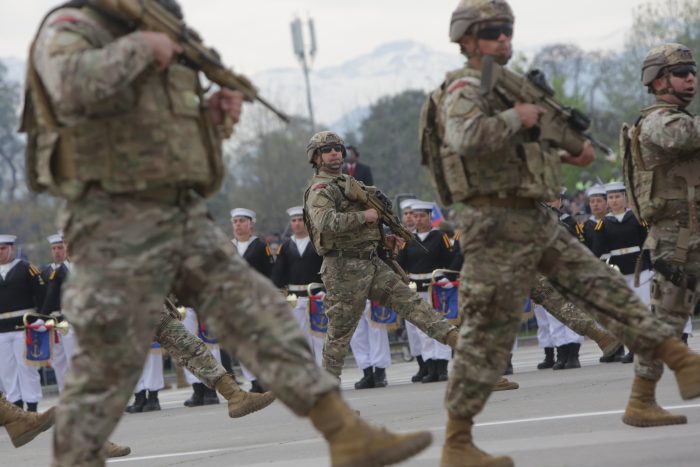
The next time we consider making cuts to the Budget, please remember, Senators and Representatives, that the primary obligation of the State is the security of its citizens, external security provided by the Armed Forces and internal security provided by the police.
Complementing a recent column on the National Defense budget, the purpose of this article is to delve deeper into the conceptual aspects of National Defense funding, particularly regarding the strategic capabilities that Chile requires to address the current threats and risks, as well as those anticipated in the medium term.
Before addressing the matter, on Wednesday, October 9, a meeting of the second Mixed Budget Subcommittee of the Senate took place, during which the budgets of the Army and Navy were reviewed. The Minister of National Defense and her team, as well as the heads of the Army and Navy, were present. The meeting was to review the operational budgets for 2026.
Two issues were made clear during the meeting: the operational impact of the adjustments to the 2025 Budget made in January of this year, and that the 2026 Budget is again very similar to the original 2025 budget, but does not resolve the low levels of training, navigation, flight, and maintenance and readiness that one would expect.
Using the words of Admiral Cabrera: “Historically, I would say, for the last six years, the Armed Forces, and particularly the Navy, have worked with a continuity budget,” he stated, describing it as “the minimum necessary to fulfill essential tasks” (more details here).
The strategic capabilities of the Armed Forces are primarily determined by the material, training, readiness level, and their ability to operate jointly. These capabilities become a reality if there is political will to utilize them. Clearly, if we want them involved in multiple tasks, focus is lost, and the ability to address the main threats and risks diminishes.
The operational budget primarily affects training and operational capacity. This budget covers salaries and fuel, among other expenses. The material, and a significant part of the readiness and maintenance level, depend on the investment budget, which for the Armed Forces is governed by Law No. 21.174 on Funding Strategic Capabilities, the law that replaced the old Copper Law, which allocated part of Codelco’s revenues to finance the military material we needed, and which provided certainty for many years, although its contribution was of lesser magnitude.
The new law, approved in the third quarter of 2019, and which practically began in January 2020, created two funds: one for the purchase of material, systems, and maintenance of capabilities, and the other to address contingencies.
When the new funding system started, it was not necessary to contribute to both accounts, as they were funded with the balance left from the Copper Law. With that balance, all pending payments were made, and the multi-year capacity fund was financed for at least five years, which is why it is estimated that the Treasury only had to contribute the baseline amount of US$488 million for the 2025 Budget, which it confirmed it would do again for 2026.
The original plan was for the first contribution that was not funded by the balance of the Copper Law to take place in 2024, but, as just indicated, it was not necessary. It is worth noting that the balance of the Copper Law not only provided the initial funding for the new law but was also used to finance social spending in an amount that far exceeds US$1.5 billion.
Current problems with the use of the new funding scheme are mainly due to the fact that the respective decrees to activate the projects are not being signed, or the funds are not available. In this regard, it is important to clarify that the funds for Defense are not managed by the Ministry of National Defense, but by the General Treasury of the Republic, which is under the Ministry of Finance. What Defense has is an account receivable or a voucher for something that is difficult to collect in times when the country is facing fiscal constraints..
When we talk about the second fund, the strategic contingency fund, we see that it has not been supplemented in the last two years, and if we include this year, it would be three. Like the other, it was initially funded by the balance of the Copper Law. The pertinent question is whether this is important or not, and the truth is that it is not as critical if the multi-year strategic capacity fund has a good balance that ensures the fulfillment of the obligations arising from our force development plans, which stem from the Defense Policy and the Military Policy.
Otherwise, it is indeed important, because one of the purposes of the contingency fund is to supplement the strategic capabilities fund and not to be used solely for contingencies, which are frequent in Chile.
The problem is more one of political signals. If it is not indicated why the amounts established by law are not being supplemented, a baseline contribution of US$488 million for capabilities and US$936 million for contingencies, it creates the impression that the Law on Funding Strategic Capabilities is dead letter and, worse still, that Defense funding is regressing decades, back to the time when the Armed Forces lived in absolute poverty and lacked the necessary capabilities, validating the arguments of those who opposed the repeal of the Copper Law and its replacement with the scheme approved during Piñera’s second term.
In this sense, it is the obligation of the Defense commissions of the Senate and the Chamber of Deputies not only to inquire about the balances of both funds but also to see how they are being used and whether the force development plans are logical and have the necessary funding, whether joint operational capabilities are being developed, and, why not, if we are in a position to protect ourselves from the technologies observed in the Middle East and on the Ukrainian battlefield.
Chile needs Armed Forces that are well-equipped, trained, and capable of protecting sovereignty and territory, the seas of Chile, its air and space, and national interests wherever they may be located. Protecting Chile and its interests goes beyond purchasing drones and systems for monitoring the northern and northeastern borders.
New mission areas or expanded roles in the realm of public security cannot be pursued at the expense of strategic capabilities and the ability of institutions to ensure they are capable of fulfilling their primary roles. No one says that the Army cannot be at the border, but it must be with the resources that this requires. In defense, it is dangerous to act on a voluntaristic basis and demand doing more with less without understanding what is being discussed. Just ask the Argentines, who suffered the loss of the submarine ARA San Juan.
The peace and tranquility that the Armed Forces of Chile have provided for over 140 years is not free. The Virgin of Carmen may indeed protect us, but she also expects her children to understand that it primarily depends on them, to grasp the importance of National Defense, and the need for funding. Following the recommendations of financial experts to eliminate the baseline contribution may make financial sense, but it is a terrible idea from the perspective of national security.
The next time we consider making cuts to the Budget, please remember, Senators and Representatives, that the primary obligation of the State is the security of its citizens, external security provided by the Armed Forces and internal security provided by the police, which—combined with other State capabilities in intelligence and cybersecurity—produce what is known as national security.


