INTERVIEW | Richard Kouyoumdjian: "It has never happened that the Army ran out of funding to make it to the end of the year"
This article was translated automatically and may contain differences from the original. For reference, read the original.
- by Richard Kouyoumdjian
- Interviews
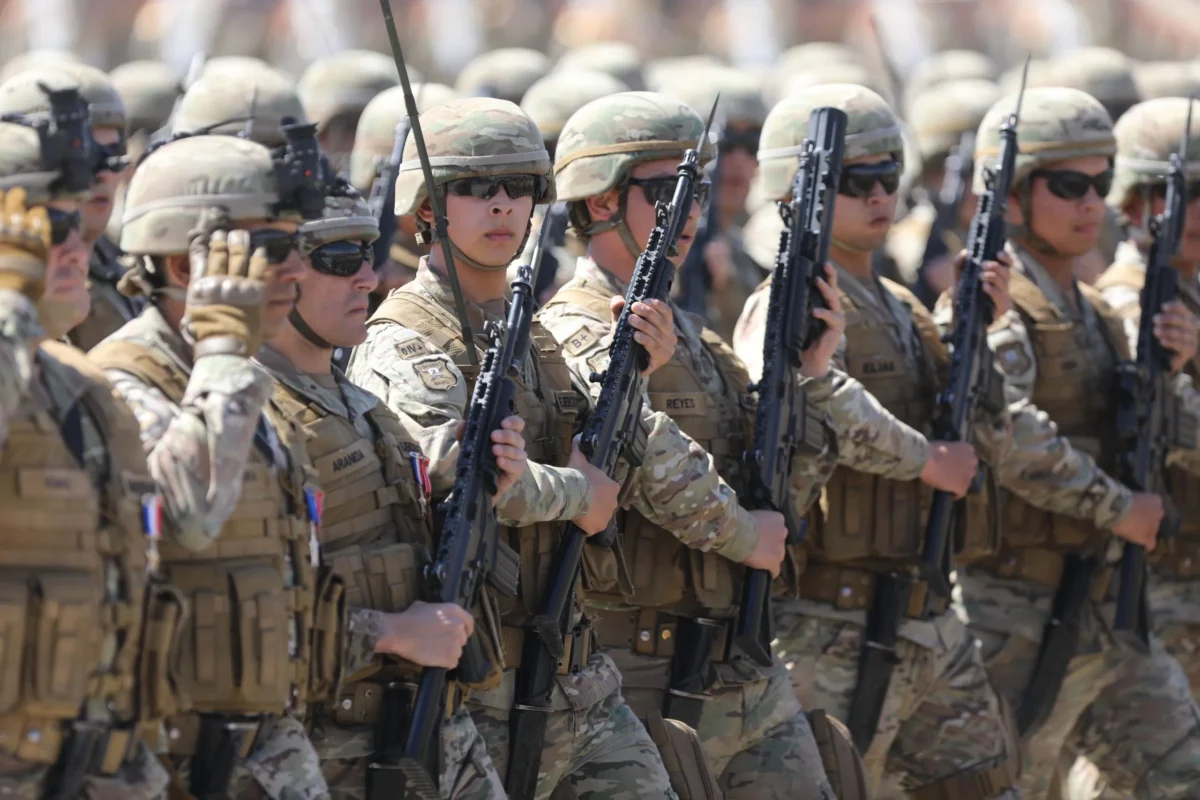
"The Minister of Defense is risking a constitutional accusation at this moment if she does not take immediate actions to ensure that, from wherever it comes, the Army and the Navy receive the resources," warns the national defense and security expert in an interview with El Líbero, regarding the statement made this week by the Army's commander in chief, General Javier Iturriaga, that the deficit in that institution is $40 billion and that they have no way to cover expenses.
Not a few reactions have arisen after this week the Army’s commander in chief, General Javier Iturriaga, stated before the second mixed budget subcommittee that the deficit in that institution is $40 billion and that they have no way to cover certain expenses, such as salaries. His words were emphatic: “Undoubtedly, we are not in a position to finish the year. This is something that has been discussed, our authorities are aware of it, and we should undoubtedly address it because we have no solution.”
The national defense and security expert, Richard Kouyoumdjian, warns in an interview with El Líbero that this situation is unprecedented in the country and is “nothing more than another demonstration of the government’s inability to manage and administer Chile.”
“I am sure that the Ministry of Defense was aware of this issue, but did not take action. Meanwhile, President Gabriel Boric is in the northern region saying he wants to change the Constitution to deploy the Armed Forces in internal security tasks without going through Congress. On one hand, this man is concerned about taking photos in Colchane, but on the other hand, he has the Army underfunded,” says the councilor of Las Condes regarding the trip the president made this week to Tarapacá, precisely for the launch of plans to strengthen border security.
Although Kouyoumdjian points out that the urgent matter is to solve the deficit immediately, he warns that investment in strategic capabilities should not be neglected, both in those already established in Chile and in those referred to as modern warfare. “In the case of the Navy, if new ships are not started to be built or second-hand ships are not purchased, but that are less used, we will be left without a fleet and without submarine force by 2040,” he says.
“With money in this country to spend on other things, the Armed Forces do not receive the funds”
-Has it happened in recent history in Chile, say in the last 30 years, that the Army did not have resources to make it to the end of the year?
-No, it has never happened that the Army ran out of funding to make it to the end of the year. There have been situations where complaints were made about low salaries. This budget is the lowest we have had.
-Is this $40 billion deficit the result of an economic problem, due to a lack of resources, or is it more related to an ideological issue of this government not prioritizing the Armed Forces?
-I believe it is more of an economic and financial situation that reflects the reality of the country. That said, the government prefers to cut salaries and general expenses, knowing that it has little impact on other matters, but I probably do not know if they were 100% aware of the impact that this has on the Armed Forces. The ideological part of the issue is that they probably protect budgets like those of the Ministry of Culture or the Ministry of Social Development, logically those of Health and Education. The programs of all those ministries did not suffer significant cuts. So we have a government that has a fascination for certain issues, that manages finances poorly, that overestimated the revenue budget and then when it realized they had made a mistake, they went to Congress and made an adjustment to the budget.
-What implications does it have for national security that the Armed Forces have this deficit?
-I believe that if one had an extremely large national security problem, the government could use the reserve or contingency funds for other things or those that the Armed Forces have for strategic contingencies. The issue here is that the Treasury does not provide money to the Armed Forces. So, with money in this country to spend on other things, the Armed Forces do not receive the funds, because this means not having funds to pay salaries. The Navy will close the year because it reduced its maintenance, training, and offshore inspection activities.
“The Minister of Defense is risking a constitutional accusation at this moment”
-How could this happen, how was it not alerted earlier?
-To me, this is simply a disorder in the Treasury, and I am sure that the Armed Forces must have been raising their voices every month to the Ministry of Defense, but remember that we have a minister (Adriana Delpiano) who does not know about defense. This lady, with all due respect, is a social worker, has never been in charge of the Armed Forces, and the undersecretaries are a couple of ineffectives: Mr. Ricardo Montero and Mr. Galo Eidelstein. They are probably more concerned with ideological issues, taking photos, and attending ceremonies, but none of them were worried about solving the problems of the Army, the Navy, and eventually the Air Force.. We have reached this point because the Armed Forces are hierarchical, disciplined, and non-deliberative, and it is very frowned upon in current times if a commander goes to the press two months ago and says he has no money to make it to the end of the year, something that any other service chief from any other ministry would have done, but the Armed Forces are not allowed to do that. When they speak, it becomes a national scandal because they say that the commanders in chief are deliberating.
-What interpretation can be given to the response that Minister Delpiano provided when she claims that there is already “an agreement with the Treasury, but that there is a debt that is not the Treasury’s, but rather a transfer that the Ministry of the Interior has to make”?
-The minister said at one point that this underfunding of the Armed Forces was not her responsibility, but that of the previous administration, of Minister Maya Fernández, and of then-Minister of Finance, Mario Marcel. If she is the Minister of Defense, she must take responsibility for the situation of the Armed Forces; if not her, then who? The Minister of Defense is risking a constitutional accusation at this moment if she does not take immediate actions to ensure that, from wherever it comes, the Army and the Navy receive the resources.
-What message is given to the members of the Armed Forces when their budget is cut and the necessary resources for salary payments are not transferred?
-It is very demotivating because they are also required, taken out of their homes, sent to the Southern Macrozone or the border, for example; they do not receive special allowances to compensate for that effort. You end up affecting an entire family. Many people in the Armed Forces take on other jobs after working hours or on weekends to supplement their income. We are also talking about individuals who are very skilled and trained, when there is a strong demand in the private sector for hiring former members of the Armed Forces for security roles with very attractive salaries.
“Members of Congress must force the government to supplement the funds that the Army needs”
-How is it understood that they cut the budget for the Armed Forces and do not transfer the necessary resources while simultaneously imposing additional tasks such as deployment on the Northern border and the Southern Macrozone?
-And not only that, I am sure that in next year’s budget, the Army will have a deficit of $20 billion for deployment, plus the additional allocation for conscripts. Additionally, all candidates have said that if they win, they will make greater use of the Armed Forces, but none have said how they will finance that.
-If this deficit already exists in this budget, is the 2026 budget already being affected?
-Yes, of course, the budget is being affected. The Armed Forces’ budget for this year already has a deficit of $40 billion, plus the $5.4 billion needed for electoral activities. For next year, it starts with a deficit of $20 billion for the same concepts as this year. If we add the additional funds that any of the candidates want to allocate to the Armed Forces, it amounts to about $30 billion more, meaning it would be a projected deficit of $50 billion.
-What decisions should members of Congress make regarding all that has been exposed concerning the financial situation of the Armed Forces?
-Members of Congress must force the government to supplement the funds that the Army needs, both to cover the $40 billion deficit and what is needed to cover the elections. They should inquire about the payments to suppliers of the Army, the Navy, and the Air Force; whether we are incurring significant delays, because this could also end up affecting small and medium-sized enterprises or other types of companies due to the Armed Forces being late in their payments. They should understand that the so-called continuity budgets that have been mentioned ultimately reduce the levels of activity of the Armed Forces to a point where, regardless of the equipment, you end up affecting national security, because strategic capacity is determined by your levels of readiness and training, not just by your material, whether it is in good or bad condition. The second point I would expect is that both the minister and members of Congress evaluate the budget presented for next year well: what it allows to be done. Also, that the presidential teams of the different candidates understand the situation in which the Armed Forces are received, because each of them is thinking about greater levels of utilization of the Armed Forces starting in March of next year.


