INTERVIEW | Chile's submarine force is the most powerful in the Southern Cone, according to prominent expert Richard Kouyoumdjian
This article was translated automatically and may contain differences from the original. For reference, read the original.
- by Richard Kouyoumdjian
- Interviews
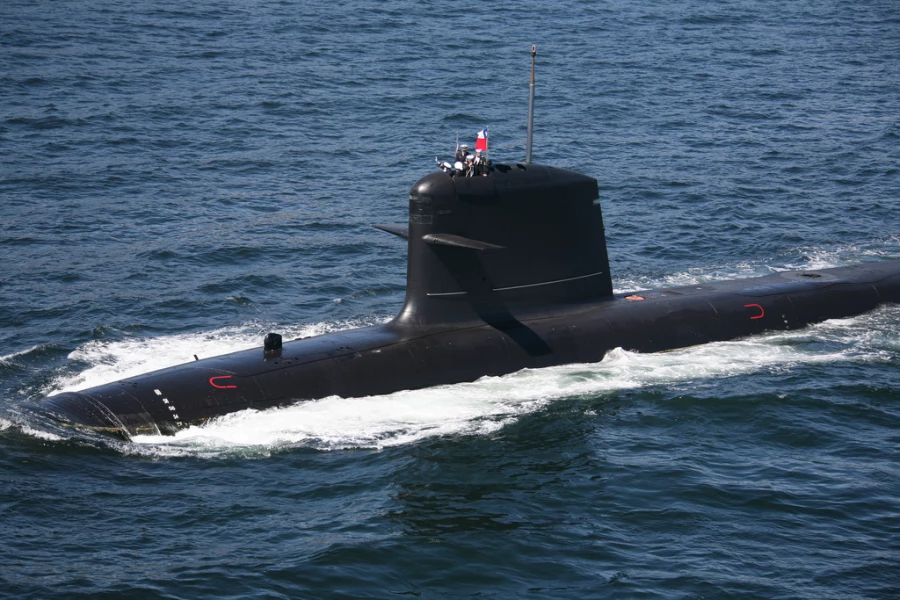
Chile and Peru are brother countries, but like all siblings, they sometimes have issues.
Therefore, it is important for both to have the necessary means of deterrence to address these issues through diplomacy rather than arms. In this context, we will analyze the capabilities of the Armed Forces of both nations.
In this series of notes, we will begin with the submarine forces of Chile and Peru. For this analysis, we will have the expert advice of Richard Kouyoumdjian.
Richard was an officer in the Chilean Navy specializing in artillery and missiles for 10 years. He is also a weapons engineer from the Naval Polytechnic Academy, holds an MBA from PUC and an MA in War Studies from King’s College London, and was deployed to Cambodia in 1992 by the United Nations.
Chile’s Submarine Force
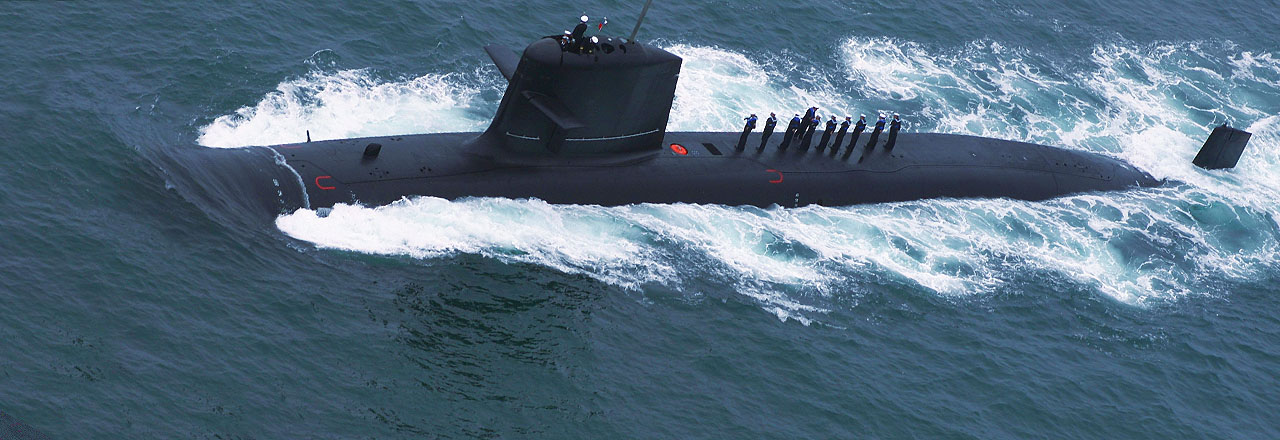
The Submarine Force of the Chilean Navy currently consists of 4 vessels:
- SS-21 “Simpson”: Oceanic submarine Class 209, type 1400-L, built for the Chilean Navy by Howaldtswerke shipyards in Kiel, West Germany, starting in 1980. It was delivered in 1984, arriving in Valparaíso on August 31 of that year. Refitted at the ASMAR shipyards in Talcahuano, in 1990.
- SS-20 “Thomson”: Oceanic submarine Class 209, type 1400-L, built for the Chilean Navy by Howaldtswerke shipyards in Kiel, West Germany, starting in 1980. It was launched on May 7, 1984, and the national flag was raised.
- SS-23 “O’Higgins”: In December 1997, the Chilean Navy and the Franco-Spanish consortium, DCN-Bazán (now NAVANTIA), signed a contract for the construction of two “Scorpéne” class submarines, which were intended to replace the old “Oberon” class submarines.
- SS-22 “Carrera”: The “Carrera” began its construction process in 2004, and on July 20, 2006, in a ceremony presided over by the then Minister of Defense of Chile, Vivianne Blanlot, the submarine was delivered. After extensive training, it began its transit to Chile on October 24, 2006, arriving at the port of Valparaíso on December 13 of the same year.
Peru’s Submarine Force
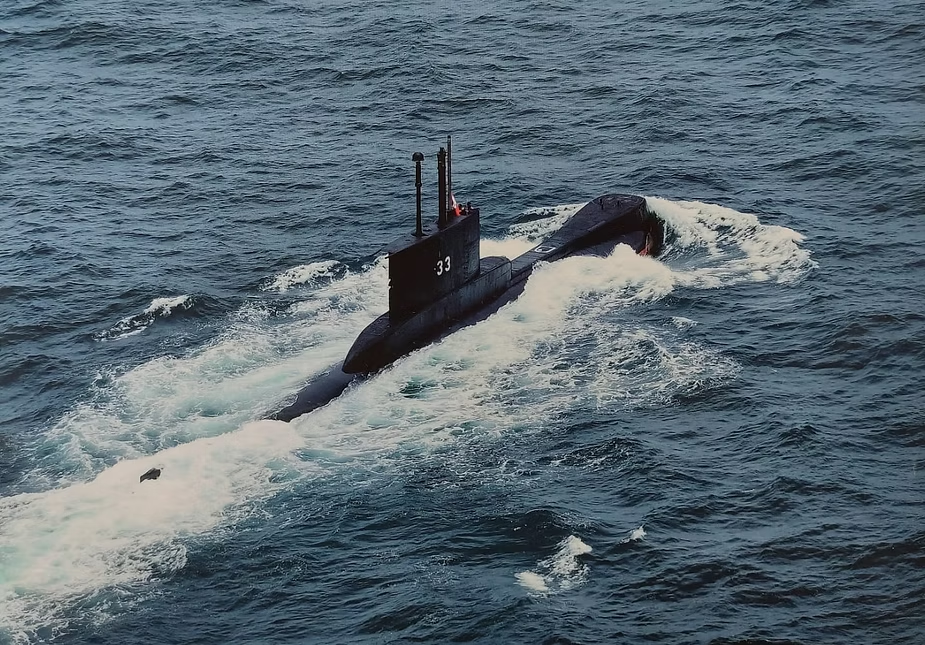
Peru’s Submarine Force has more vessels than Chile. In fact, there are 6 submarines, although from the perspective of age, the Chilean submarines are more modern:
- BAP Angamos: (SS-31): Class 209/1400.
- BAP Antofagasta: (SS-32): Class 209/1400.
- BAP Pisagua: (SS-33): Class 209/1400.
- BAP Chipana: (SS-34): Class 209/1400 and
- Two Class 209/1200 submarines: these submarines were built at Howaldtswerke -Deutsche Werft (HDW) shipyards in Kiel, between 1970 and the mid-1980s.
Submarines “are the only ones with strategic capability in Chile”
Richard Kouyoumdjian gets straight to the point. “Chile has 4 submarines. I would say they are all in operational condition. As sailors say: float, navigate, and fight. The main problem Chile has is that there are two for which we should soon be looking at a renewal project, the Thompson and Simpson, which are from the 80s,” he said.
“They have all undergone the necessary refits (modernization). They are all operational. The Carrera and the O’Higgins are the first submarines in the world of the Scorpéne class, and these are much more modern,” he added.
“Peru has a more deteriorated situation than we do,” Kouyoumdjian stated, “because their submarines, while they must have about 6 of them operational, they could have had 8 or 10, are a bit older than ours and have gone through all the necessary modernization processes,” he explained.
There was also time to discuss the other side of the Andes. However, the situation there is different. “Today Argentina, after the ARA San Juan has no operational submarines,”, asserts the specialist.
“Submarines are probably the only ones that provide strategic capabilities to Chile. In other words, you can position one in front of Callao and immobilize the entire Peruvian fleet. This is a more strategic capability. The submarine does not announce its visit, and when it does announce, it has already struck,” he assured without hesitation.

Is Chile’s Submarine Force the most powerful in the Southern Cone?
To answer this question, many factors must be considered. Namely, the number of submarines, the age of the vessels, their technical capabilities (displacement, armament, sonar, etc.), the training of the crews, and even the geography of the nations competing for leadership must be taken into account.
Despite all that has been said, Richard Kouyoumdjian is clear. “I would say that today the Chilean submarine force is the most powerful in the Southern Cone. Definitely, in the eastern Pacific, yes,” he added.
“I do not underestimate the Peruvian submariners, who are extremely professional. They have always operated under very efficient standards, and the Peruvian naval force always deserves my attention,”, he reflected.
“Obviously, Brazil is locally building the Scorpéne and has this nuclear submarine project, but Brazil has other economic capabilities that allow them to face that. They have always considered themselves the relevant regional power,” he added.
“Our naval force operates throughout the Pacific, up to the Panama Canal, Easter Island, and the southern sea. It was never designed to operate in the deep Atlantic, more towards Brazil and that world,” he concluded.


