COLUMN | The Security Strategy for the Day One of Kaiser, Kast, or Matthei
This article was translated automatically and may contain differences from the original. For reference, read the original.
- by Richard Kouyoumdjian
- Opinion
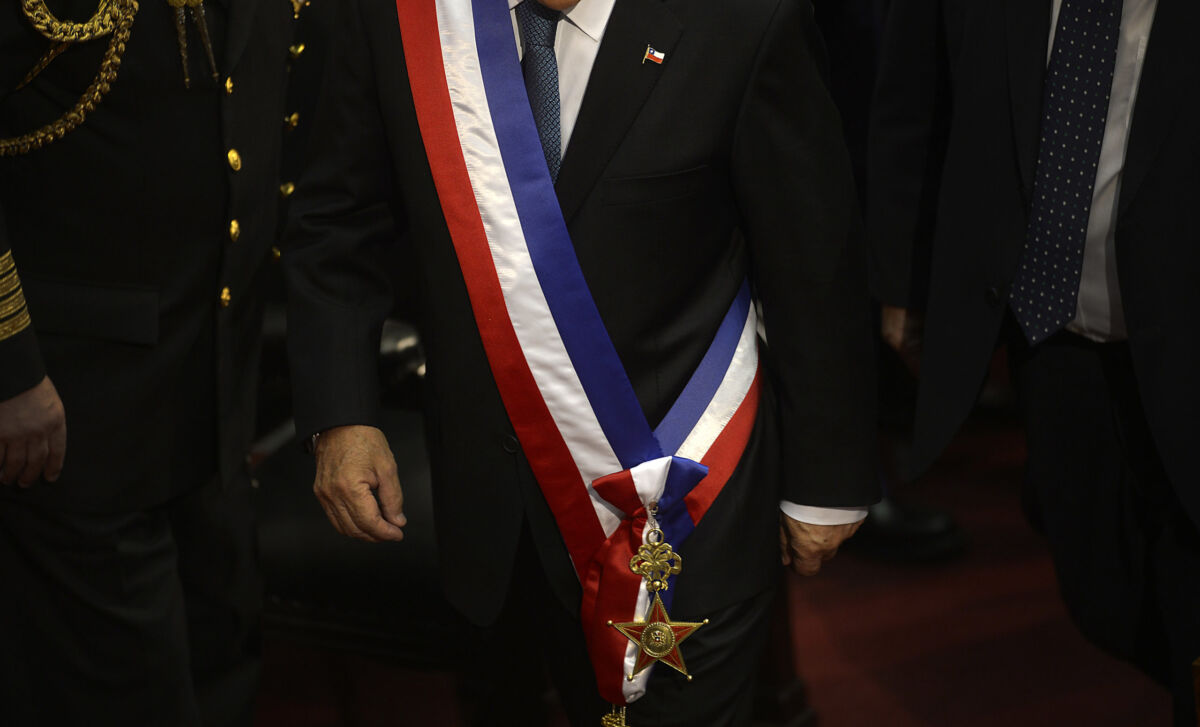
To understand what can be done in the first 100 days, we must comprehend the resources available and the capabilities that can be leveraged to achieve what is known in military jargon as "Hit the ground running."
Like the vast majority of Chileans, I assume that the next government will be right-wing. In this sense, regardless of who is elected President of the Republic, whether it be José Antonio Kast, Johannes Kaiser, or Evelyn Matthei (listed in alphabetical order by their last names), the expectations they have generated regarding a substantial improvement in the security environment are significant. It is anticipated that a right-wing government will yield relevant and swift results, especially concerning organized crime, delinquency, insurgency, and terrorism in the Southern Macrozone, border control in northern and northeastern Chile, and consequently, the end of illegal immigration and the operation of transnational cross-border crime.
The honeymoon is expected to be short. I do not believe that public opinion and the opposition will give them more than 100 days to demonstrate results, which obviously must be more than mere announcements, such as filing lawsuits as was done in Sebastián Piñera’s second term, or presenting bills that do not see the light of day, a common practice of the current government.
Clearly, having a Senate and a Chamber of Deputies from the same sector is very helpful, but that support does not provide much in the first 100 days, as these days are primarily played with the resources that currently exist and not with those that may exist in the future. Obviously, a right-wing project aimed at steering Chile in a new direction requires majorities in Congress that exceed the 4/7 threshold, but that majority will be crucial for the structural reform needed to dismantle the ties and structures that the left implemented in Chile during the Bachelet 2 government and the current presidency of Gabriel Boric.
To understand what can be done in the first 100 days, we must comprehend the resources available and the capabilities that can be leveraged to achieve what is known in military jargon as “Hit the ground running“, which is nothing more than making an effective impact with results from day one, that is, from March 11, 2026, and in the following days. For those who may be tempted, we are not talking about going to take photos at the border or visiting the Los Álamos barracks dressed as military personnel.
First, forget about having more Carabineros, Army soldiers (who are not reservists), sailors, and marines than currently exist, which are, in fact, few, and also forget about using conscript soldiers for internal security purposes who do not have at least a year of training. The initial period will be played with the team available by March 11, and therefore any strategy that is intensive in military or police manpower is, for the time being, ruled out until those resources exist in the necessary quantities and with the required capabilities.
Of course, we can eventually use military institutes and Carabineros training schools, sending their students into the field, but common sense makes it clear that they may be immature for the intended purposes, and this is something we will pay for in the future, as it will affect their initial training and capacity-building periods.
Second, security initiatives that require funding will not be immediately available. This is because some will have to pass through both chambers of Congress, and others, such as reallocations, are not as simple to implement as some overly optimistic individuals have suggested. The budget that will be available is the one approved in 2025 for 2026, which in practice leaves the police and armed forces as they currently are, without greater capabilities or the ability to do more than they already do now, which is not much more than what currently exists in terms of policing or deployments at the northern and northeastern borders, or in the provinces under a state of constitutional emergency.
And if that is the case, what can actually be done? The answer is that there are indeed options, but they are clearly not exactly what the candidates publish in their government programs, which are more focused on solutions that require funding, such as prisons or structural types, like the creation of a military border force. So far, the competition in the security realm has been about sending impactful messages rather than being characterized by rationality and clarity in the objectives to be achieved. It is more valuable to announce things that seem important, but without specifying how they will be funded, the timelines, and the manner in which they will be implemented. It is more valuable to appear tougher and generate more credibility with the public than to have the best strategy and the most experience.
First is the effectiveness of the current work being done in combating organized crime. On one hand, the effectiveness of the Ministry of Public Security must be improved, including having the right people in the undersecretariats and regional secretariats. We are talking about professionals who know what they are talking about, which immediately produces a positive effect. On the other hand, we must recognize the good work being done by prosecutors in Santiago Sur, Temuco, and Antofagasta, who have managed to implement multi-agency work teams that include the Public Ministry and the police, resulting in a notable increase in the effectiveness of investigations and the apprehension of criminals. None of what is indicated here implies an additional budget. It is simply about doing things better, something that has been largely absent in much of the state apparatus over the past four years. Copying and scaling what is good is something that can be implemented immediately.
Second is the work being done at the northern and northeastern borders. After a period of collaboration between the police, the Army, and other state agencies, results are being achieved. The joint effort, combined with the effective use of technology, has led to greater control. This must be maintained and further refined. To say that the borders are completely out of control is a mistake; it is a thing of the past, more perception than reality.
Third is the effectiveness of the states of emergency in the Southern Macrozone. Certainly, having troops deployed has a positive effect, but since they are only in scarecrow mode, all they achieve is to lower the temperature. If, instead, a state of siege is declared in that area and the defense chiefs are ordered to detain all insurgents and terrorists, the problem can be resolved quickly. It must be clear that there is no solution without costs. There may be casualties on both sides, but the problem is resolved, and the deployments that have a very high cost for Army and Navy personnel are ended.
Fourth is political support and command responsibility. It does not cost money. It is only necessary to have a President who assumes responsibility for their orders, both in what must be done in the south and in the north, and in the fight against organized crime. Certainly, we are all accountable to justice, but it is another matter for Corporal Zamora or Soldier Robledo to pay for higher orders. If a presidential candidate is not willing to do this, it is better that they do not run and spare us the constitutional accusation that would follow.
Fifth is to place competent professionals in the Ministry of Public Security and the Ministry of National Defense. This is something that has already been mentioned in the first measure. Having competent and experienced individuals in charge of public security, national defense, and intelligence is an obvious measure, but not so much when it falls under the logic of distributing quotas among parties. Security and defense must be exempt from that logic.
Sixth is to appoint a National Security Advisor. Separating the second floor into two offices, one dedicated to national security and the other to other government matters, makes complete sense considering the context and needs we have. A national security advisor would be key to supporting the presidency, coordinating and implementing strategies, and seeking effectiveness in the actions taken. Its implementation does not cost much either.
Seventh, is to have a public security strategy. To date, one has been known that the government recently launched, which, like everything that comes from this administration, must be reviewed. As soon as the elected official has access to classified information about the police and the data they manage, they will be able to establish objectives, resources, means, and methods of use. For now, they have only communicated common-sense matters, but as long as they do not have a clear understanding of the resources available to them, it is nothing more than music. Everyone will agree that having a strategy is mandatory.
And finally, before the change of command, review the state of public finances to see the real state of the budget and accounts related to security and defense. It is known that this administration indicates one thing and does another. A thorough audit of the state of public finances is a priority for initiatives that involve reallocations or a more intensive use of military and police forces. The strategic contingency fund was not financed in 2025 and is also not considered for 2026.


