COLUMN | The Neighborhood Environment and Its Relation to National Security
This article was translated automatically and may contain differences from the original. For reference, read the original.
- by Richard Kouyoumdjian
- Opinion

Without the cooperation of the Bolivian authorities, we will not achieve effective control. Threatening to close the border, which seriously affects our northern economies, or re-mining the border crossings are not good ideas.
Nothing is more important for national security than neighborhood relations and internal security issues, especially when they are interconnected. The quality and type of relationships we have with China, our main trading partner, as well as with the United States, the global power that dominates the world we operate in and with which we share values such as freedom, democracy, and respect for human rights, certainly matter.
Our neighbors are just that: neighbors with whom we share land and maritime borders, Latin American cultural aspects, periods of war and peace, and significant trade exchanges. We import and export problems among ourselves, and what happens in those countries almost always impacts our security, economy, and politics.
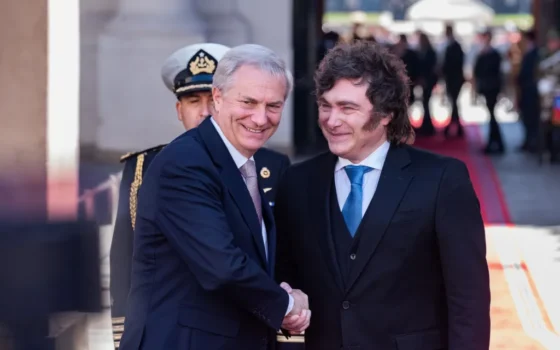
Often, the governments in power do not align in their political-ideological positions, but due to being neighbors, we are obliged to behave well, adhering to minimum standards of coexistence and good treatment, just as we would personally with our own neighbors. Argentina under Milei and Chile under Boric exemplify that even with presidents who could not be more different, things function, and due to being neighbors, they moderate the outrageous things they say or, better yet, remain silent.
I speak of national security and not public safety because neighbors are and can be direct external threats to our freedom and sovereignty, whether they seek to be (of which our history is full) or because, as I indicated earlier, they export their criminal problems to us or do nothing to prevent criminals from settling in our territory.
None of the three neighboring countries is currently a serious military threat, which does not mean they cannot become one, especially in the tumultuous times we live in.
Argentina under Milei, who has promised to restore that country to the power it was at the beginning of the 20th century—something that may not be ideal for Chile—is seeking to rebuild strategic military capabilities, but its progress is slow due to the fiscal discipline implemented to recover the economy of that country. The F-16s will take time to arrive, as will the logistical capacity needed to operate and maintain them. The funds are insufficient to re-equip the navy with submarines and replace its fleet, which averages over 40 years old. The Army has received some modern equipment, but it is limited and does not change the situation significantly.
The priority in Argentina has been internal security and, therefore, the equipping of the police and the Gendarmerie. They have done something right, as they do not seem as desperate as we are. Perhaps this is due to the work of Patricia Bullrich, who is about to leave the Ministry of Security for the Senate. What is clear is that organized crime and the delinquency that plague us do not come from Argentina.
In Peru, the development of military capabilities runs on separate tracks from politics and the economy. It appears that the armed forces of Peru enjoy political independence and fiscal autonomy. Their equipment program is progressing despite a lackluster economy, organized crime pressing them hard, and their political system facing serious problems.
The ongoing rearmament in Peru should not be underestimated. They are dedicating billions to re-equip their air force, navy, and army, which does not mean the same is happening with their police and public security apparatus, which is overwhelmed by criminals and delinquents. Our land border with Peru—despite no longer being mined—is easy to control, as it is only 169 kilometers long. Peruvian criminality does not enter Chile directly from Peru but rather through Bolivia, which is currently our greatest national security risk.
I do not wish to be disrespectful to Bolivia, especially as it is about to have a new president, one from the center, to whom we wish the best of success in his administration, and who will be accompanied by the President of Chile at his inauguration ceremony, reflecting the importance they hold for us, despite not sharing similar ideological views at the governmental level.
With Bolivia, which is not a military threat, we have nearly 900 kilometers of a border that is not easy to control due to its topography and altitude. It is through this border that criminals and illegal immigrants seek to enter Chile after having freely transited through Bolivia, without their police or security forces having prevented them.
Clearly, we are improving the level of control exercised daily, with room for further improvement. All presidential candidates recognize the importance and seriousness of this border, and they are willing not only to deploy Carabineros de Chile but also to place it under the protection of the Army, thereby acknowledging that it is an area where all state capabilities must be applied.
Without the cooperation of the Bolivian authorities, we will not achieve effective control and effectiveness in the work performed, nor will we be able to carry out the repatriation of illegal immigrants. We must work on this issue together, as otherwise, it will not work. Threatening to close the border, which seriously affects our northern economies, or re-mining the border crossings are not good ideas. Good ideas involve helping them prevent criminals and illegal immigrants from entering their country to later attempt to enter Chile.
It also involves working together with Peru, Ecuador, and Colombia in managing Venezuelan immigration, neutralizing the operators who facilitate illegal migratory flows, and seeking to work with other countries on a regime change in Venezuela that stops the export of people and, worse yet, criminals.
Having good relations with neighbors pays off, and having constructive relationships, especially regarding security, pays off even more. Establishing multinational public security organizations composed of the police forces of Chile, Bolivia, and Peru to address common security issues would be an objective for the next government. In security, we must be partners, not adversaries. The enemy is the criminals and transnational delinquents.