COLUMN | The Factor of Public Security in the Elections of November 16
This article was translated automatically and may contain differences from the original. For reference, read the original.
- by Richard Kouyoumdjian
- Opinion
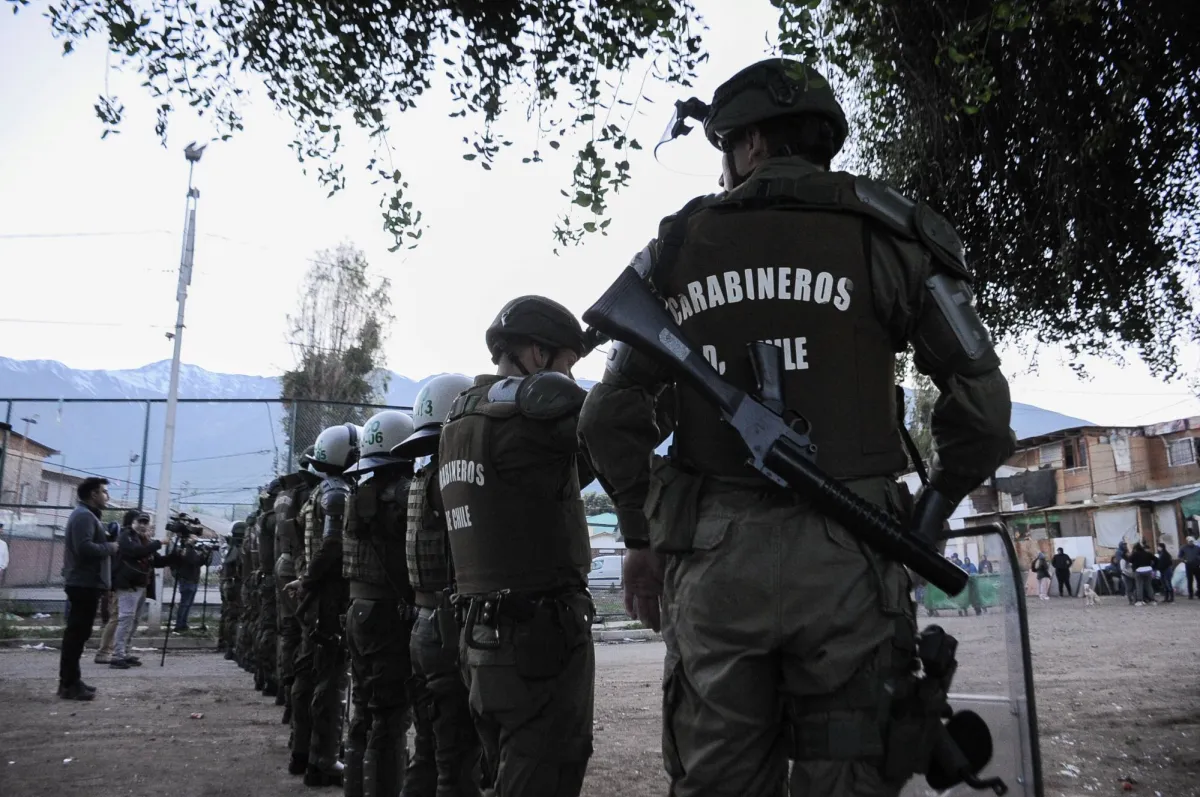
Public security must be understood as a system, where the Ministry of Public Security plays a principal role both in execution and coordination, but the issue cannot be resolved solely through voluntarism or by adopting a tough or intimidating demeanor.
This is my column number 100 with El Líbero. How fortunate I am that it coincides with the approach of a presidential election, as well as elections for senators and deputies, an election in which we all have high hopes, one in which it could happen that the right, through its various factions, but ultimately all right-wing, could even end up controlling the Senate and the Chamber of Deputies. Literally, the dream of a young person!
The reflections in this column are written from the perspective of someone who has been specializing in issues of foreign relations, national and public security, and defense. I do not write this as an RN councilor for the municipality of Las Condes, despite the fact that communal security is one of my main concerns.
I am sure that all Chileans, from right to left, agree that we are experiencing a situation of serious public insecurity, and that we have a relatively clear understanding of the problems, their origins, and eventually how they should be addressed and resolved, something that became clear in the last debate held on Monday, December 10, as the approaches of the main candidates were not very different; all indicated what they would do, but none specified their strategy, none presented clear objectives, which is fundamental since any strategy is based on ends, means, and methods of use. Two candidates were clear about whom they would appoint as ministers of Public Security, while the others only had ideas about what the person should be like or the professional experience they should possess.
The characteristics that the President of the Republic should have, as well as those that the ministers of National Defense and Public Security should possess, were detailed in the columns I wrote on this subject in this same medium, characteristics that align with what Chile needs given its current reality and problems.
It is not the intention of this column to focus on the candidacy of Jannette Jara, Franco Parisi, Marco Enríquez-Ominami, or Professor Artés. The focus is on one of the three right-wing candidates who will advance to the second round and will be the next President of Chile, and therefore the one who must deal with the issues that afflict us.
The three candidates claim to have public security strategies, but the truth is that they have programs that identify what they want to do; however, for them to be strategies, there must be an identification of objectives, means to be used, and methods of use. All talk about eliminating or neutralizing the Tren de Aragua, closing the border, and ending terrorism or insurgency in the Southern Macrozone. None spoke about communal security, about carjackings, about ambushes, about violent assaults, and similar issues that afflict ordinary people. None spoke about leveraging the good work being done today in some regional units of the Public Ministry and only one spoke of public security as a system, and as a result, indicated that it needed an engineer to operate it. No one indicated how they will finance their public security strategies, where they will obtain funding, or otherwise, whom they will take it from. Chileans deserve rationality and to be treated as adults, especially in a country where public insecurity is not the only problem that concerns us.
What was seen in the last debate, especially in the security section, which in theory matters most to Chile, was a competition of who appeared tougher, seeking to convey security, character, and firmness. The competition was not about the quality of the programs or who has the best minister. It was a search through images that conveyed seriousness and a forceful manner of speaking to convince the electorate that they were the right person to lead security efforts from the presidency.
The truth is that the presidency, unlike in the past, in present-day Chile does not control everything that happens in the national territory. It only has direct command over the ministries of Interior, Defense, and Public Security, presidential delegates and regional secretariats, the police, the Armed Forces, intelligence, the prison service, customs, the Internal Revenue Service, and the UAF, but does not have control over governors, mayors, courts, the Public Ministry, or the Senate and Chamber of Deputies, all of which are equally critical when it comes to combating drug trafficking, crime, or transnational organized crime and the terrorism that afflicts us.
A president and their ministers must understand that what depends on them is as important as what others do. Public security must be understood as a system, where the Ministry of Public Security plays a principal role both in execution and coordination, but the issue cannot be resolved solely through voluntarism or by adopting a tough or intimidating demeanor. That said, voters must exercise the thought process of considering not only who has more character but also the ability to attract the necessary talents and to design and implement a successful strategy. Of course, it sounds appealing to place generals and admirals in charge, but the problem we face is more than just selecting the right leadership; it is about having a system that functions and is effective. Chileans have the right to be well governed and to have a good government, as Gonzalo Ibáñez indicates in his column in El Líbero from November 11.
As important as the presidency is the composition of Congress. There are evidently things that a president can do on day one, but everything that is more structural depends on modifying or creating new laws, laws that in the case of public security refer to intelligence, states of emergency, the role of the Armed Forces, military justice, the due legal protection of law enforcement and public security forces, and many other matters. Having 4/7 in both chambers would be a dream. Having the right-wing forces not fighting and seeking the best for Chile in Parliament would be paradise.
I am not concerned about the criticisms made of Republicans and Libertarians for having fewer teams available to form a government when compared to Chile Vamos. The truth is that one would expect many to be available for this reconstruction of Chile, especially when we talk about security and defense. A government needs 100 between ministers and undersecretaries or positions of equivalent rank, and another 2,500 to complete the central administration and its regional representatives, something that in terms of security and defense can be quickly filled with good specialists in those areas.
As has been my practice, and regardless of my political affiliation, I will not recommend any candidate for president, senator, or deputy, but I will ask you to reflect, based on the considerations included in this column number 100, for a moment about who provides the most guarantee of seriousness and success regarding public security. We cannot squander this unique opportunity we have to rebuild and redirect our beloved Chile. The time for professionals has come, and the time for amateurs has passed.
As a final reflection, it is important in any problem to be able to identify its nature. The solution is different for one that is purely criminal, for one that is of a terrorist nature, for another that is insurgent, or for those that are of organized crime. Some will require Carabineros, others the PDI, or a combination of both, as well as those that need the Armed Forces or special intelligence or counterintelligence operations. The sole strategy of filing lawsuits, passing the problem to the Public Ministry, or sending the ball to the corner is no longer applicable. The time has come to assume responsibility for the orders that are given. It is no longer acceptable to hold conscript soldiers and Carabineros accountable for the consequences of decisions made. In the debate on Monday, December 10, many candidates were seen promising prison or bullets. I hope that the one who is elected will rise to the dignity of their office and assume the command responsibility that comes with being the commander-in-chief of Chile.


