COLUMN | Crisis in the Middle East: Update and Challenges
This article was translated automatically and may contain differences from the original. For reference, read the original.
- by John Griffiths
- Opinion
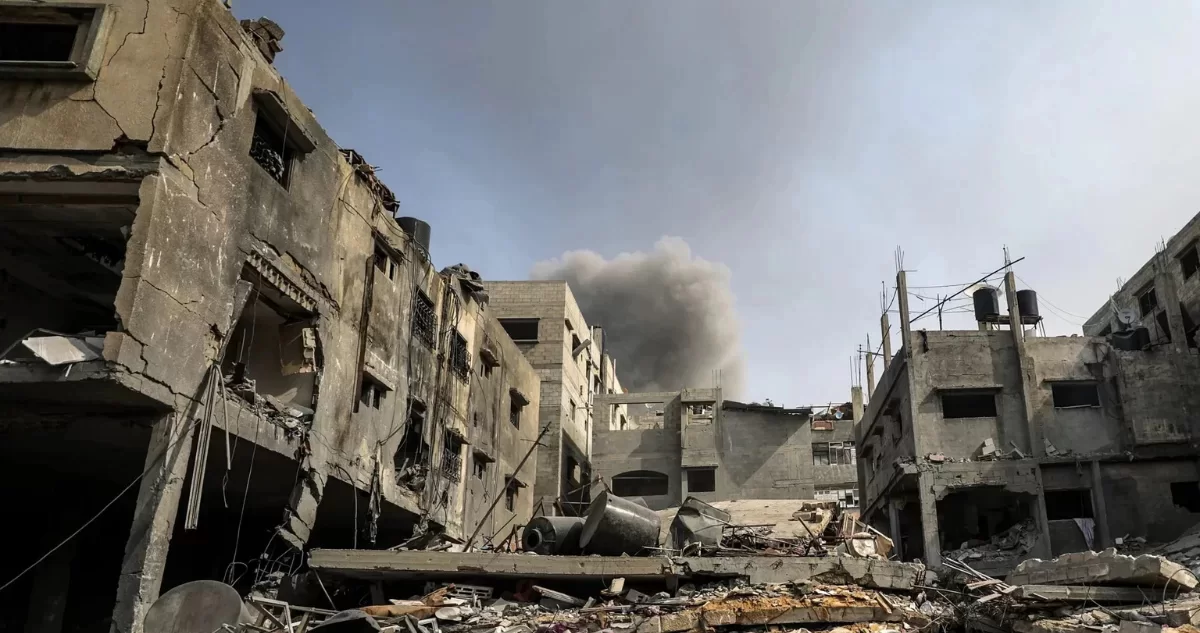
Nevertheless, the strategic situation in the Middle East remains fragile, as the possibility of escalations is always likely.
In a world characterized by the transition of the current international order, the most distinctive feature has been the escalation of geopolitical tensions among major actors, as well as the increase in conflicts and wars globally, with a notable rise in defense budgets.
Among the ongoing and impactful conflicts, attention has focused on the war between Russia and Ukraine and the current confrontation in the Middle East. Therefore, the main objective of this brief article is to identify some of the key elements to date in a war that is still unfolding and has significant international impact.
A first aspect to highlight is that this conflict has materialized the main strategic reconfiguration of the last few decades in the area of interest.
To date, the fighting and actions between Israel and Hamas are framed within a ceasefire process and a peace plan that considers successive stages of achieving objectives that will lead to the withdrawal of Israel’s military presence in Gaza.
Uncertainties remain regarding who will politically take charge of the Gaza Strip, as well as the continuity and influence of Hamas in that geographical area, where reconstruction appears as one of the most urgent challenges in the short term. Thus, the main challenge is to transform the current ceasefire into an effective peace plan among the main actors that can limit or make it more difficult for the belligerents to resume the use of force. The security of both parties is the asset to be safeguarded and ensured.
In this relevant context, it is important to address the conflictual relationship between Israel and Hezbollah, the latter being the main actor under Iranian influence in the neighborhood. This new stage of the conflict, characterized by an attack from multiple fronts on Israel, resulted in the neutralization of its leadership, the disruption of its command and control, and consequently the lack of initiative to continue carrying out attacks from southern Lebanon to Israel.
What is novel is that this time an intelligence operation—complemented by precision airstrikes—achieved quickly and decisively what the traditional use of force would have compromised with a more significant effort of material and human resources over a longer period. However, the most relevant question today is: How long can we expect this inactivity to manifest?
It seems that there are certain and valid indications that a reorganization of the group, its leadership, and capabilities is currently developing in that geographical area.
Thus, on this front, the challenge posed by the ceasefire of November 26, 2024, between Israel and Hamas suffers from the same problem as the Gaza Strip, regarding transforming this interruption of the use of force into a plan and scenario of greater stability, with the local commitment of the main actors, as well as with clear regional and global support, which is currently unlikely.
In this regard, the presence of the United Nations peacekeeping force in southern Lebanon, with 11,000 blue helmets from 46 countries, will once again face the challenge of being an actor that can collaborate in this process or continue to be irrelevant due to a lack of leadership and influence. It will also further test the capacity of the central Lebanese government to impose its effective sovereignty south of the Litani River.
This multi-front conflict has also developed with the regimes of Damascus and Tehran. Syria, embroiled in a civil war, continues to experience clashes in parts of the country despite a change in power. It is relevant to observe the growing influence of Turkey in Syria. Meanwhile, the Iranian regime—the axis of resistance—participated for the first time in a direct confrontation with Israel.
Iran has been a significant actor in the conflicts of the Middle East, establishing itself as the main orchestrator and supporter of groups that have collectively affected Israel’s security. The joint military actions of the U.S. and Israel against Iran’s nuclear capabilities have undoubtedly delayed its atomic program and affected the intensity of its actions in the area. The most relevant question to date is: How long will this behavior continue?
Nevertheless, the strategic situation in the Middle East remains fragile, as the possibility of escalations is always likely.
Today, the question of the current multi-front conflict continues to be how to translate potential military successes into political objectives that ensure greater peace and stability for the region.
It seems that the proposal—more common in specialized publications—of two independent states has not transcended the essence of the nature of the conflict in its depth, which we could summarize as the mutual recognition of the other state’s right to exist and not be destroyed. Only from this point is the configuration of two political entities that can engage in a real peace process viable.


