INTERVIEW | Richard Kouyoumdjian, defense expert: Chile has a superior naval squadron, but if it does nothing, in 10 years Peru will be better off
This article was translated automatically and may contain differences from the original. For reference, read the original.
- por Richard Kouyoumdjian
- Entrevistas
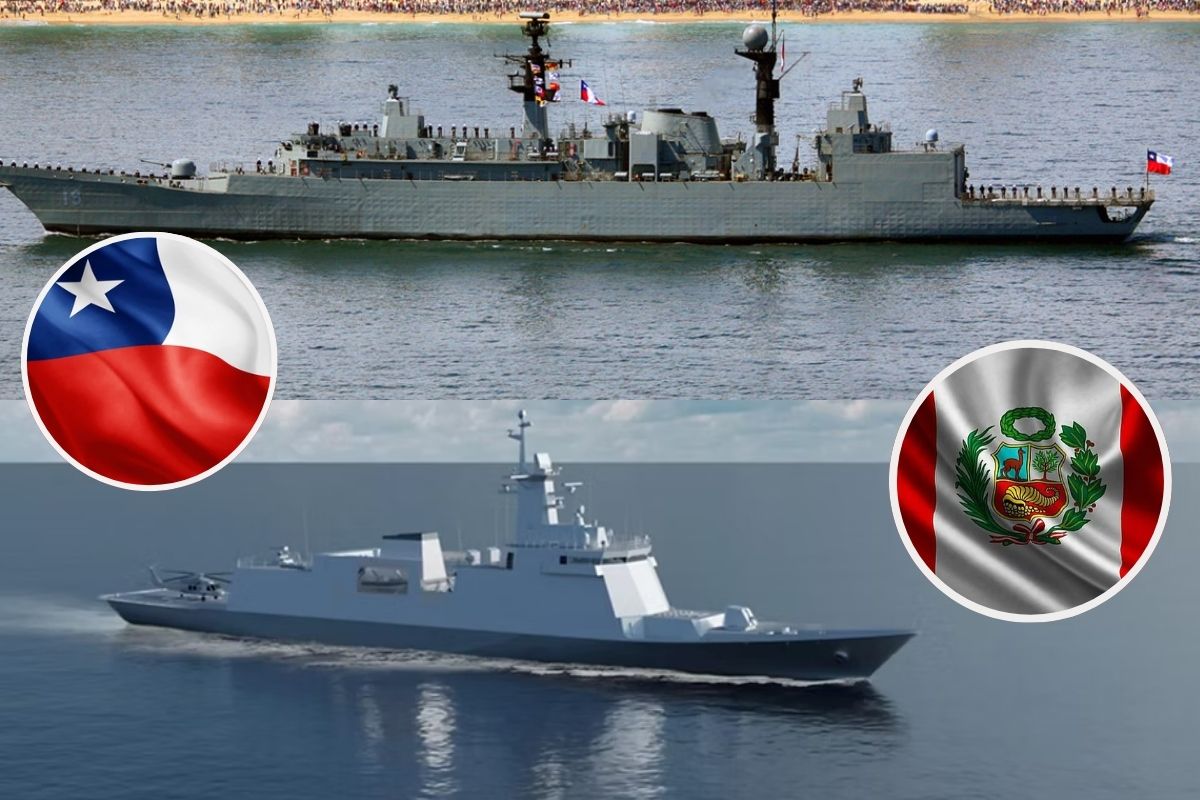
November 22 SIMA Peru formally announced the cutting of the first steel plate for the first multi-role frigate it is building with a Korean company.
The ceremony marked the official start of the ship renewal for the Peruvian Navy. During his speech, the general manager of SIMA PERU emphasized that the Multi-Role Frigate represents a strategic milestone to strengthen the country’s defense and update the operational capabilities of the Navy.
Additionally, the ceremony highlighted that the incorporation of cutting-edge technologies will coexist with local manufacturing, boosting skilled employment, technological transfer and the integration of Peruvian suppliers into the project.
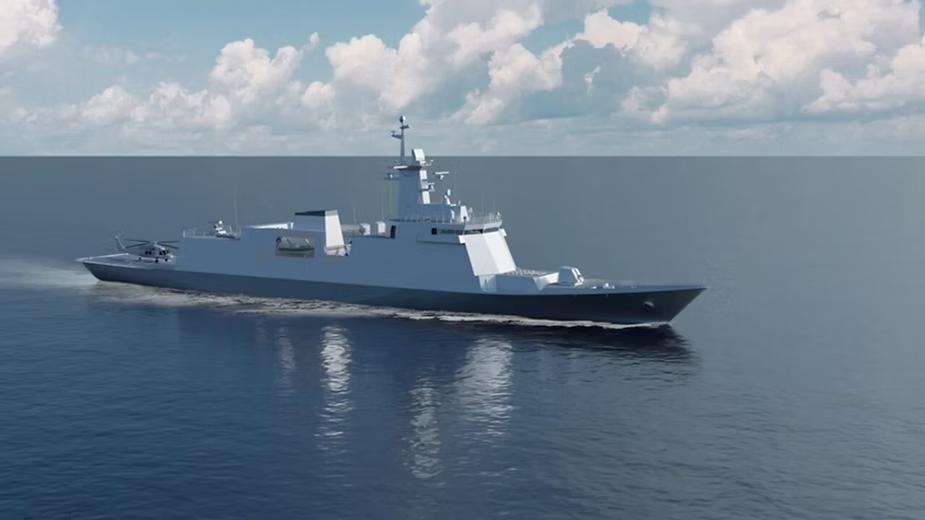
Frigates of Chile versus Peru
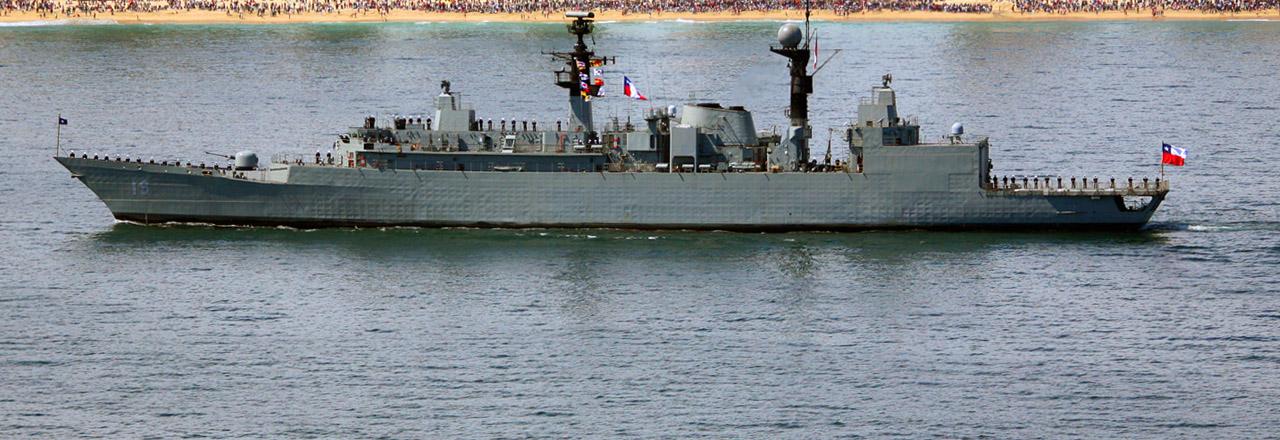
Considering that frigates are generally vessels characterized by versatility, speed, and maneuverability, any naval squadron or fleet worthy of the name must have some combat frigates. In the case of the Chilean Navy it is reported to have 8 vessels of this type.
The oldest is the Williams frigate, which was built in England in 1988, but has been in Chile since 2003. This means it has already been in service for 37 years. Alongside this vessel, there are reportedly 7 other frigate-type units according to the Chilean Navy’s website.
In the case of Peru, official information from the state website names 7 Lupo-type frigates from the late 1970s and early 1980s. Like Chile, it does not provide much detail. It all depends on the modernization processes to which the vessels have been subjected.
If we compare numbers, Chile’s naval power would be superior as it maintains a fleet of around 130 vessels. Peru, meanwhile, has just over 70 vessels.
Chilean and Peruvian squadrons: “If Chile does nothing, in 10 years Peru will be better than Chile”
We reconnect with an expert in the field. Richard Kouyoumdjian, a former member of the Chilean Navy and defense specialist, spoke with the Press Room. The main focus was, of course, the frigates.
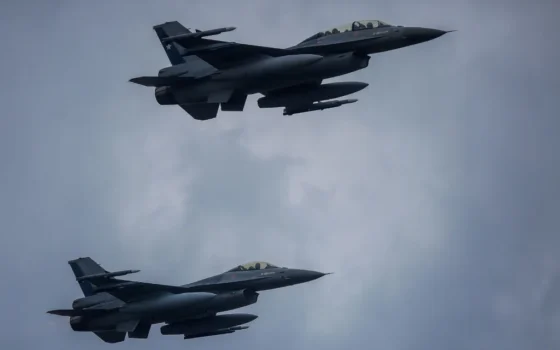
“Peru is trying to catch up”, Kouyoumdjian began. “Remember that they not only started with this contract (with South Korea) but also with the purchase of F-16s for $3.5 billion,” he specified.
“In naval matters, they clearly have a situation with their submarine force that is somewhat more complex than ours, as they are submarines from the 1970s and 1980s.” Regarding the Peruvian frigates, he commented that “Peru at one point operated, I would say, 4 Lupo frigates from the 1970s that were in service in the 1980s. Subsequently, they decommissioned the rest of the squadron, which were European, American, and Swedish vessels, and brought in 4 more Lupo frigates. I would say they must have about 8 at this moment. It is a combination similar to that of Chile with light corvettes and missile boats“, he pointed out.

Chile, as we know, has proposed a continuous construction project through the Shipyards and Arsenal of the Navy (ASMAR). The Escotillón 4 project is currently underway. However, the ultimate goal is to build its own warships, that is, combat frigates.
However, the Chilean project is evidently more delayed: the Peruvian project has already begun the construction of its frigates. Therefore, we asked Kouyoumdjian about what could happen in the short term with the power of the frigates from the Chilean Navy and the Peruvian Navy.
“Today Chile clearly has the best squadron, I would say the only one that could be compared is Brazil. At this moment, the Chilean Navy and its current capabilities are notably better in terms of material, training, and capabilities,” he stated confidently.
— When Peru, in two or three years, has its first Korean frigate, will Chile still be leading?
“Yes, still. The problem for Chile is in the 14 to 15-year timeframe. If Chile does nothing in 10 years, Peru will be better than Chile, but not now. All these issues are long-term. Here, the years pass quickly and planning errors also have consequences. The same applies to the F-16s. Our Air Force currently has capabilities and can face the three neighboring air forces and defeat them simultaneously, but in 10 years, if we do nothing, it won’t be the case,” he concluded.