COLUMN | On the Direction of International Relations, Security, and Defense in Chile
This article was translated automatically and may contain differences from the original. For reference, read the original.
- by Richard Kouyoumdjian
- Opinion
We must be demanding in the search for ministers and undersecretaries. It is acceptable for this to be a unity government, but one in which we would expect that unity to manifest through the freedom of action that the parties forming the governing alliance grant the elected President to choose the most capable individuals.
The purpose of this column is to guide the current discussion regarding the characteristics, profiles, and knowledge that those who will lead the ministries of Foreign Affairs, National Defense, Public Security, and a new role deemed necessary, that of National Security Advisor to the President of the Republic, should possess, with the aim of coordinating the aforementioned ministries as well as the national security and intelligence systems, which currently do not exist, need to be developed, and whose absence explains much of our recent problems.
The first step in designing a government is to understand that the President of the Republic is both Head of State and Head of Government (executive function) and, if there is a coalition or similar, the leader of that association. There are cases where the President, due to affinity, necessity, or strategy, decides to focus on a particular issue, as was the case with President Duque in Colombia, who primarily dedicated his time to security issues.
I do not know how the elected President expects to conduct himself during his government or what he will focus on, but all indications suggest that, being consistent with his campaign, it should initially be on public security and economic reactivation, or alternatively delegate these issues to very capable ministers who can advance them while he attends to the three presidential roles mentioned earlier.
Addressing the ministries in order of precedence, in Foreign Affairs , one would expect to see ministers with experience in the field, who know what they are doing and are not coming to learn, who come with a team and can play from day one. In Foreign Affairs, it is essential to understand that national interest prevails, that things like multilateralism are means and not ends in themselves, and that current priorities are regional relations and the reestablishment of relations with the United States of America and Israel. There are many candidates who fit this profile. It would benefit Chile to become an attractive destination for investment again, but this is more about eliminating local restrictions than a lack of external interest.
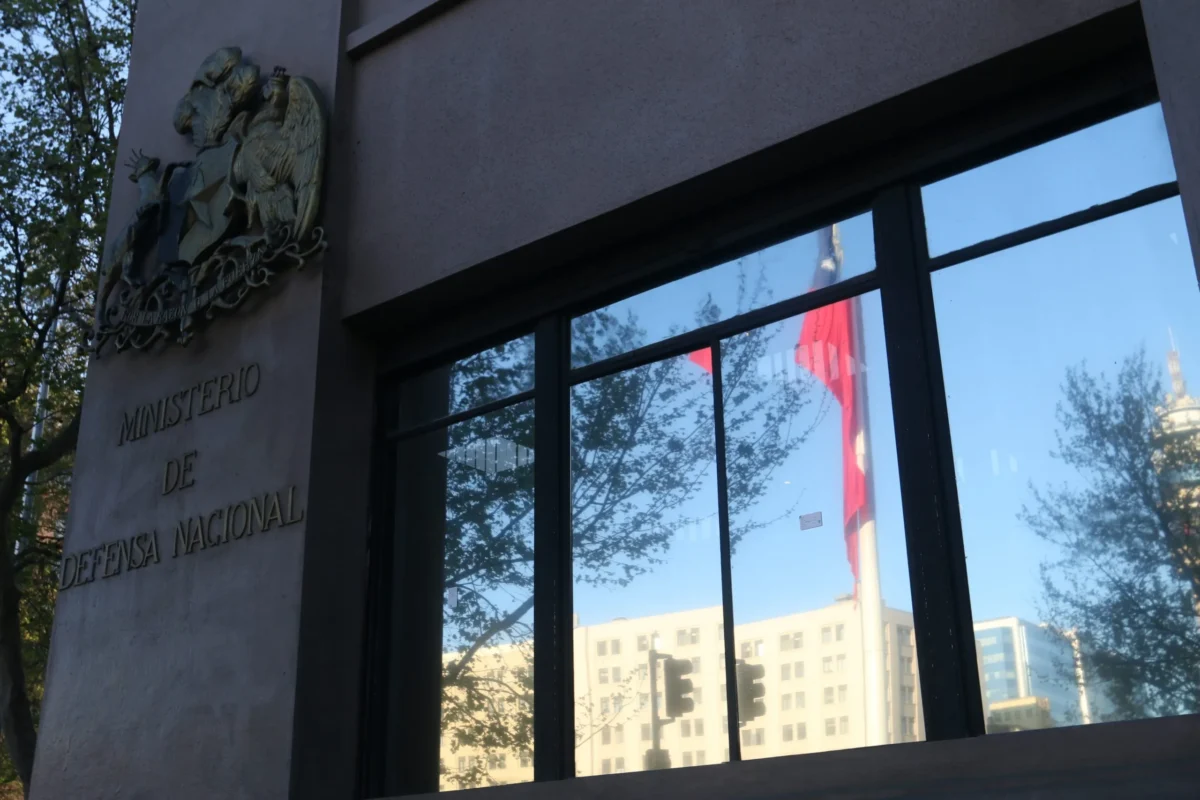
Regarding National Defense, it has been customary, since Aylwin’s government to the present, to place the direction of the ministry under politically significant individuals close to the President, but without substantial knowledge of the subject. Among them, those who knew the most about military matters were either members of some defense commission or had personal interest.
The main focus of ministers has been more on controlling the Executive over the Armed Forces than on their strategic development, which has primarily been delegated to the undersecretary, which is why significant advances have only occurred in direct correlation to the capabilities and knowledge of the second-in-command, as has been evident in recent times. It is different to speak of Izurieta, De la Maza, and Gaspar than of others who have shone by their absence or lack of progress in areas such as defense policy, military policy, and force development.
Perhaps it is time to appoint a minister who understands defense matters, just as would be the case for a ministry of Justice, Health, or Education. When someone is appointed who is only capable of managing but not developing National Defense, the results are more than evident, and we continue under the model of a minister who pretends to lead, and Armed Forces that pretend to follow orders, but continue to enjoy high levels of independence, which is only controlled through budgetary means.
Before moving on to the next ministry, a clarification that also applies to public security. A retired military or police officer is a civilian. Contrary to what some analysts are saying, a former uniformed officer does not jeopardize the subordination of the Armed Forces or police to the Executive Power. To understand otherwise is to misunderstand entirely, sounding more like the personal interest of someone seeking positions by discrediting other candidates.
General and senior officers in Chile enjoy high levels of training and experience, which includes interaction with the executive, judicial, and legislative powers. They are perfectly capable of serving as ministers and undersecretaries, as they demonstrated extensively during 17 years, which, although affected by regrettable human rights cases, were attributable only to a few. In all other matters, the military government performed quite well, having delivered to Chile a country very different from the one received, one that is the product of the modernizations and institutional frameworks established during that time.
When we look at the Ministry of Public Security there are those, like this columnist, who at the time spoke against its creation, so if they want to do something, return it to the Interior Ministry or designate the Minister of the Interior as a dual minister while it is dismantled. What does not apply is having a dual minister with National Defense, as Defense would then become a secondary priority, which is not advisable for the security of Chile in the medium and long term, as well as for the budgetary and operational conditions in which institutions are left after the four years of President Boric’s government.
It is not a good idea to ask recently elected senators or deputies to assume ministerial roles. They were elected by the Chilean people to represent them in Congress. It is not advisable unless there are very compelling state reasons to go against the will of the sovereign, which does not seem to exist. There are many other good candidates to occupy ministries, who should be chosen based on their capabilities, experience, and knowledge. Chile can no longer afford to have ministers and undersecretaries without the necessary qualifications. The results are evident.
Allow me to conclude by explaining the need for a presidential National Security Advisor. Chile has historically lacked a national security architecture. What we had under the original 1980 Constitution is not the same as a system that seeks to ensure that the ministries and organizations related to foreign relations, national defense, public security, intelligence, and other state agencies function in a coordinated manner, defending national interest, with a strategy that clearly outlines objectives, means, and their use.
Having a person of ministerial rank as a National Security Advisor is as important, if not more so, than the ministries that he must coordinate, and it is also possible to do what President Trump currently does, having his Secretary of State perform the role of National Security Advisor in parallel, which ideally should not be a part-time function, but if there is no one else to do it, better that than nothing.
Just as in the case of the ministries that make up the national security area, there are individuals who can perfectly serve in such roles, with the only requirement being knowledge and experience, which also applies when seeking directors for the National Intelligence Agency, Gendarmerie, ambassadors to neighboring countries, Washington, London, Madrid, and Beijing.
To conclude, we must be demanding in the search for ministers and undersecretaries. It is acceptable for this to be a unity government, but one in which we would expect that unity to manifest through the freedom of action that the parties forming the governing alliance grant the elected President to choose the most capable individuals. Chile needs to correct its course, and we must help the President, as he will not be able to achieve this alone.


