The regrettable and fatal ineffectiveness of Senapred
This article was translated automatically and may contain differences from the original. For reference, read the original.
- by Richard Kouyoumdjian
- Opinion
One thing is prevention understood as education and the generation of a preventive culture, but another is for the system based on existing information and predictive models based on AI to be capable of acting preventively.
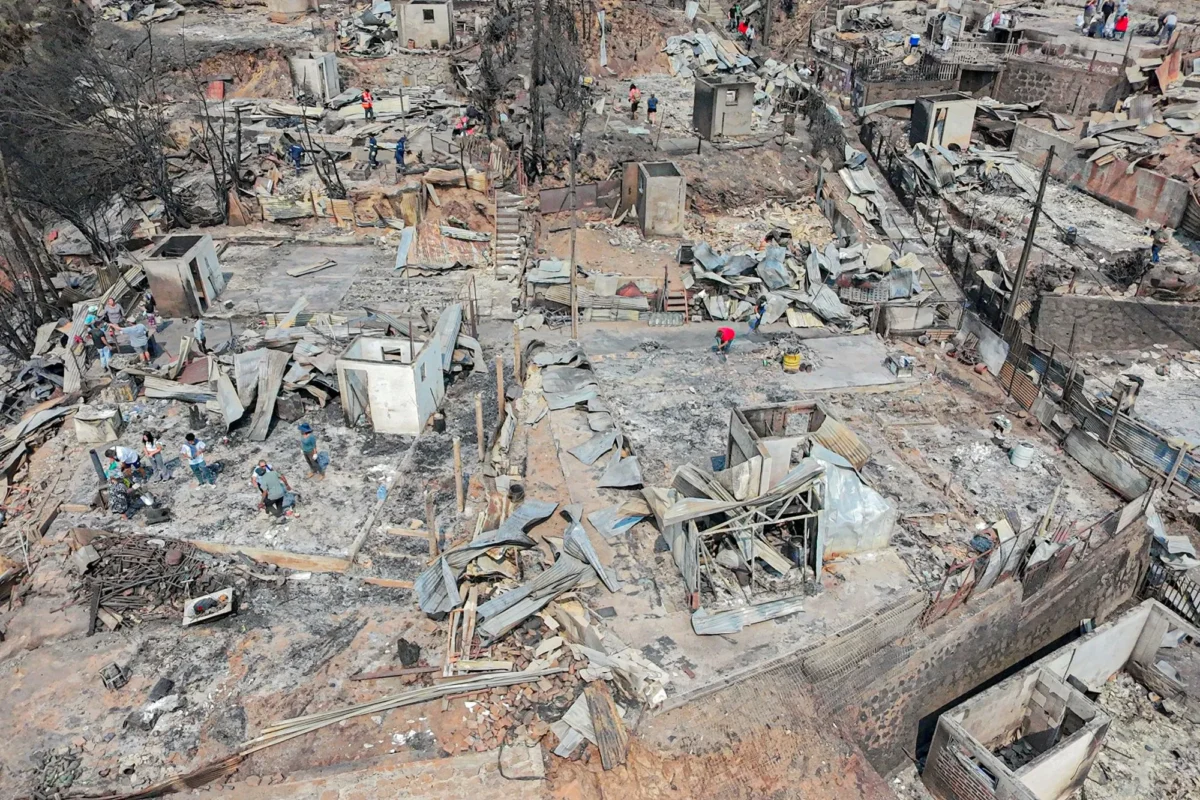
The families of the more than 130 deceased in the Viña del Mar fire in February 2024, or the 20 who unfortunately lost their lives mainly on the night of Saturday, the 17th to Sunday, the 18th in the Biobío and Ñuble regions, surely demand explanations for their dead from the National Disaster Prevention and Response Service (Senapred).
The Senapred was created by Law 21.364 to replace the former National Emergency Office (Onemi), which existed from 1974 to 2022. It began operations on January 1, 2023, with the aim of modernizing emergency management in Chile, transitioning from what was supposed to be a reactive organization to a service focused on prevention, more effective, with greater powers, authorities, and resources.
It defines itself as: “The National Disaster Prevention and Response Service (Senapred) is a decentralized public agency with legal personality and its own assets, responsible for coordinating the National Disaster Prevention and Response System (Sinapred). Our team is present throughout the national territory, with 16 Regional Directorates working alongside authorities, communities, and institutions to strengthen prevention, preparedness, and response to emergencies and disasters, with the purpose of protecting lives and reducing the risks faced by our country.”
I am sure that the idea behind the creation of Senapred was good and that the people working in that organization give their best, but events such as the aforementioned fires or the power distribution network outages in August 2024 due to the strong and hurricane-force winds that affected much of Chile indicate that, despite the efforts made, something is not functioning well or as we all expected.
AthenaLab, a think tank with which I am affiliated, published in March 2025 the working paper by risk expert Pablo Matamala titled: “Disaster Management in Chile: Institutional Framework for Prevention or Just for Reaction?”, which aptly indicates in its title the main flaw of Sinapred; it reacts well, as was the case with Onemi, but fails to be prepared for events that could be anticipated, such as wildfires and adverse weather conditions typical of Chile that can generate strong winds, mudslides, and floods.
In the opinion of this columnist, Senapred lacks real authority and responsibility for the performance of Sinapred, which is legally defined as a “National Disaster Prevention and Response System, composed of a set of public, private, and organized civil society entities that make their capabilities and competencies available for disaster risk management. This System is organized in a decentralized manner and in a staggered way, from the communal, provincial, regional, and national levels.”
The above sounds fantastic; indeed, it is good in some cases to work on issues in a decentralized manner, but for it to be effective, the central authority, in this case Senapred, must ensure that there is planning, training, resources, information technologies, satellites and drones, and a command and control system capable of managing the system as a whole, anticipating where possible, mobilizing resources preventively when necessary, all things that after three years it is still unable to perform in the manner that we all expect and that Chileans need.
Both in the Viña del Mar fire in the summer of 2024 and in the one from the past weekend, it was known that there would be high temperatures accompanied by winds that help wildfires spread. Why were preventive evacuations not arranged? Why was there no preventive mobilization of military, municipal, and private resources? The same applies to the strong winds of August 2024. Why were the organizations that must react not on alert, especially knowing the impacts caused in the regions of Los Ríos, Araucanía, and Biobío? In some cases, the absence of prior actions could have completely or partially prevented the deaths that occurred, and in the second case, the restoration of electrical services could have been faster and more efficient, avoiding deaths of those dependent on electricity and the paralysis of cities that increasingly can only function with electrical power.
One thing is prevention understood as education and the generation of a preventive culture, but another is for the system based on existing information and predictive models based on AI to be capable of acting preventively, deploying its means and capabilities to act sooner rather than later, thereby avoiding unnecessary deaths.
We are champions of reaction and solidarity, but we need, out of respect for the dead and their families, for Sinapred to function as a system and fulfill the objective for which it was designed. The national security of Chileans demands it.
“In memory of those who died in wildfires, mudslides, and floods that we could have prevented, as well as in the case of those dependent on electricity due to the absence of electrical power.”
The opinions expressed in this section belong exclusively to their authors and do not necessarily represent the official position of the institution.