Chile's Foreign Relations in the Current Global Context
This article was translated automatically and may contain differences from the original. For reference, read the original.
- by Richard Kouyoumdjian
- Opinion
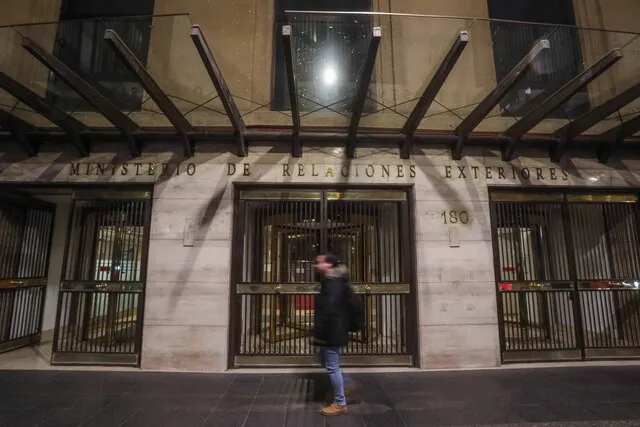
Chile's foreign policy priorities are the United States (the dominant continental power in the Western Hemisphere and the Americas in particular), China (economic relations), and neighboring countries.
In light of the new international reality marked by the National Security Strategy of the United States of America and its practical application in Venezuela, along with subsequent publications on war strategies and foreign relations, the following are reflections on what I believe should be Chile’s foreign policy and aspects it must consider. Starting from the macro to the micro, and using real examples from January 2026, these are:
The foreign policy of countries typically responds to national interests, except when some indulge in ideologies rather than what is important to the countries. We do not have to look far for examples of such behavior.
The logic of a country’s foreign policy is that it always responds to local political realities. Presidents and politicians know that it must resonate with their voters, rather than making logical decisions or doing what is best for the world. This is why sometimes some pursue epic impossibilities they call foreign policy based on moral principles, with speeches that sound very nice, appealing to those who hear them, but lacking realism and practicality in today’s world. It is excellent to have principles and to stand by them, but in the end, national interest must be the final consideration when making decisions.
The foreign policy of the United States of America clearly seeks to protect itself from what it considers threats to its security and national interest.
In this sense, the ultimate objective of its national security strategy is to neutralize China so that it is never a real threat to them, starting with preventing it from having strategic presence in the Americas (case of Venezuela). The war department’s strategy indicates that the United States will only address major threats, leaving the rest of the problems to be resolved by those most affected. There will be no more ‘free riding’; the time has come to assume the costs of defense.
The ambassador Brandon Judd has been very clear that his main role is to protect the interests and national security of his country and what that entails. Obviously, they do not look favorably upon China’s presence in strategic sectors such as satellite monitoring from facilities in northern Chile.
What countries like Canada or the EU say or do is neutral for Chile. They are clearly our friends, but in our reality as a small country globally, relevant regionally, dependent economically on China and Asia, but located in the Americas, what ultimately matters to us is what the United States or China say. The rest is unfortunately just background noise.
Navigating the above will likely involve ensuring that China does not have strategic investments in Chile, while continuing to trade as we have always done, since that trade has proven mutually beneficial. We should not draw attention from either side; we should simply focus on our own affairs, acknowledging our strengths and weaknesses and, above all, our tri-continental geographical, economic, military, and security reality.
Nothing prevents us from having good relations with middle powers such as those in the EU, as long as the United States does not consider it inappropriate, but it is estimated that it should not be a problem for such countries to invest in Chile, replacing the diminishing importance of Chinese investments, which will feel, for obvious reasons, unwelcome in the Americas, shifting their investments to areas of influence where they have more power and control, or as could also be the case in Africa with its mineral and raw material wealth.
The premier Carney when speaking in Davos gives a speech recognizing the new reality, but his solutions and call to action for middle powers are more rhetorical than practical, inapplicable, as reality demonstrated a few days later when he was told that if he signed a trade agreement with China, U.S. tariffs would be 100%. After that, Carney fell silent.
Continuing with premier Carney as an example, when he speaks to his electorate as he did regarding tariffs, he seeks to establish some type of association of middle powers akin to non-aligned countries with the EU, the United Kingdom, and countries of that sort. He knows it is difficult to do so because, at the end of the day, they all depend on their relations with the United States or China, the superpowers of the moment.
There are abundant examples of how middle powers yield to the United States. Canada, Brazil, Mexico, Colombia, the United Kingdom, the EU, and others have all ended up yielding to President Trump. They do so trying to save face and appear strong, but in the end, everyone yields. No one can withstand the pressures of economic actions such as tariffs. The economy always dictates and pays.
In the meantime, China takes advantage of the time, preparing its consolidation in its sphere of influence. The same is true for the Russians. Europeans are beginning to see that there may be options for them as a fourth sphere of influence by default, but to do so they know they have to pay and that it will not be free. NATO has ceased to exist; it no longer has purpose or objectives. Canadians are unfortunately lost, practically like Greenland; physical proximity to the United States has benefits but great costs when seeking an independent path. Ukraine will eventually have to face its reality. It is only a matter of time. I do not see the United States coming to its rescue, and the Europeans are only willing to provide financing and arms, but not troops on the ground.
Given the global reality, it is estimated that Chile’s foreign policy priorities are the United States (the dominant continental power in the Western Hemisphere and the Americas in particular), China (economic relations), and neighboring countries, both for being neighbors, which is always important, and for economic issues and the insecurity that affects us equally. A deeper relationship with Argentina is something we should seek, overcoming past problems, but understanding that there are border and maritime issues that we must resolve adequately. With Peru, we must wait to see how the 2026 elections unfold, and with Bolivia, we should not rush the establishment of full diplomatic relations. One thing is to assist in the recovery of Bolivia’s economy, understanding that what happens there is not neutral for northern Chile, and another is to think that Bolivians will yield in their claims of sovereignty, access to the Pacific, and the recovery of Antofagasta, all issues used by politicians to generate unity in a highly divided country. Even the most popular president of Bolivia will not rewrite the Constitution, accepting the realities following the Pacific War. To do so would be immediate political suicide.
But more importantly, it is to have a Foreign Ministry and diplomats that allow us to successfully navigate the aforementioned scenario. One that understands that concepts like multilateralism are means and not ends, that what guides foreign policy is national interest, that they are one of the instruments of national power, and a fundamental part of the national security system, and that they must work together and united with National Defense and Public Security for a safer, sovereign, and prosperous Chile.
In conclusion, if you have not done so, I recommend reading the trilogy of strategic documents from the United States, starting with the National Security Strategy, the one from the Department of War, and the one from its Foreign Ministry. All aligned and consistent, with absolute clarity, leaving no doubt about President Trump’s will regarding these matters. Matters in which he has the support of his Secretary of State and National Security Advisor, Marco Rubio. If you receive a call from him, it is advisable to answer.
The opinions expressed are those of the author and do not necessarily represent AthenaLab.


