What is the purpose of the Armed Forces of Chile?
This article was translated automatically and may contain differences from the original. For reference, read the original.
- by Richard Kouyoumdjian
- Opinion
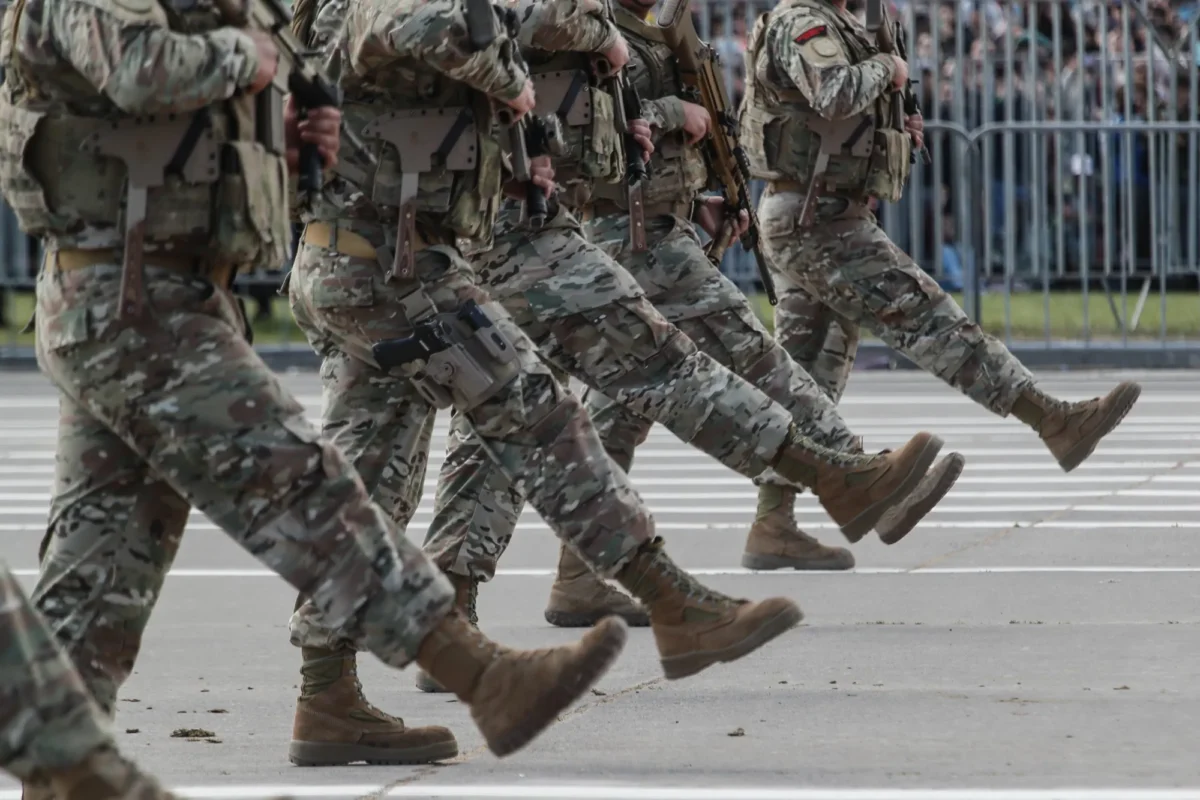
Strong budgetary discussions are anticipated due to the tight fiscal situation, which is why in recent weeks I have dedicated a couple of columns to the concerning financial situation of the National Defense, including the presidential responsibility in this fundamental and non-delegable state matter.
On this occasion the idea is to understand the purpose of the Armed Forces of Chile, what they do, what we can demand of them, what resources they have to carry out their tasks, and why we must care for and protect them from those who do not see value in them, often due to ignorance or having other political interests.
It is important for the new authorities taking office to remember that Article 101 of the Constitution of the Republic states that the Armed Forces are under the ministry responsible for National Defense, and are constituted solely by the Army, the Navy, and the Air Force. They exist for the defense of the homeland and are essential for national security.
The Chilean Constitution does not detail what is meant by homeland or what is understood as essential for national security, nor does it define national security as a concept. The constitutional organic law of the Armed Forces does not do this either, but this latter legal framework does add two aspects of great interest in its general provisions:
It states that they exist for the defense of the homeland, are essential for national security, and guarantee the institutional order of the Republic, and that, to achieve the aforementioned permanent and not circumstantial objectives, it relies on an adequate level of personnel and material readiness, and on the fulfillment of the oath of service to the homeland and defense of its fundamental values.
The organic law of the Ministry of National Defense does not add anything new regarding purposes, reaffirming and confirming what is stated in the Constitution and the constitutional organic law of the Armed Forces. With all the above mentioned, we can address the questions posed at the beginning.
Question 1: What is the purpose of the Armed Forces? In short, for the defense of the homeland, which encompasses the territory and its inhabitants, the seas through which it navigates, its commerce and the wealth it contains, the airspace we use to transport people and goods, and the space from which we monitor and protect what happens in Chile, as well as wherever national interests are located, something closely linked to foreign trade and the economic survival of Chileans, which can clearly be very distant, but critical, very critical for our reality as a country open to the world, both an exporter and importer.
The essential nature is evident, they are the main component of defense and, therefore, of national security, but it is common for this concept to be misused by the political world when they interpret the concept of national security at their convenience, leading to the use of the Armed Forces as a broad-spectrum antibiotic that can cure all ills.
Question 2: What do they do? They train to be lethal and effective in warfare. If they manage to be efficient in this regard, they will be able to deter potential enemies from attacking Chile or seeking to harm its interests.
In Chile and elsewhere in the world, because we are not always at war or in danger, efforts are made to utilize their versatile capabilities, which are provided by their logistical, organizational, and operational capacities in non-combat roles such as responding to climate emergencies, earthquakes, and tsunamis, attending to extreme areas, and supporting the State’s foreign policy. The issue is that these important but non-critical tasks confuse and distract from the main focus, so it is always necessary to ensure that they do not become primary alongside the supposedly extraordinary contributions they make to public security under the regime of constitutional exceptional states or the safeguarding of critical infrastructure, including borders, which the political world additionally demands of them.
Question 3: What can we demand of them? Essentially, we can and must demand that they be prepared to fulfill their constitutional mandate and what is outlined in their constitutional organic law. Their permanent use in public security tasks, border control, or anti-insurgency, while they may be considered essential from a national security perspective, is not what they are designed for, which is nothing other than the primary task of defending Chile, its territory, and sovereignty.
Question 4: What resources do they have to carry out their tasks? With the budgets allocated to them by the State, both for their operations and investments in strategic capabilities, including Chileans who serve in the three institutions, in the Joint General Staff, and in the Ministry of National Defense itself.
The current problem is that the allocated resources are insufficient, preventing adequate training and preparation to ensure the primary mission, as well as the supposedly exceptional tasks required of them. The funds are limited and soldiers are nearly nonexistent. As indicated in previous columns, this is the main problem, one that was not addressed in the previous four years and would be negligent not to address in the four years of President Kast’s government and his minister Barros.
Question 5: Why must we care for and protect them from those who do not see value in them? I refer to what the Constitution states, they exist for the defense of the homeland and are essential for national security. If that is not reason enough, we might as well close the establishment and go home.
I hope I have clarified the purpose of the Armed Forces of Chile, which have provided us with hundreds of years of peace, tranquility, and prosperity, and in a tumultuous, uncertain, and complex world, are something that is better to care for and develop than to neglect. We do not want the Armed Forces of Chile to experience what happened to those of Argentina under the governments of the Kirchners or Alberto Fernández.
Obviously, it will always be politically more correct to prioritize social spending over defense spending, something that politicians seeking votes favor, something they prioritize until the threats become too evident and there is no time to build or develop strategic capabilities.
To conclude, I leave you with three things to consider. The Armed Forces of this country, Chile, are among the few, if not the only ones that think strategically, looking at the medium and long term. Their mission to protect and care for Chile compels them to focus on what is important and not on political contingencies. They are not concerned with the short term; they are concerned for Chile, their homeland, for which they swear to give their lives if necessary.
They are composed of Chileans from north to south, from the coast to the mountains, from all social, economic, cultural, and racial backgrounds. They are the only instrument of national cohesion that exists, something that has no comparison, as they attract all the children of the homeland for their defense and existence.
They have been key in technological development and innovation, stemming from their need to be prepared for war and the defense of Chile. The Navy, the Air Force, and the Army have been pioneering institutions in bringing and developing new technologies, adapting them for civilian and everyday use.
Among others, under their auspices, Famae, Asmar, and Enaer were developed, companies that work in conjunction with the national industry, promoting technological innovation and the existence of start-ups.
Their schools have always been at the technological forefront, and we must ensure that this continues. The engineers and technicians who study there are highly valued and of world-class military quality. They play in the top tier of defense professionals, under NATO standards.


