Strategic Lessons from the Chinese Cablegate
This article was translated automatically and may contain differences from the original. For reference, read the original.
- by Richard Kouyoumdjian
- Opinion
It is time to understand how the new world operates, one in which each power has its sphere of influence, where they establish the rules regarding security, and where the national interest of each is paramount, but this does not mean that ours is rendered null.
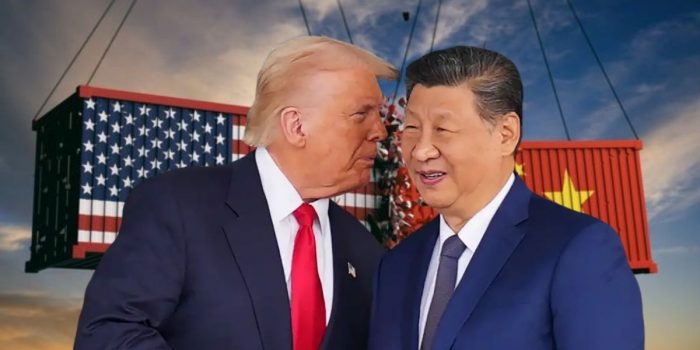
The withdrawal of three official visas by the United States government on Friday, February 20, from three officials of President Boric’s administration, due to the “Chinese Cablegate,” created a crisis in the outgoing administration and significant concerns for the incoming administration set to take office on March 11, as it appears they will inherit the Chinese shoe we are stuck in.
Chile had been relatively isolated from what was happening further north in the Latin American region, which constitutes the main part of the Western Hemisphere, a geography that was declared a priority for the United States in its recently published National Security Strategy, as well as in the directives issued by the State and Defense Departments of that country.
Venezuela, Colombia, Mexico, Canada, Nicaragua, and Cuba, among other countries, are experiencing firsthand the importance that the Trump administration places on national security and the protection of national interests in this area. In Chile, it took the withdrawal of three visas to note that the United States National Security Strategy applies to the entire region, particularly regarding Chinese investments in strategic areas such as telecommunications, data processing and storage, ports, electricity generation and distribution, oil, rare earths, lithium, and copper.
The United States strategy does not seek to prevent us from trading with China. They are aware of the irreplaceable economic importance that China holds for Chile and the countries in the region, as well as for themselves. They do not seek to compete with China, as long as China restricts itself to its sphere of influence, which is Asia, and does not intrude into areas considered strategic within its own sphere, namely the West and, more specifically, the Americas, or what some mistakenly call the backyard of the United States.
They do not want China to have access to raw materials that would allow it to enhance its strategic military capabilities that could jeopardize their security. They also do not want them involved in data transmission and storage, aspects that, due to digitalization and technological development, acquire a value equivalent to having nuclear weapons, as whoever controls the processing, storage, and transmission of data, controls the information, being able to manipulate it or use it to their advantage or against their adversaries. Information is the primary asset of the digital age, and it matters who manages it.
It is in the realm of data transmission that the issue of submarine cables gains significance. The majority of data circulates through cables running under the sea rather than through satellites. Knowing what goes in and out, or being able to allow its transmission or cut access, holds high value, which means investments in this area cannot be viewed solely from an economic perspective.
When examining the issue of submarine cables, they are primarily located in the Northern Hemisphere. So far, our data and that of the rest of Latin America predominantly head north, to then be distributed west and east, depending on their destination, which implies that North America has control over the transmission of this data, whether in terms of content or movement. Therefore, allowing a Chinese cable to run from Chile directly to Hong Kong without their control is something they are unwilling to accept; it is a risk they consider intolerable, jeopardizing a region that is within their sphere of influence regarding security.
The Humboldt cable, which connects Valparaíso with Australia, passing through French Polynesia, where it also connects with a ring linking it to Fiji and Guam, is a Google development in which the Chilean government has a minority stake, but which provides guarantees to the U.S. government regarding control and security, both in terms of what goes in and what comes out, whether in Australia, in the South Pacific ring, or in its subsequent exits to Asia.
For more information, it is recommended to see details of the Google project that aims to provide connectivity to the South and Central Pacific in terms of data. The project is known as Bulikula and Halaihai (https://cloud.google.com/blog/products/infrastructure/introducing-bulikula-and-halaihai-subsea-cables-to-connect-the-central-pacific).
The issue generating the discussion is not of an economic nature, or at least it is not a concern for the Chinese. The issue is control over the data that circulates, due to its strategic value and the implications from a national security perspective, as well as the custody and processing of data, which is why the U.S. government requires us to have cybersecurity capabilities regarding data they share with us, such as those provided as part of the Visa Waiver program.
If we cannot provide assurances, the program will end. If we hand over to Chinese companies the processing, custody, and transmission of data from the Civil Registry, police, Public Ministry, National Defense, or any matter considered sensitive, we will lose the most advanced support in these areas.
We will also be required to improve our intelligence and counterintelligence services, cybersecurity, and have a national security system that assures the United States that we can be a reliable and secure partner regarding critical infrastructure, particularly of a technological and digital nature.
Having a technological and digital infrastructure with high control standards would even allow us to connect with China, as long as it provides them with the assurance that we know what goes up the submarine cable, something we cannot guarantee with the Chinese cable, as everything is controlled by China Mobile. The United States allows direct cables from Australia to China, but it does so because Australia has sophisticated control capabilities over everything that goes up and is transmitted.
Chile will have to review with the United States what it does in this area and what is acceptable to them, in order to provide the assurances that the U.S. requires. President Boric’s government has already referred this to the administration of elected President Kast. The solution will necessarily involve a redefinition of the control of the data that goes up the China Mobile cable, and this implies generating regulatory definitions that currently do not exist, but that we should have had before embarking on these projects.
The relationship with China cannot afford more unforced or beginner’s errors, mistakes that arise from the absence of regulations in strategic matters or critical infrastructure. Stopping the Cerro Ventarrones project, along with the cable that connects us to Hong Kong, places stress on the good relationship we have with China, by far our largest trading partner.
It is time to be strategic, intelligent, and to understand that we can no longer navigate life naively, carelessly, and unprofessionally. It is time to understand how the new world operates, one in which each power has its sphere of influence, where they establish the rules regarding security, and where the national interest of each is paramount, but this does not mean that ours is rendered null. We only need to understand what is important to the superpowers, that is all.