COLUMN | Politics of Nothing: A Response to Mathieu González
This article was translated automatically and may contain differences from the original. For reference, read the original.
- by Richard Kouyoumdjian
- Opinion
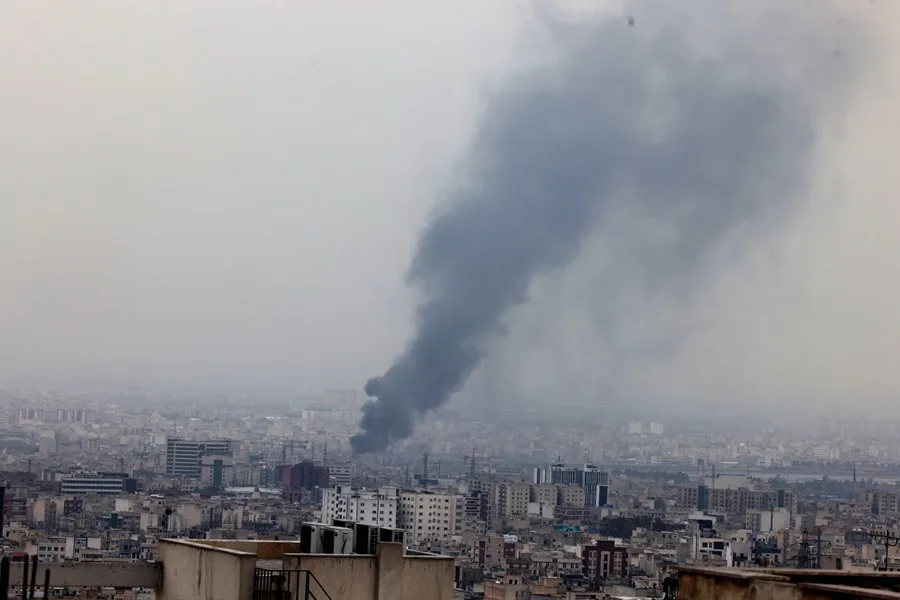
The world is very cynical; many benefit from a Iran without ayatollahs, but few are willing to pay to be free from the threat they represent.
On Saturday, March 14, UAI professor Mathieu González responded to a column I published on March 6, titled “Is the Third Time the Charm? Clerics with No Options in Iran” .
I appreciate both the recognition of my work and the response, as it allows me to address the main observations he makes, as well as to discuss the attack on Iran more than two weeks after it began, since we have 10 more days of observation of the events that have occurred and, therefore, the opportunity to make observations with more evidence.
The first observation he makes is that he believes my assertion of 47 years of war is incorrect. This idea, of 47 years at war, is one I fully share, one that comes from several prominent American analysts and academics, who defend it when analyzing the conflict between Iran and the United States, which began with the arrival of the clerics to power in February 1979, who have as their main and declared enemy the Americans and the Israelis.
There is clearly no doubt about that, nor about the fact that the Iranian regime has done everything possible to attack, directly or indirectly, U.S. interests, something that the current administration, that of Donald Trump, unlike previous ones, is not willing to tolerate, just as it is not willing to tolerate anything that jeopardizes its national security.
Evidently, a nuclear and ballistic-capable Iran is not something they appreciate, and therefore, it is something they have dedicated themselves to neutralizing or eliminating. This is something that no one likes, including the Chinese. In this effort, they are accompanied by the Israelis, as they too are a target of Iranian desires, who want to eliminate the State of Israel and the Jews who inhabit it, something they have dedicated efforts to for the 47 years since the ayatollahs overthrew the shah.
Regarding American technological superiority, I believe I am correct in saying that, whether alone or with the help of Israel, they have been able to conduct military operations with little opposition, currently possessing an air superiority that allows them to select where and when they will attack and the targets to hit. The losses they have suffered have not been due to a lack of capability, but rather inherent to high-risk activities, such as aerial operations in complex environments.
Having fewer than 15 casualties to date in this response, with over 50,000 U.S. personnel deployed in the Middle East, speaks very well of the military capability of the United States.
Evidently, having a 100% effectiveness in missile and drone defense is something that does not currently exist, and it does not exist mainly due to the cost it entails, but surely in the near future they will achieve cost-effective solutions. That said, if one observes the Israeli model, to which a laser component is now added, one knows that it will not reach 100%, but that such a percentage is achievable in terms of protecting human lives and critical infrastructure.
More important than the above is the poor performance of the Russian and Chinese systems used by Iran for its defense. Part of the U.S. objectives is to test their military capabilities without having to confront China or Russia directly.
What is being learned from the attacks of 2024, 2025, and the one currently underway will generate conclusions and lessons for the U.S.-Israel duo, as well as for the Chinese and Russians, but more importantly: it will allow the U.S. to see if its new way of waging war—one more based on air assets, with precision technology, with extensive use of AI, which avoids the need to use troops and thus minimizes the loss of human lives suffered in Iraq and Afghanistan—is feasible, and if not, what needs to be improved to make it possible. For now, they have won by a landslide.
What many analysts struggle to understand is that the great and only enemy the United States has, and which is not something invented by Trump, is China. If we look at the case of the action taken in Venezuela, the objectives may have been various, but the main one is to deny China access to Venezuelan oil, oil that the United States does not need, but which is important for China.
When we look at the case of Iran, the United States attacks for several reasons, including the fact that Israel was going to attack regardless, with or without the Americans, as they seek to eliminate Iran’s ballistic capabilities. They attack because, among other things, the opportunity arose to eliminate a good part of the Iranian leadership, but primarily the United States attacks because it was given the chance, through the attack on Iran, to affect China and its oil supply, one in which Iran represents 14%, but more importantly, one that is greatly affected by the closure of the Strait of Hormuz, as more than 50% of the oil consumed by China comes from the Persian Gulf and/or the Gulf of Oman.
The United States offered China an area of influence in its national security strategy, but that does not preclude them from seeking to degrade the economic, industrial, and technological capabilities of the Asian giant, directly or indirectly. Attacking Chinese oil supply is one way to do so, especially when the supply coming from Venezuela and Iran was not paid for in dollars or through the normal market. It was done in Chinese currency and at a discount, as both countries are sanctioned. It was conducted using so-called ghost fleets, which also serve Russian interests in oil matters.
After more than 15 days since the start of the attacks, Iran is without significant capabilities. Soon they will run out of missiles or drones, leaving them at the mercy of the United States and Israel. It is true that the situation is complicated in the Strait of Hormuz, but everyone forgets that the Americans are self-sufficient in oil, with the only affected party being the rest of the world, which does not want to help ensure free passage.
The rebellion of middle powers will not result in anything, and it is very likely that the Americans will soon achieve total control of the Persian Gulf, the Gulf of Oman, and the Strait of Hormuz, which, if they manage to do, they will charge dearly to those who did not support them.
The world is very cynical; many benefit from a Iran without ayatollahs, but few are willing to pay to be free from the threat they represent. We will see what China does, but for now, the meeting between Xi and Trump has been postponed, with China literally trapped in a Chinese shoe, from which they can only free themselves if they come to ensure free passage or exert pressure for the clerics to surrender.
For now, it is clear that, like the rest of the world, they will pay dearly for their oil. We will see how long they and the middle powers can endure, which will soon discover that the whims of someone like Carney lead to nothing.
In conclusion, the duration of this conflict, more than being in the Strait of Hormuz, lies in the internal politics of the United States, in the midterm elections in November, and in the impact on the American economy of the current conflict.
If the pre-election polls are bad for the Republicans, Trump will end the attack and declare his objectives accomplished. If the situation does not look bad, he will continue to hit the Iranians hard and indirectly the Chinese. President Trump always seeks to maximize his utility.
Richard Kouyoumdjian