COLUMN | The Importance of Public Order Control and the State's Deterrent Capacity
This article was translated automatically and may contain differences from the original. For reference, read the original.
- by Richard Kouyoumdjian
- Opinion
In public security, unlike other areas of government, there is no issue with acting firmly and decisively. This is what Chileans expect from the government of José Antonio Kast, from the newly established Ministry of Public Security, and from the police forces reporting to Minister Steinert.
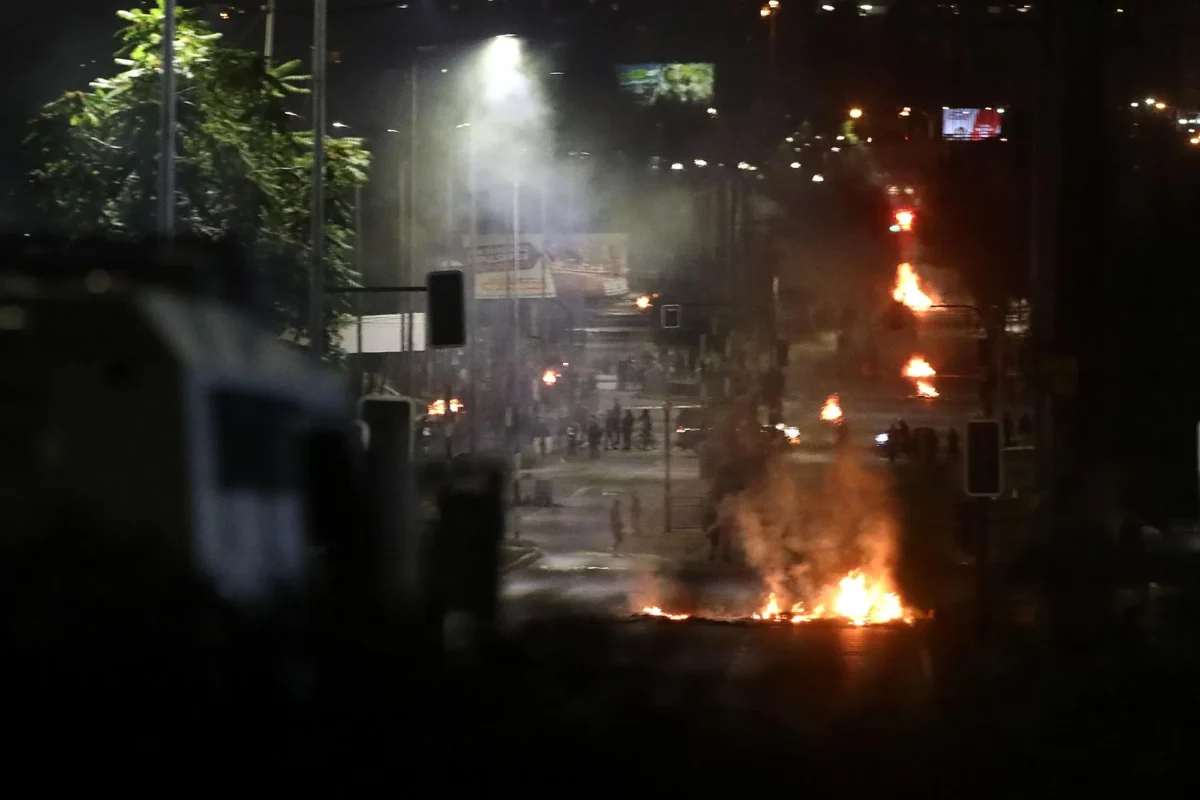
As has traditionally been the case, the Day of the Young Combatant was marked by high levels of violence, the use of firearms and explosive devices, material destruction, and, more concerning, several injuries, including innocent young civilians with gunshot wounds. The night from Sunday, March 29 to Monday, March 30 was not very different from previous instances and confirmed that the more revolutionary left, that of the criminal outbreak, will use dates like these to test the government’s willingness to act and the capabilities of Carabineros regarding public order control.
In the Metropolitan Region, there was criminal activity in San Bernardo, the Lo Hermida sector of Peñalolén, Estación Central, Cerro Navia, Huechuraba, Pedro Aguirre Cerda, and Quilicura, which adds to the actions that took place in the regions of Valparaíso, Biobío, and Araucanía. The most violent incidents occurred in Villa Francia and Cerro Navia, on a night that included attacks on Carabineros and concluded with 193 arrests, 127 of which were in the Metropolitan Region, and the remaining 66 in other regions. Of the total, 15 are foreigners and 23 are minors.
One might say they were testing the government, just as students did a few days ago, an activity that was also very violent and ended with several young people detained. It is clear that the government acted with energy and determination in the use of state force, and it is crucial that the efforts made by Carabineros are not diluted through sloppy actions by the Public Ministry or by courts that release criminals due to alleged lack of evidence.
It is interesting that, despite the decisive action of the police on the night from Sunday to Monday, students attempted to set fire to Liceo Lastarria with Molotov cocktails on the morning of Tuesday, March 31, in a clear indication that we are not succeeding in deterring violent individuals from committing attacks against people and public infrastructure.
What occurred both last week and in more recent days is a clear indication that we do not have available intelligence that allows us to anticipate and prevent the occurrence of violent acts like those recently experienced. We allow crimes to occur, most of which are largely announced, we do not take prior actions and only act when they are destroying or setting fire to the city, forcing Chileans to avoid exposure, to remain trapped in their homes, to be captured by antisocial elements who dominate, and worse still, they carry out a very effective deterrence, but in reverse, doing what they want, when they want, and where they want. They have the initiative and we react.
As concerning as the above is the fact that we do not have enough police officers to simultaneously manage public order and security issues. This is despite the fact that both the Constitution of the Republic and the Organic Constitutional Law of Carabineros establish that:
Article 101 of the Constitution: “The Forces of Order and Public Security are composed solely of Carabineros and Investigations. They constitute the public force and exist to enforce the law, guarantee public order, and ensure internal public security, in the manner determined by their respective organic laws. They depend on the Ministry responsible for Public Security.”
Article 1 of the Organic Law: “Carabineros de Chile is a technical and military police institution that integrates the public force and exists to enforce the law; its purpose is to guarantee and maintain public order and internal public security throughout the territory of the Republic and to fulfill the other functions assigned to it by the Constitution and the law.”
During President Boric’s administration, the insufficient staffing of Carabineros was already an issue, and that was despite the fact that, for obvious reasons, public order was not a topic in his government. Imagine the problem President Kast will face, as, just three weeks into his administration, public order is already strained, and when that happens, the likelihood of public security being affected is high.
Just like in war, effective deterrence implies that the counterpart does not act because they are clear that if they do, the punishment they will face will be so severe that they prefer to behave. I gain nothing from having tremendously capable forces if they are not able to prevent the occurrence of public disorder. I gain nothing if I do not have intelligence, whether provided by the National Intelligence Agency (ANI) or by police intelligence, that allows me to anticipate and prevent violent and destructive actions. I gain nothing if the Public Ministry is unable to bring criminals to justice or if, once detained, the courts release those who destroy, burn, injure, or kill.
Evidently it helps to see the President, his ministers, police chiefs, presidential delegates, regional secretaries, and mayors committed against violence, accompanying the Carabineros commanders at their control and monitoring posts. This clearly goes in the right direction, it is a strong political signal, but for it to become effective deterrence, more than that is required, that every disorder be confronted with the full force of the State, that intelligence acts in advance, seeking to prevent crimes from occurring, placing all those who challenge the State in prison, making it clear that the government is in charge and not the violent individuals, that Carabineros control the streets and not the criminals.
I remember that in Argentina, at the first instance when the piqueteros came out to test their strength against the government of Milei, Patricia Bullrich, the then Minister of National Security, acted very decisively, with all the power of the police. The result was that since then, public order ceased to be an issue, goodbye to the piqueteros who had been causing trouble for years. We must learn from our neighbors the good practices they have developed in public order control, good practices that allow them to effectively focus on combating drug trafficking, organized crime, and delinquency, without having to waste energy on addressing disorders and violence.
In conclusion, I want us to understand that we must act with the maximum force of the State in such a way that they effectively deter any attempt at public disorder, that we need intelligence services to prevent their occurrence, and that, if they exist, both the Public Ministry and the courts act with the utmost rigor, sending a clear signal that it is not a good idea to go against the State of Chile and the Chileans. If we do not do this, we are in trouble, as we do not have enough Carabineros for everything and we must be efficient and effective in their use.
In public security, unlike other areas of government, there is no issue with acting firmly and decisively. This is what Chileans expect from the government of José Antonio Kast, from the newly established Ministry of Public Security, and from the police forces reporting to Minister Steinert.