COLUMN | How Much Should We Invest in National Defense?
This article was translated automatically and may contain differences from the original. For reference, read the original.
- by Richard Kouyoumdjian
- Opinion
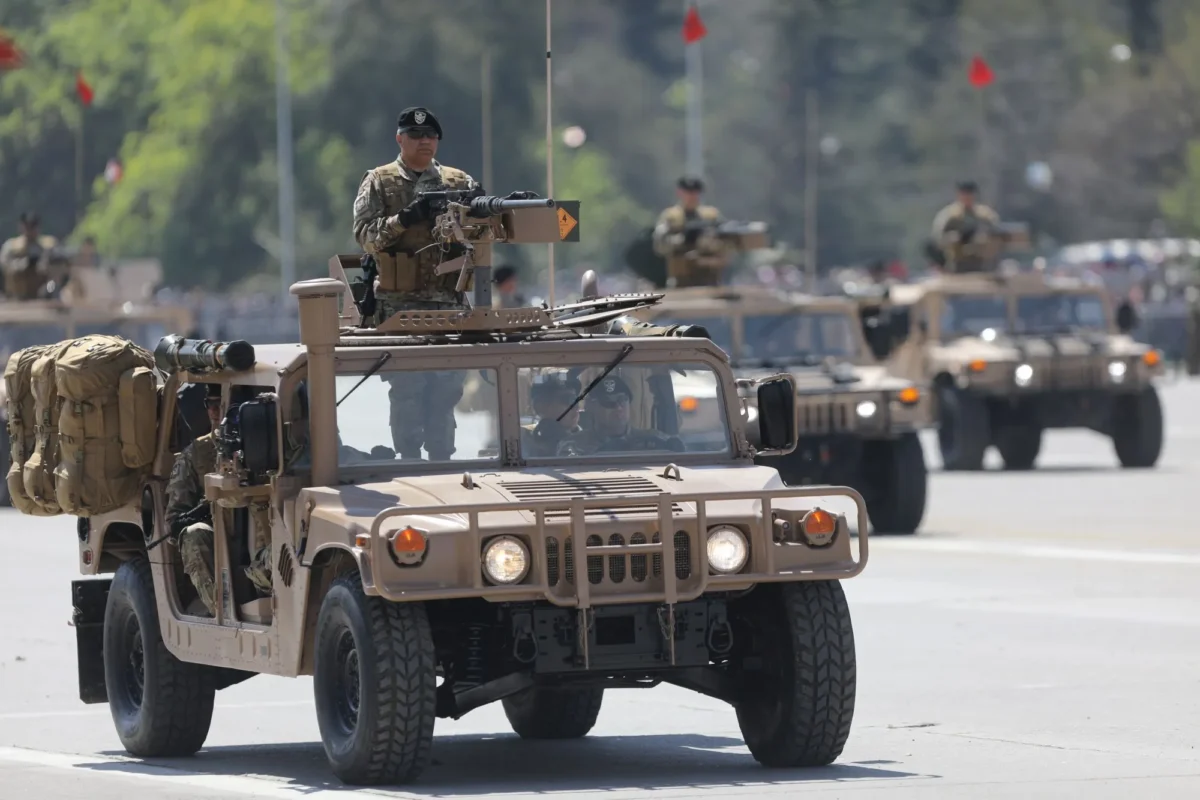
Defense spending has remained stable over the past 15 years, but the country to be safeguarded is different; its value is higher, and the global geopolitical reality is considerably more complex.
It is reasonable and healthy for a country to allocate around 2% of its Gross Geographic Product (GGP) to defense spending and investment, aiming for 5% if circumstances are complicated.This is what Europe should aim for now that the United States has conveyed the message that, to continue enjoying their protection, including the nuclear umbrella they provide, Europeans will need to invest more than they have since the end of the Cold War.
For those of us who like to use the countries of the Organization for Economic Cooperation and Development (OECD) for comparison purposes and as the standard we should aim for in all areas, particularly in military spending, the average for the OECD has already surpassed 2.6% in 2024 and is rising rapidly, potentially exceeding 3% by now.
As of now, Chile spends annually (at an exchange rate of $900) US$ 2.5 billion in the Ministry of Defense, plus about US$ 500 million in funding for strategic capabilities, as investments are approved and the fiscal budget allows, and US$ 2 billion in pensions paid through the National Defense Pension Fund (Capredena), from a budget that falls under the Ministry of Labor and Social Welfare. All of this totals approximately US$ 5 billion.
For general calculations, I am including the budgets of the General Directorate of Maritime Territory (DGTM) at US$ 140 million and the General Directorate of Civil Aeronautics (DGAC) at US$ 375 million, which together amount to just over US$ 515 million. These two agencies generate income and provide services that go far beyond national defense, being essential for the protection of maritime interests and aviation in Chile.
According to projections from the International Monetary Fund (IMF), our product for 2026 should exceed US$ 400 billion. If this is the case, we are talking about 1.25% when everything is included (spending, investment, and pensions), or 0.75% if we exclude pensions from the calculation, which could be a matter for discussion. Similarly, we are far from international standards, a situation that is even more pronounced if we exclude the DGTM and DGAC, as we would then be at 0.625%.
Defense spending has remained stable over the past 15 years, but the country to be safeguarded is different; its value is higher, and the global geopolitical reality is considerably more complex. Continuing to rely on low spending and investment in defense may not be a good idea; the politicians just do not realize it. If we do not take prompt action, we will surely regret it in the coming years, as currently, for all intents and purposes, we are not investing; we are living off the past, from what Eduardo Frei, Ricardo Lagos, and Sebastián Piñera did and provided us.
The budget of the Ministry of National Defense in real terms has only increased by 4% from 2012 to 2026 (series available in the Library of Congress). It would have been negative if we had made the cut in 2022 or 2023. Compared to the average from 2018 to 2020, the decline is 15%. As an additional note, during President Boric’s administration, the average budget was the same as in 2012, still in real terms, but with more tasks and missions to fulfill. These are the so-called continuity budgets.
During the same period from 2012 to 2026, the national budget in real terms increased by 76%, with the Ministry of National Defense consistently representing just over 2% of a budget where 60% is spent on education, health, social security, and housing. Chile, for all intents and purposes, is a welfare state, also referred to as a social rights state, that invests little in its national defense, while police forces receive significantly more (23% increases for Carabineros and 57% for the PDI) without any noticeable improvement in public security during that same period, but rather a marked decline.
If we take the universally accepted percentage of 2%, we are short US$ 3 billion annually, and if we use the OECD average projected for 2026, it amounts to US$ 7 billion. In the case of the US$ 3 billion, we should allocate US$ 500 million for the Ministry of National Defense budget, US$ 2.5 billion for investment in strategic capabilities, changing those amounts to US$ 2 billion for the ministry, and US$ 5 billion for investment in resources if we use the 3% OECD standard.
Obviously, there are other ways to structure national defense budgets, but for that, we would need a defense strategy and not just the policy currently in place since 2020. A policy establishes the what and the why, while the strategy adds the how. That exercise would provide us with the necessary human and material resources to meet the objectives and their usage.
One might wonder how we are able to manage with a budget that is only 0.625% of the GGP; we do so because we pay low salaries, because our professional army is small, largely based on conscript soldiers who receive between $230,000 and $415,000, depending on the area to which they are assigned.
We are capable because we are flying little, training little, and sailing little. We are still capable because the military, naval, and aerial material received in the first decade of this millennium still holds up, but it will not last beyond 2040, with significant losses beginning to occur soon.
We are capable because we maintain in flight the F-5 Tigers III of the FACH, which are 50 years old, the U-209 submarines of the Navy, which are over 40 years old, and the Leopard 1 tanks of the Army, which have surpassed half a century since they were delivered by the Dutch Army, and 25 years with our army.
Evidently, if there were used material in good condition available in international markets, we would acquire it. The issue is that there is none, or very little, and what exists is not in good condition. The global geopolitical reality has liquidated the second-hand market to the point that they have sought to purchase Chilean material if it were available.
If we were to consider new options, the figures are significant, and it is not something we can manage solely with the law on financing strategic capabilities, which, as previously indicated, only provides just under US$ 500 million a year, and that depends on available funds. Through this route, we will receive US$ 7 billion over the next 14 years, which is clearly insufficient and does not cover Chile’s strategic equipment needs.
Naval needs exceed US$ 10 billion if we seek to renew the fleet and submarine force in a format similar to what we know with new means, potentially a bit less if we pursue a different combination, and it easily reaches US$ 12 billion if we add maritime, aeronaval, logistical, and Marine Infantry resources. I will leave the calculations of what the FACH and the Chilean Army need to specialists in aerial and military matters, but we can assume that they also require significant contributions to maintain their strategic capabilities, something we could easily achieve if we used the international standard of 2% or the OECD countries’ standard of 3%.
If the baseline contribution to the strategic capabilities financing fund were US$ 1.5 billion annually, we could have a national defense with reasonable capabilities; however, there is no room for a 3% cut, but rather the need to supplement the ministry’s budget by US$ 500 million annually.. With all of that, we would only be at a defense spending level of 1.625% of the GGP.
It is time to address the issue of defense professionally and under international standards.


