Global risks, those of Chile and our neighbors
This article was translated automatically and may contain differences from the original. For reference, read the original.
- by Richard Kouyoumdjian
- Opinion
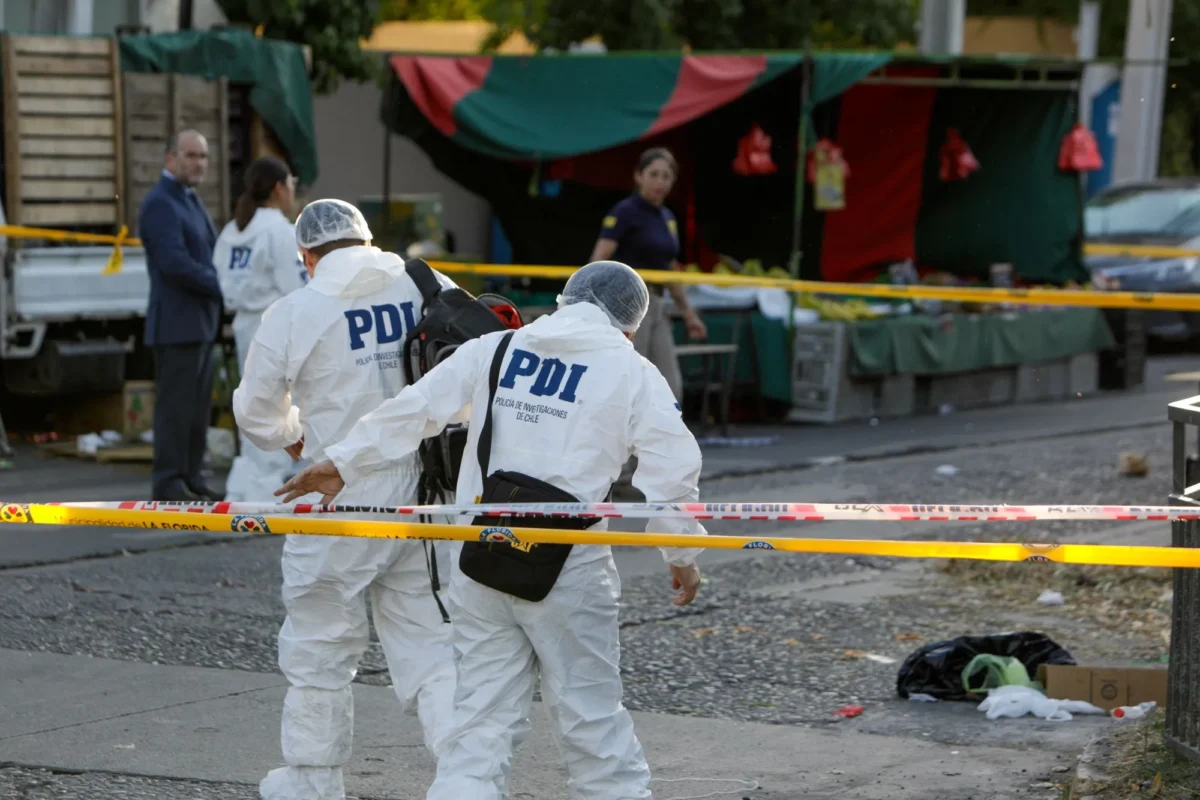
We will see what emerges for Chile in 2027, but surely the economy and insecurity will continue to be at the forefront, and it would not be surprising if intra-state violence occupies a significant position.
In a world where geopolitics and global risks have gained importance, it is worthwhile to see what experts say. At the beginning of 2026, the World Economic Forum published the 21st edition of its global risks report. This report examines risks both by categories and by countries, allowing for a consolidated global perspective as well as a specific view of South American countries of interest, such as Chile and its neighboring countries, Argentina, Peru, and Bolivia.
The first thing the report reveals is quite obvious: the two main short-term risks (to occur within 2026) identified in the global risks perception survey are geoeconomic confrontation and inter-state armed conflict, which looked different for 2025 when the main risks were inter-state armed conflict and extreme climate events. The criminal and illicit economic activity is ranked 29th (15th in 2025), with intra-state violence at 31st (25th in 2025) out of a total of 33 risks measured for 2026.
I mention criminal activity and illicit economy, as well as intra-state violence, because these are concerns in Chile, a country where insecurity stemming from crime and the insurgency from the Mapuche world dominate much of the local agenda, which is not the case globally.
When the world looks at two- and ten-year horizons, the two main risks in the first case are the risk of geoeconomic confrontation and disinformation, while in the second case, they are environmental risks. In the two-year outlook, the risk of inter-state armed conflict drops to 5th place, disappearing from the top ten when viewed over a ten-year horizon. The long-term perspective is dominated by environmental, technological, and societal issues, a trend also observed in the 2025 version. We will see if this expert perspective holds over time, as when they responded to the 2026 version of the survey, the attack by the United States and Israel on Iran had not yet occurred, which not only emphasizes the issue of inter-state armed conflicts but also the systemic importance of supply chains, which in the 2026 survey was only ranked 18th, the same as in the 2025 version.
The topic of artificial intelligence (AI) has alarmed many. The potential of Mythos from Anthropic has brought the issue to the forefront of the media. In 2025, the risk of adverse outcomes from AI was ranked 13th, rising to 8th place in 2026, and it is expected to become increasingly important over time, despite only being in the top 10 when viewed over a ten-year horizon and not a two-year one.
In the second part of the survey, where executives are asked to indicate the top five risks for their respective countries in 2026, a survey conducted with 11,000 respondents globally, the results for Chile are 1) Criminal and illicit economic activity, 2) Insufficient public services and social protection, 3) Social polarization, 4) Lack of economic opportunities and unemployment, and 5) Economic recession.
A year earlier, reflecting the reality under the Boric administration, the survey of the most important risks for 2025 indicated 1) Criminal and illicit economic activity, 2) Social polarization, 3) Involuntary migration, 4) Economic recession, and 5) Intra-state violence.
When we compare ourselves with our neighbors, we resemble Peru more, as in Bolivia, economic-type risks predominate, which is closely related to the election of President Paz and his focus on economic recovery. The same applies to Argentina, where everything related to the economy is by far the main concern. In none of these countries is insecurity, criminal activity, or illicit economy a top 5 issue.
In the case of Peru for 2026, which faces situations very similar to those seen in Chile, the main risks are 1) Criminal and illicit economic activity, 2) Insufficient public services and social protection, 3) Social polarization, 4) Intra-state violence, 5) Lack of economic opportunities and unemployment.
It is interesting to see how Chile and its neighbors live in a different reality and seem disconnected from the world, a world where the risk of geoeconomic confrontation and inter-state armed conflict prevails, something we will see if it remains in the 2027 version, in which we are experiencing a reality where the United States is being more assertive and operating under the National Security Strategy published in December 2025, a strategy that has been strongly felt at the beginning of 2026 and will surely accompany us at least until the midterm elections in November 2026.
We will see what emerges for Chile in 2027, but surely the economy and insecurity will continue to be at the forefront, and it would not be surprising if intra-state violence occupies a significant position as efforts are made to adjust fiscal spending, of which more than 60% is allocated to social areas (education, health, social protection, and housing), which may not be to the liking of the left, which tends to seek the streets and violence when things do not go their way, promoting social polarization among Chileans.