How did Chile fare with the "Godzilla Child"?
This article was translated automatically and may contain differences from the original. For reference, read the original.
Something is failing, and it is time for both technicians and politicians to take action. The goal is not just to continue winning awards for our capacity to react.
In January, I published the column The regrettable and fatal ineffectiveness of Senapred. The text was published in light of the 20 fatalities in the January 2026 fires that occurred in the Ñuble and Biobío regions, events in which neither the National Disaster Prevention and Response Service (Senapred) nor the National System for Disaster Prevention and Response (Sinapred) demonstrated effective performance. Two years earlier, their ineffectiveness had already been demonstrated with the fires in Viña del Mar in February 2024, where more than 130 people died.
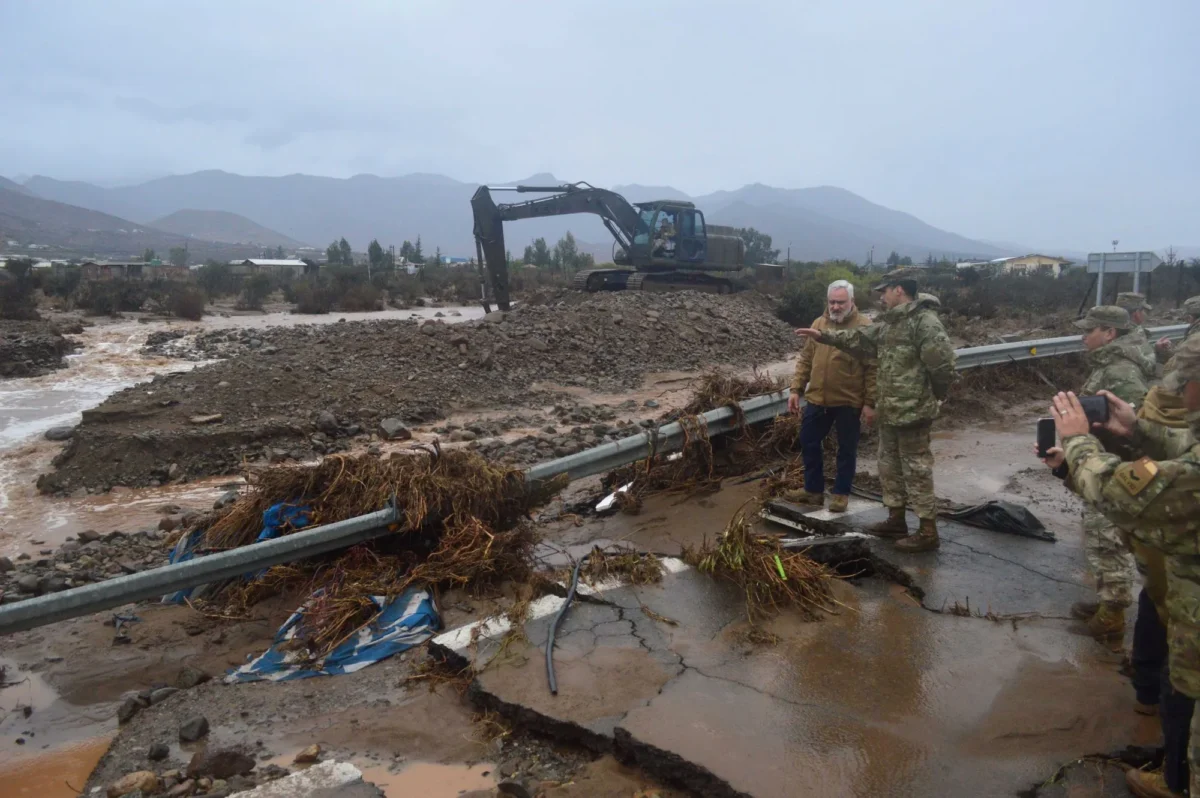
The serious situation generated by the storms that have occurred since Thursday, July 16, in the central area and in the regions of Coquimbo and Atacama, which has already claimed several Chilean lives, again brings the effectiveness of Sinapred into question. The results are evident, where the impact of nature is more than clear, but it is also evident that these effects would be less severe if the preventive measures functioned better. Something is failing, and it is time for both technicians and politicians to take action. The goal is not just to continue winning awards for our capacity to react. Chileans deserve more; they deserve planning and prevention.
In this situation, there are examples where acting preventively yields results, whether by avoiding or minimizing the effects of bad weather, as well as actions that could have been taken to prevent the problems that occurred. Applause for the former and awaiting explanations from those who, despite a good response attitude, did not take timely action.
Virtuous examples include simple actions like those taken by Las Condes to keep all its channels clean and clear, as well as resources prepared to manage the risk that could not be eliminated before the climatic event, such as the structural deficiency of the channel that runs through Quebrada Honda at its crossing with Bulnes Correa, where two backhoe loaders were placed, one on each side of the channel crossing, ready to clear what the rising water brought down from the hills. Las Condes learned significant lessons from the fires at the end of 2025 and the rains in January 2026. The important thing is that it successfully applied the lessons learned, planned, acted, continues to learn, and improve.
Unfortunately, we have cases like the power line that runs along route F-30E connecting towns like Puchuncaví and Papudo, which is cut off by falling trees during significant weather events, leaving important parts of the communities in the area without electricity. The difference this time was not just that the power went out, but the number of trees that fell on the line and the extent of the damage, and therefore, the time required to restore full electrical service. The $40,000 offered by CGE is clearly insufficient to compensate for the impacts affecting the residents of the area. If they know that trees fall when it rains or there are high winds, why do they and the municipality of Zapallar not take action? It is hard to understand, and it is clearly not a matter of resources, at least not in the municipality of Zapallar or in a company the size of CGE. It is more concerning that something like this did not come up in the reviews by the Comptroller General of the Republic (CGR) or in the reviews and audits that Senapred should have conducted, especially regarding known risks that regularly cause problems. We must be more demanding with the contracts we have with electric, water, gas, and communication distribution companies.
The main attribute expected from Sinapred is effectiveness, and from Senapred, efficient management of the system that must produce both foresight and effective responses. There remains the question of why we are not capable of conducting risk assessments and establishing process improvements without having to go through catastrophic critical eventsto learn lessons or ensure that learning is applied to prevent disasters from recurring year after year. The use of artificial intelligence should assist us.
We allow settlements to be established in riverbeds and do not consider the possible overflows that may occur, and worse still, when the time of crisis arrives, we must dedicate the very demanded and scarce resources to evacuate the people living there to avoid tragedies and loss of human lives.
We are the kings of reaction capacity and solidarity, as well as of taking corrective actions after suffering the effects of disaster. High-tension lines run free of nearby trees after forest fires that taught us a lesson; we do not allow human settlements near volcanoes after Chileans died from volcanic eruptions, and we established tsunami flood zones after the 27-F of 2010, despite the fact that in many cases the risks faced by those living there were known. Several hundred Chileans had to die for governments to take action. For some reason, I do not understand, we are not good at prevention.
This government acted correctly by beginning to take preventive actions and preparing to respond. It demonstrated respect for the existing institutions and allowed them to function, with a President of the Republic leading the government’s actions on the ground. What one would expect is that in the future, once the crisis is over, they would seek to identify what needs to be improved in Sinapred at the central, regional, and municipal levels. It would be a nice legacy for Chile to leave a better Sinapred than the one received from President Boric’s government, one that reviews whether it has the best people in leadership positions, the best professionals in the field, and, above all, the capacity to ensure that the system can improve and correct itself, being effective while also efficient. It should be capable of preventing Chileans from dying when it rains.
Failing to take advantage of the lessons this crisis offers is to squander a unique opportunity that nature has presented us, especially in the Third and Fourth Regions. It is a duty to the Chileans living in those parts of Chile who deserve a safer country to live in. The new climatic reality we are experiencing, which will frequently bring complex events, compels us to improve.
As additional final recommendations to what has already been indicated, I would add five fundamental things that would help create a better Sinapred, more effective in both prevention and response capacity:
- That both the Central Government Audit and the CGR audit the processes and risk maps of Sinapred, regional governments, and municipalities with a risk-focused approach,, seeking not only to assess reaction capabilities but primarily the preventive aspect, which involves understanding the risks and the plans that exist to correct or mitigate them as appropriate.
- That an independent commission of disaster risk management specialists be established for an ex post review of Senapred’s actions.Regional governments and municipalities managed the preventive aspect of this crisis, as well as the subsequent response. The report should be public.
- That when facing a potential crisis of the type we are experiencing, the heads of National Defense be previously designated and activated before the event occurs.. Obviously, activation is difficult to apply for earthquakes, tsunamis, and volcanic eruptions, but by being previously designated, they know what resources they have and are expected to be familiar with their areas of responsibility. Armed institutions function in Chile, and normally their generals and admirals are prepared and capable of managing situations like those mentioned above. We should not wait, as was the case this time, for the regions of Coquimbo and Atacama to be underwater and without roads to declare disaster zones.. Clearly, an early and prior use of general officers, superiors, and chiefs, also integrated into the Disaster Risk Management Committees, would greatly assist both in prevention and response capacity.
This may require legal modifications. If the goal is to save Chilean lives, they must be made. There are no excuses when it comes to saving lives.
- Review the mission of Senapred which currently states: “To lead a continuous, collaborative, and participatory process with the members of the National System for Disaster Prevention and Response and the communities, to promote Disaster Risk Management throughout the population and the national territory.” Nowhere does it mention that the mission and objectives of Sinapred are to save lives and prevent Chileans from dying when disasters occur. When the mission and objectives of the service that manages a system defined by the prevention and management of disaster response capacity are not well defined and focused on the people they should seek to protect, we have a significant problem. I would recommend starting with this. If this is not clear and well defined, do not expect things to go well or that Chileans will not die when the Godzilla Children visit us.
- Once the mission and objectives of Senapred and Sinapred are reviewed, I would recommend reviewing the organization, job descriptions, and professional profiles of both those who manage and those who work in Senapred, as well as the regional and local organizations dedicated to these critical matters.
I am very grateful to all the officials of Senapred, the central government, regional governments, municipalities, firefighters, the Armed Forces, Carabineros, and the PDI, and to all Chileans who seek to make Chile a safer and less risky country, one where mistakes are not repeated, one where authorities act with responsibility and vision for the future, thereby avoiding unnecessary loss of human lives.
RICHARD KOUYOUMDJIAN INGLIS
Executive Vice President AthenaLab