Is the plan to strengthen the Carabineros of Chile sufficient?
This article was translated automatically and may contain differences from the original. For reference, read the original.
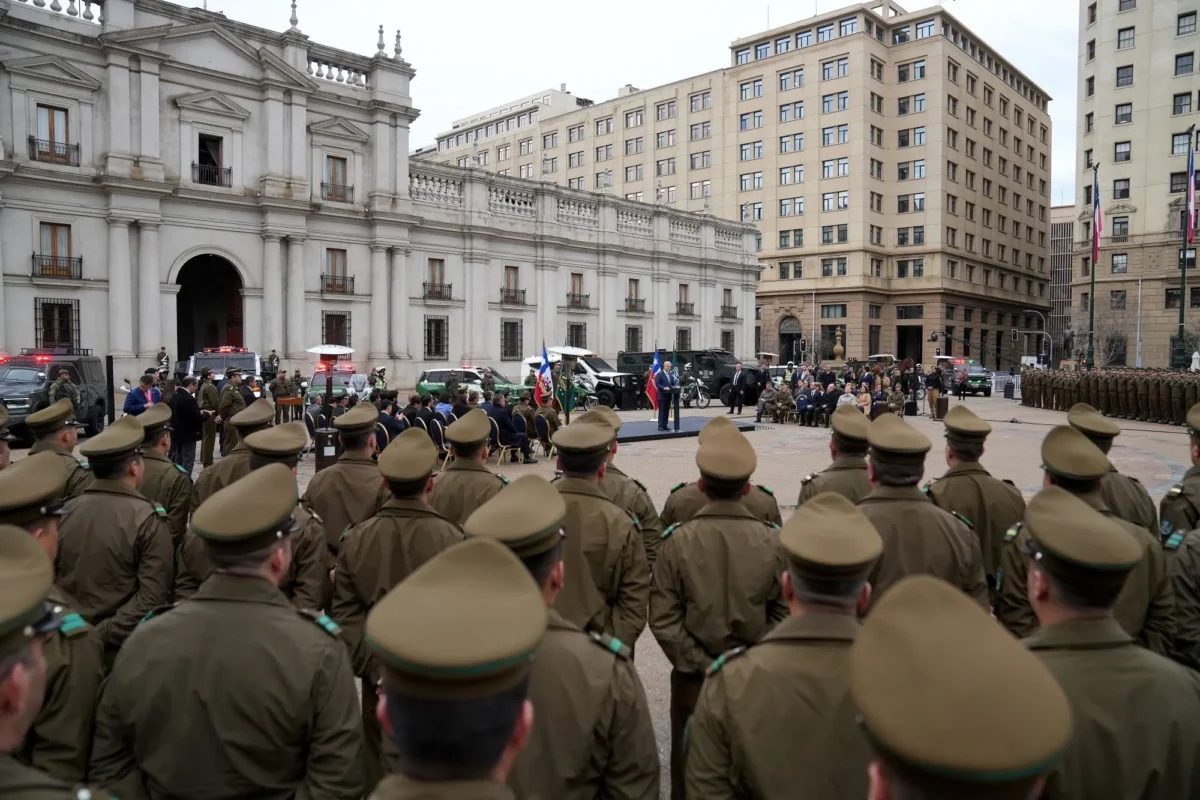
How much are we willing to invest in ensuring that the Carabineros can fulfill their constitutional role? This is something we need to discuss because if we are not willing to invest, why do we demand it in the Constitution and the respective organic constitutional law?
I firmly support the Carabineros of Chile; I believe we need many more Carabineros and that Chile would be better off with more of them. However, I also believe that, regardless of the strengthening plan for the Carabineros announced last week, it is heading in the right direction, it is insufficient for the challenges we face in terms of security and public order. It is also inadequate for the Carabineros of Chile to be in a position to fulfill their constitutional role, which they share with the PDI (Article 101 of the Constitution of the Republic of Chile) to enforce the law, guarantee public order, and ensure internal public safety, something that Article 1 of their organic constitutional law No. 18,961 reinforces.
How much are we willing to invest in ensuring that the Carabineros can fulfill their constitutional role? This is something we need to discuss because if we are not willing to invest, why do we demand it in the Constitution and the respective organic constitutional law?
Why is it insufficient? It is because the plan announced by the government basically discusses actions to be taken across five critical areas aimed at improving incentives for recruitment and retention, as well as freeing them from administrative duties, while also providing better equipment and technology. All of this should imply more available Carabineros, increasing their effectiveness by being better equipped and prepared, but all of this is on a scale that, while it partially closes the gap we have, is still far from what we need or should have.
The current ratio of Carabineros to inhabitants, using the government’s figures of 38,000 by the end of 2025 in order and security functions, is 1 Carabinero for every 526 people, which is close to the globally accepted minimum standard of 1.8 per 1,000, with the recommendation from international organizations being 1 for every 357, a figure that also coincides with the global average of police per capita. In our case, this would require increasing the number of Carabineros by 18,000, an increase that, using the announced plan, would take at least 15 years to achieve, assuming everything planned functions correctly and that the current attrition rate does not increase.
It is debatable whether the nearly 13,000 PDI count towards this or whether municipal security forces should be considered in the numbers we allocate to public safety. However, the former are supposed to be the investigative police, and the latter, while also preventive, do not have the same powers and authorities as the Carabineros, making them imperfect substitutes.
In the private sector, one would conduct a calculation known as capacity planning, which is the strategic process of determining the resources, such as personnel, equipment, and time, that an organization needs to meet current and future demand. This requires having objectives that I am not sure exist, as so far in public accounts, what has been done is reported, but not the degree of compliance with the objectives. A zero-based budget could also be conducted to determine how many Carabineros we need. The issue with the figures reported in the strengthening plan is that they do not indicate the number of Carabineros necessary to guarantee the order and security that the Constitution demands of them. I insist, the information provided is heading in the right direction, but it fails to indicate how many are necessary or what the staffing of the Carabineros of Chile should be.
The plan does not mention other possible measures that directly impact capabilities, such as eliminating the Palace Guard and replacing it with a guard from the Chilean Army and other defense institutions. It could also be worth reviewing the necessity of having a Carabineros band, the Green Corps, police attachés in multiple countries, and other measures. If we are short on Carabineros, we need to utilize all available resources. We must also address the reasons for those on medical leave, an aspect not covered in the announced plan, as well as review investigative functions that should be under the PDI. The Carabineros are primarily focused on prevention, while investigative functions belong to the PDI. Having overlapping functions does not help at all.
It is important to review existing corruption cases and the infiltrations that have occurred from organized crime. We do not have an excess of Carabineros to allow some to switch to the dark side of the force. Retention measures of an economic nature are important, but so are those aimed at eliminating attrition due to medical reasons and those occurring due to misconduct.
When there are casualties in confrontations or police procedures, the corresponding investigations must be conducted. We must learn from any mistakes or improve police actions if criminals have become more sophisticated. There are not enough Carabineros in Chile for the list of martyrs to keep increasing.
Eventually, greater use of digital technology and AI can be made, as well as interconnecting the systems of the Carabineros with those of the PDI, municipalities, and other state agencies. This should increase productivity and eventually require fewer Carabineros, but until we have the necessary staffing, we will not have a clear understanding of the contribution of technology to the existing problem of being short on police.
The great concern of President Kast’s government for the police is evident. This is something that the General Director of the Carabineros feels and made clear in a recent interview. There is no doubt that as part of the effort to restore the authority of the State and the rule of law, they firmly support police actions and will seek to ensure that they have the legal powers they need to be an effective police force. However, we must not forget the cases of Maturana and Carvajal, who are imprisoned for acting in accordance with their police mandate. If there are no prompt pardons for them, all of the above and the strengthening plan may end up being meaningless, increasing spending and investments in the police without effectiveness due to fear of using the force that the State has delegated to them, in other words, a multiplication by zero.