The Serious Problem of Underfunding National Defense
This article was translated automatically and may contain differences from the original. For reference, read the original.
If we do not promptly resolve the issue of financing the Armed Forces, the current capabilities will be completely lost by 2040.
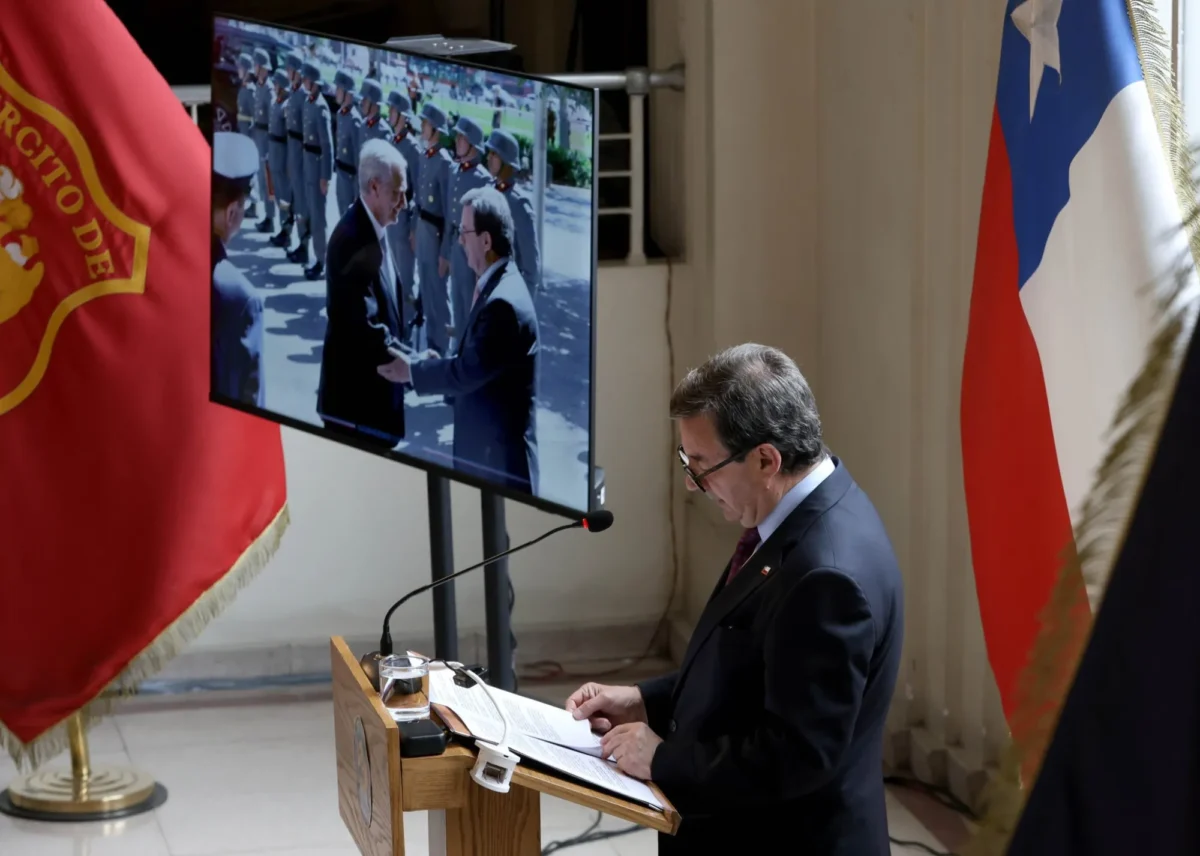
In his public address on Friday, July 31, 2026, the Minister of National Defense, Fernando Barros, when discussing the financing of investments in strategic defense capabilities, stated:
“At this point, I must say that the current financing system for the Defense sector, consisting of multi-year funds and a strategic reserve fund, implemented a few years ago, has not functioned as expected. Therefore, we are open to exploring other alternatives that ensure a constant, sufficient, and guaranteed flow of resources for the sector.
In this short period, and by decision of the current government, there were years when the multi-year funds were eliminated or even defined only to be withdrawn later, while the strategic reserve fund, amounting to about US$1 billion, has never been completed and remains at 0.1% of what the law stipulates.
As we pointed out, National Defense cannot be improvised, and we must seek new formulas, a system that works and guarantees the acquisition projects or expenditures we approve in the future.”
What the minister said was surprising because, due to the sensitivity surrounding these issues, figures like these are not very public. Some even think it was imprudent to do so. I am among those who believe it was appropriate for him to say it, aimed at raising awareness of the problem, and I am among those who were not surprised by his statements, as there had been noise on this matter for some time and little clarity from the government of Boric, which received the accounts in order and fully paid, but could not properly operate the new financing mechanism established in Law 21.174.
Many long for the return of the copper law, but they do not know or forget that it also did not function very well nor did it provide everything that was needed. Can you imagine today contributions from Codelco considering its concerning situation?
The financing of National Defense has always been a complex issue because governments find it difficult to invest in this area unless they feel the sword of Damocles hanging over them, as was the case with investments made in equipment due to the crisis of Islote Snipe, the near wars of ’76 with Peru or ’78 with Argentina, or due to maritime boundaries with Peru during Piñera’s first term.
Between social spending that brings votes and defense spending, it is clear which one politicians lean towards. It is the old and false dichotomy of guns vs. butter. In this government, anything not related to economic growth or public safety is not a high priority, and they will not reduce spending on social aspects to finance the strategic capabilities of National Defense. To understand the orders of magnitude and the little importance, in the current budget, which does not include investments in strategic capabilities, 66% of the government budget goes to social spending, with Defense receiving less than 2.5% despite having more requirements and missions assigned by governments in public safety and border protection.
The advantage of having a mechanism that ensured an annual floor close to US$500 million helped plan the investments to be made, but it did not resolve the entire problem we face if the issue is to renew or maintain the capabilities we acquired in the early years of this millennium. Its main problem is that it left the management of the funds in the hands of the Treasury and not Defense, and therefore, could be used for other purposes. What this mechanism generated were notional rights and not a certain fund managed by the finance department of the ministry.
Clearly, generating capabilities in joint matters or in projects related to the digital and cyber dimension, along with what the Army, Navy, and Air Force need, far exceeds what the previous mechanism or the current one were capable of generating, so we still had to face the uncomfortable question between the Defense we need or the one we can afford. In the past, it was always the latter, only that we received aid or supplements from the United States through the Mutual Defense Assistance Pact (MDAP) or from the United Kingdom through aid provided to them in the ’80s. When that no longer exists and we have to pay, we face the harsh reality. There is no longer the possibility of going, as they say in good Chilean, “to the cochiguagua,” with others paying for our Defense, something that was never free because that aid was not given without conditions.
It is very possible that readers not expert in National Defense issues may not grasp the importance of the matter at hand, but having a financing mechanism for strategic capabilities that does not work or a state that lacks funds or is not a priority for those in charge due to other urgencies is at least concerning.
As we stand after the news, forget about having an Army with armored brigades equivalent to a Leopard 2, or a navy with 8 frigates and 4 submarines, or an Air Force with more than 50 combat aircraft of generations between 4, 4.5, and 5.
Chile has enjoyed a long peace that has allowed it to develop because it has been able to have, among other things, professional and well-equipped Armed Forces. If we do not promptly resolve the financing issue, the current capabilities will be completely lost by 2040. We still have an Army, a Navy, and an Air Force adequately equipped, but they have an expiration date. Before 2030, we must have our financing problem resolved if we do not want to end up like the Argentine Armed Forces under recent Peronist governments.
Some may tell me that I am being alarmist, but what was stated last Friday is at least unsettling. In the current geopolitical reality, lacking strategic capabilities is not an option.
RICHARD KOUYOUMDJIAN
Vice President AthenaLab