What is the purpose of the Shield of the Americas?
This article was translated automatically and may contain differences from the original. For reference, read the original.
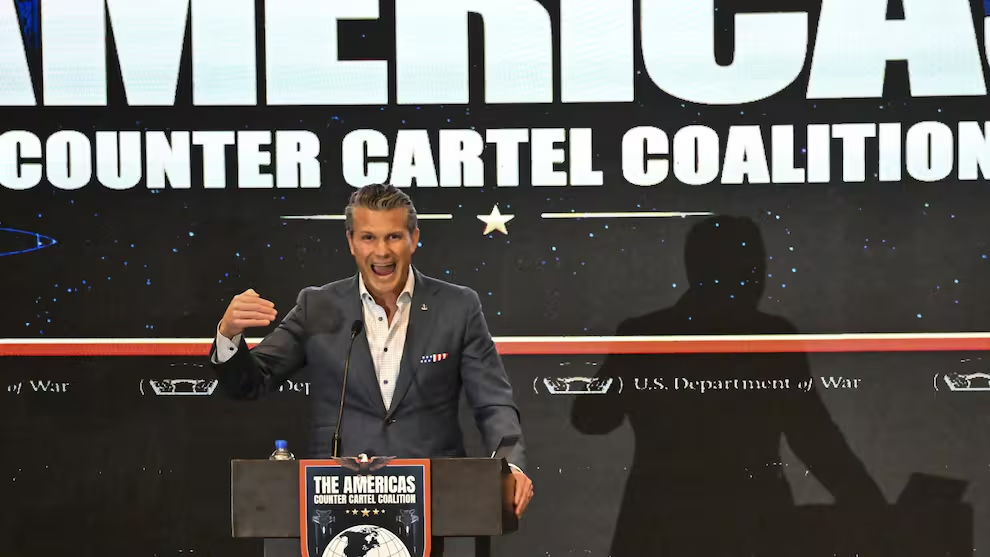
At the recent meeting held in Panama, attended by the Minister of National Defense and presided over by the U.S. Secretary of War, it was decided to continue advancing in the structuring of the Shield of the Americas, an alliance led by the United States that currently has 19 members, including confirmed participants and those still considering joining.
The next meeting will be in November, by which time it is expected that U.S. Southern Command, known as Southcom, will be prepared to present the organization and strategy of the alliance, which entails clarity in objectives, resources, and their mode of use. Arriving in November with all of this ready is no small challenge, especially considering that the membership is diverse and the realities of each member are very disparate, except for one common factor: the shared enemy, the drug cartels.
If we are clear that the United States is the world’s leading military power, far surpassing all others combined, why does it need an alliance to combat organized crime? Alliances are necessary when, despite one’s own power, no matter how great, it is unable to manage or resolve the problem, requiring third parties to do so. Additionally, it makes the efforts more politically acceptable, and if things do not go well, it allows for the sharing of losses among the members, something to consider when embarking on an initiative of this kind, one that, regardless of who leads it, can end poorly.
The United States is shaping the Shield of the Americas because it is clear about its limitations, particularly regarding its technologies, as was clearly demonstrated in Iran. Neutralizing and eliminating cartels or drug traffickers that bring their production to North America is not as simple as eliminating vessels navigating the Caribbean or the Pacific bound for U.S. shores. We are talking about having to operate in unfamiliar territories, where the opponent has the home advantage. This is why they primarily need the countries from which the drugs are exported to their shores. We are talking about Central America, the Caribbean, Venezuela, Colombia, and Ecuador.
Chile is not relevant from the perspective of the objectives of the Shield. We do not export drugs to the United States, but it is important for the U.S. that Chile is included due to the leadership we exercise in the region. This alliance has nothing to do with the International Criminal Court, defense spending and investment in Chile, Chinese strategic investments, or being someone’s backyard. We must always look at the purpose of things and guide our decisions from the perspective of national interest and security. The United States is and will continue to be our main strategic relationship, and our second largest trading partner.
RICHARD KOUYOUMDJIAN
Executive Vice President AthenaLab