On the letter from former Defense Ministers and Chile's deterrent capacity
This article was translated automatically and may contain differences from the original. For reference, read the original.
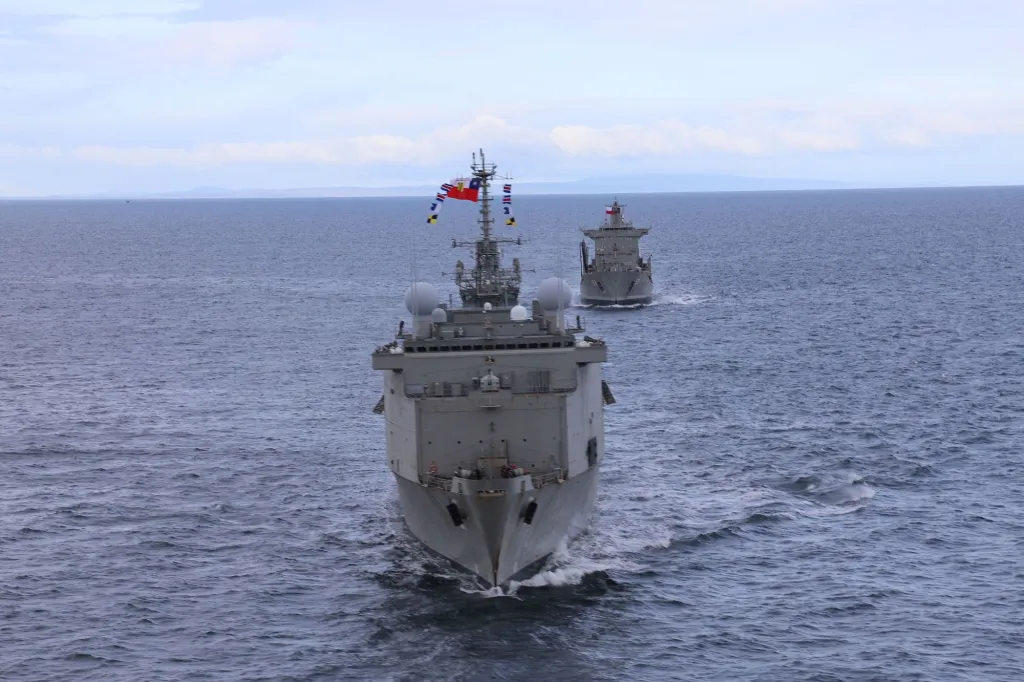
In our current geopolitical and geographical reality, maintaining a credible deterrent capacity is mandatory and fundamental for national strategic objectives.
On Sunday, September 6, we were surprised by a letter in El Mercurio of Santiago signed by former National Defense Ministers Francisco Vidal, Mario Desbordes, José Goñi, Jaime Ravinet, Jorge Burgos, and Alberto Espina. In the text, they essentially urge the government not to neglect and to finance the needs for the renewal of strategic capabilities of the Armed Forces, which we know, as indicated by the National Defense Minister in his public account at the end of July 2026, have not been adequately addressed due to lack of funding. The minister stated that the law for financing strategic capabilities No. 21.174 has not operated as expected since its enactment during Sebastián Piñera’s second term.
The issue of the National Defense situation is something I have mentioned in several columns published in this same medium during August. We covered the political responsibility for the conduct of national defense and the state it is in. We also discussed the serious problem of underfunding that affects it and, therefore, the Armed Forces that comprise it and their ability to provide deterrence now and in the future, something that goes beyond the funding of their strategic capabilities and is reflected in their limited operational budget, which directly impacts the maintenance of their equipment, training, and readiness of their combat units.
It was the statesman decisions of Presidents Frei and Lagos in defense matters that provided Chile with a quarter-century of tranquility as a result of our ability to generate deterrence. In subsequent governments, investments were primarily made to maintain strategic capabilities, but decisions regarding their renewal were avoided. If nothing is done, by 2040 the efforts of Frei and Lagos will be completely lost. Those efforts provided us with one of the periods of greatest tranquility recorded in our republican history. In our current geopolitical and geographical reality, maintaining a credible deterrent capacity is mandatory and fundamental for national strategic objectives.
Not financing National Defense is no longer an option, nor is it acceptable to ask them to engage in tasks outside their primary duty, which is the defense of sovereignty and Chilean territory, seas, and airspace, as well as national interests wherever they may be located. This implies equipment and training. It means that support for public security tasks should only be exceptional , I repeat, exceptional, and efforts should be made to avoid distractions that prevent them from ensuring the Executive and the Chilean nation can provide effective, real, and credible deterrence. This is not free; it requires investments and increased defense spending, but it ensures peace and tranquility, economic development, prosperity, sovereignty, independence, and democracy.It is concerning that a trans-Andean neighborhood disagreement has prompted a call to action rather than the evident absence year after year of investments that should have been made, as well as the existence of poor operational budgets.
It is concerning that the rearmament of Peru and Argentina has triggered our interest in the state and equipment of our Armed Forces, something that the community of specialists has been indicating for some time. In the previous government, little to no progress was made. The current budget was the work of the outgoing administration, something that the current one can correct when they present to the National Congress on September 30 how they will address the problem that was transferred to them. Chile has negative political objectives, I repeat, negative.
We do not seek or yearn to possess foreign territories or seas, which is not necessarily the case for Peru, Bolivia, and Argentina. It is a reality we must coexist with , which does not mean we do not aspire to have the best economic integration with them and to act jointly in the face of common challenges such as transnational organized crime that affects us all. For this, we must have a strong, real, and credible deterrent capacity, which must be backed by an unwavering political will to ensure that in case of problems, its use will be effective and lethal, available now and in the future, with investment plans and operational budgets that assure Chileans that the peace we currently enjoy can last another 25 years or more.Investing in National Defense pays off; all developed countries do it. They do so regardless of whether their neighbors are wonderful people who assure them peace and love.
The primary duty of a state is to ensure that its citizens can live in peace, safely, and tranquilly, something that, if it occurs, allows for development, independence, and democracy. Do not take it the wrong way, but this is more important than what is understood as social spending, education, health, social security, and housing, which are goods and attributes that only exist when we are capable of defending ourselves or providing effective and credible deterrence, one that may very well involve, if necessary, the ability to project our power beyond our territory, seas, or Chilean airspace. The capacity for attack is and will be the best defense. As the former National Defense Ministers rightly indicate, the times are not for being disarmed and unequipped
, something that is justified not only by the more complex neighborhood reality but mainly by the complicated global geopolitical reality that may eventually take unforeseen forms. Apparently, the recommendation made by the Secretary of War of the United States in Panama was correct when he indicated that we should increase our defense budget.For now, at the very least, I would maintain the operational budget for 2027 and commit to relevant investment plans starting in 2028. Remember that
if we do not act soon, we will lose existing strategic capabilities by 2040. Without those capabilities, our reality could be very different and not necessarily for the better. To conclude, if there are second-hand Japanese destroyers, frigates, and submarines available, they would be welcome. They would be a fantastic bridge program for the Navy, a very necessary one that would allow us to maintain capabilities while naval construction continues to take shape and deliver combat vessels. RICHARD KOUYOUMDJIAN
Executive Vice President AthenaLab.