Army of Chile, always victorious, never defeated
This article was translated automatically and may contain differences from the original. For reference, read the original.
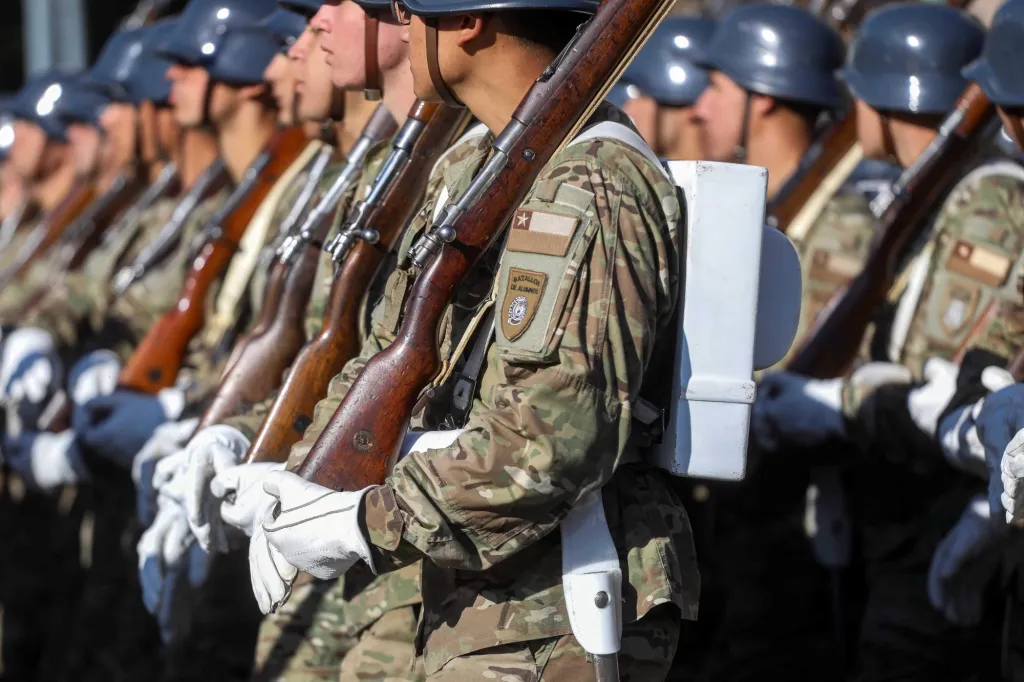
The current Army is asked not only to be prepared for the defense of Chile's territory but also to engage in public security tasks, a matter on which there is no consensus and which detracts from the maintenance and development of the capabilities that its ultimate purpose requires.
On September 19, 2026, our Army of Chile will celebrate 216 years, especially considering its origins in the army of the Kingdom of Chile, which was created in 1603. This institution, more than two centuries old, is one of the fundamental pillars of the republic alongside the other national defense institutions and the police., something that the public consistently recognizes in surveys such as Plaza Pública by Cadem.
Chile’s deterrence rests on the capabilities of its Armed Forces, both individually and in their ability to operate jointly. In this reality, the Army must not only be capable of interoperating with other institutions but also take charge of the land defense of the territory, which implies the need to operate from south to north, from sea to mountains, and, if required and with the necessary logistical means, to be able to project its capabilities beyond the territory of Chile and wherever national interests demand.
Our Army of Chile, always victorious, never defeated, stands on the examples of its first commanding generals, Bernardo O’Higgins and José Miguel Carrera,, in the soldiers who died for Chile in all the wars they had to fight, and particularly in the heroes of the glorious 4th Company of Chacabuco who sacrificed themselves in La Concepción, always seeks to be prepared to respond when and where called upon, requiring us, the Chileans, through the government of President José Antonio Kast, to seek to ensure that they have the human and material means to fulfill their constitutional mandate, and above all, to continue being victorious and never defeated.The Army will state what it needs, and it will be the government’s responsibility to provide what is requested.
The challenges facing the Army of Chile in 2026 are not very different from those experienced in recent years, only that over time they have become clearer and more real. The current Army is asked not only to be prepared for the defense of Chile’s territory but also to engage in public security tasks, a matter on which there is no consensus and which detracts from the maintenance and development of the capabilities that its ultimate purpose requires. The red line, in our view, is its participation in operations in urban areas, either jointly or in support of the police. One thing is a state of emergency in the Southern Macrozone, which is already debatable and has extended beyond what is reasonable, and another is to support border security and control efforts with Peru and Bolivia.
The Army of Chile prepares for war, to be lethal, effective, and victorious. It does not prepare to carry out police duties or public order control. Its use for ongoing states of constitutional exception or to form forest brigades in the summer is already something that borders on the limit, distracting from the main focus. The political world, whether from the left or the right, makes use of their disciplined and non-deliberative nature beyond what is appropriate, forgetting that at the end of the day, it is the responsibility of the President of the Republic and the Minister of National Defense to ensure that Chile’s deterrent capacity remains at a high level, that the required equipment is available, and that the necessary personnel are provided, including officers, non-commissioned officers, classes, and soldiers. Without an adequate operational budget and funding for strategic capabilities, we should not expect the Army to be everywhere and capable of scoring goals all the time.
Current strategic capabilities are adequate, but they must also be updated if we apply the lessons from modern wars, especially if we think in terms of 10 or 20 years. Active and passive defense of the MBT Leopard 2, modernization or replacement of the Leopard 1, missile and drone defense capabilities, long-range precision artillery, command and control, logistics, cyberattack and defense are some that come to mind. Modern warfare is characterized by being more complex and comprehensive. Drones do not replace armored brigades; they operate together or against them, but not alone. If we want an effective and efficient Army of Chile, always victorious and never defeated, we must consider all of the above and how to finance it.
All the previous effort and deterrent capacity may not be entirely effective if we do not take prompt action and demonstrate charity and clemency toward the old military prisoners in Punta Peuco and Colina 1 as well as other prisons. This also applies to the soldiers who had to defend the homeland in 2019. The Army of now and the future observes the treatment given to those who preceded them. They take note and remember. Not acting puts effectiveness at risk. Not sending them home to spend their last years is clearly just revenge. I hope that our Christian President and his Minister of Justice will promptly grant clemency to those who deserve it. Robledo and others are waiting.
“For the soldiers of the Army, always victorious, never defeated, who, faithful to their oath, gave their lives for Chile.”