On the Relationship with Argentina
This article was translated automatically and may contain differences from the original. For reference, read the original.
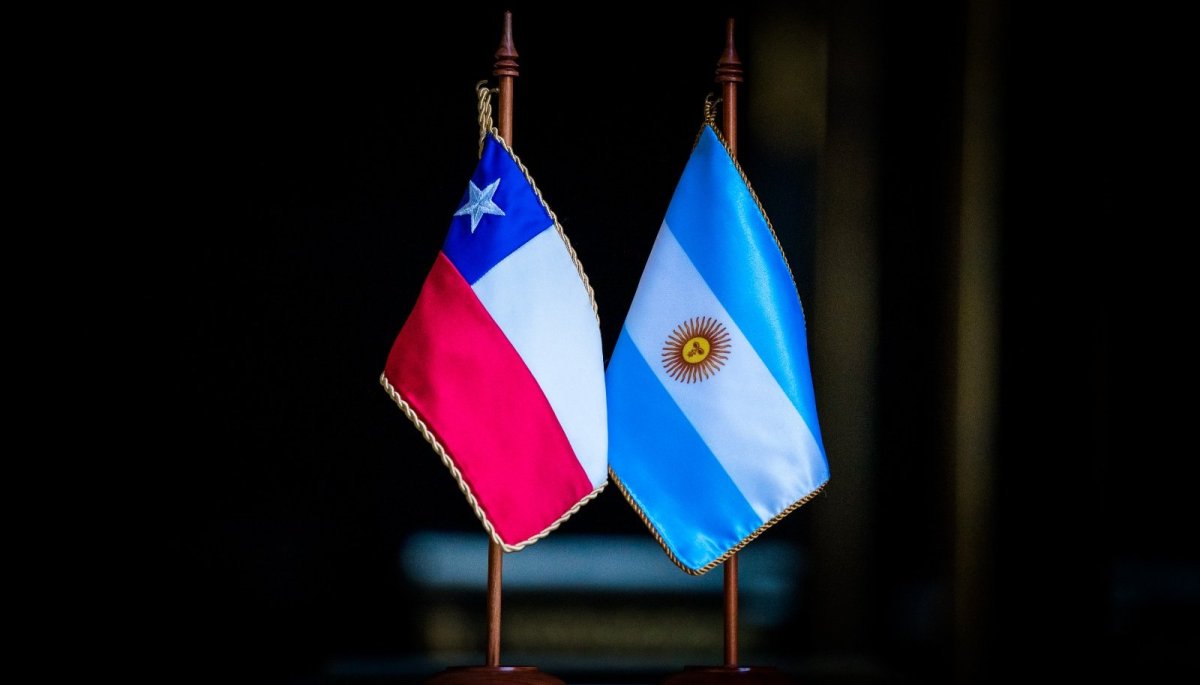
The recent statements made by the Minister of Defense regarding the sovereignty effectively exercised by the United Kingdom over the Falkland Islands have opened a new communicational front in the relationship with Argentina. The minister may be entirely correct in defending the interests of the people of Magallanes in trading with the islands, but it turns out that a month prior, we signed a communiqué as a result of President Milei’s visit to Chile, in which they thank us in advance for the efforts we will make to prevent the consolidation of hydrocarbon and fishing exploitation activities in the disputed area with the British.
It is true that it does not have the character of a treaty and that we only agreed to make our best efforts to prevent Punta Arenas from being used to logistically support the islanders and the economic efforts occurring in the surrounding maritime spaces. It is clear that the people of Magallanes were not consulted, but the understanding of the Chilean Foreign Ministry is that only the best efforts were agreed upon, and nothing more, something that the Argentine Foreign Minister understands as obligatory, leaving the doubt as to whether he retained the idea of the original version, rather than the one that was ultimately agreed upon and signed in Santiago.
Since the communiqué was signed during Milei’s visit, it was known that the issue of supply from Punta Arenas would be a topic, and it is indeed becoming one. If it occurs, it could worsen, with no clarity on what we would do if a Chilean-flagged vessel is detained in Argentine territorial waters while returning, exercising the free passage through the Chilean Strait of Magellan.
With Argentina, we need a strategy, and we need to stay three steps ahead, but in a coordinated manner. What they understand they are signing is not the same as what we understand. Quino signed a treaty, and Perez Mackenna signed an agreement without contractual obligations.
The issue starts poorly since we allowed ourselves to be dragged into a problem that is not ours. The dispute is between the United Kingdom, the Argentines, and the islanders, each with their own interests and realities, to which the interests of Magallanes and Chileans who feel poorly attended by the capital are added. They will clearly come out ahead because if Santiago stops the vessel, the price to be paid will be high. The interview in La Segunda with Radonic is clear.
Nothing prevents us from having good relations with Argentina, especially in economic matters. They need Chile more than we need them. If they do not export copper through our ports, the exploitation is uneconomical. If they do not sell us gas, who will they sell it to? Continuing to support their claim in exchange for nothing is nonsensical. For now, let us invest in our deterrent capabilities and prepare for a relationship where the past can be revived.
RICHARD KOUYOUMDJIAN
Executive Vice President AthenaLab