The Future of the Chilean-Bolivian Relationship
This article was translated automatically and may contain differences from the original. For reference, read the original.
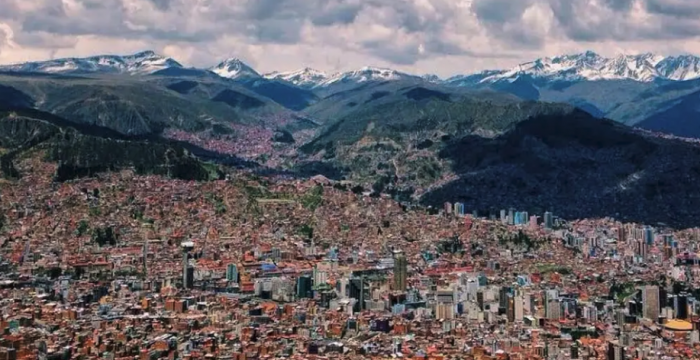
Bolivia needs Chile for its development, just as Chile needs Bolivia to ensure that the north does not lose dynamism and becomes more than what the mining business currently generates.
It is expected that President Kast will travel to Bolivia next week. To prepare for this visit, the Bolivian Foreign Minister, Héctor Huanca, will come to Chile this week. Evidently, the visit has been scheduled for some time, but all indications suggest that the issue of contaminated or impregnated wood complicates the relationship at a rather inopportune moment.
If this were the relationship with another country, it might be less complicated, but considering the historical burden of the Chilean-Bolivian relationship, things are not so simple and can become disordered in the blink of an eye. This goes beyond the political affinity that the presidents may have. This is the reality of a relationship that has always been complex and will continue to be so as long as they do not have access to the sea.
The relationship with Bolivia is governed by the Treaty of Peace and Friendship of October 20, 1904. For all intents and purposes, Bolivia exited the Pacific War at the end of the 1880s, signing the truce pact, also known as the Treaty of Valparaíso, only in 1884. It took another 20 years to sign the peace treaty.
In 1964, the father of the current president severed relations, which were restored by Hugo Banzer in 1975. Since 1978, we have had only consular relations, a situation that arose from the failure of negotiations at the time to provide them with an outlet to the sea, which was blocked by the Peruvian government of that time, a country that proposed a solution that was not viable for Chile. In the nearly 50 years since then, we have gone through good times and less positive ones.
Regardless of the fact that Bolivian politics uses the issue of access to the sea, the reality indicates that both countries have an economic relationship that works, regulated by the 1904 treaty, with levels of cross-dependence typical of two neighboring countries, a dependence that is heightened by the fact that Bolivia relies on Chile for its access to the sea, generating a Bolivian economic activity that creates a dependency on the north of our country, which, if it did not exist, would seriously affect the Chilean reality in the north.
There are those who only see the relationship with Bolivia in terms of a border relationship, a border that in recent times has only been a source of problems related to illegal immigration, smuggling, and drug trafficking, which is correct, but this overlooks all the economic potential that the relationship between both countries can achieve.
Bolivia needs Chile for its development, just as Chile needs Bolivia to ensure that the north does not lose dynamism and becomes more than what the mining business currently generates. It is time to view Bolivia as more than just a source of problems.
The case of wood impregnated or contaminated with drugs is an example of the problems we have to deal with, which are characteristic of modern times and something for which the 1904 Treaty is not necessarily prepared. The reality indicates that the drug trafficking business will operate more strongly in southern Peru and Bolivia, as long as the efforts of the A3C succeed in northern South America. Chilean ports, Argentine waterways, and Amazon rivers are the natural exit routes for drugs that may eventually be produced in the aforementioned places, which have already been used for that purpose in the past.
The issue is that Chile must be prepared for this. Relations with a country like Bolivia are not only the responsibility of the Foreign Ministry but also of the Public Ministry, the police, and the courts. If it is determined that the treaty regulating our relations is not capable of ensuring that Chilean ports will not be misused for illicit businesses, then we must make the necessary adjustments. Misuse affects both parties.
What cannot happen is what happened with the so-called narcomaderas. Apparently, a multimillion-dollar seizure was announced in haste, which could be less than what was announced, but due to inappropriate and careless handling by Chilean authorities, it has allowed the case to be challenged by Bolivian authorities and companies, creating the possibility that in the future it may be preferable for the review of cases like this not to take place in Chile, but at the destination, which would reflect poorly on both countries, Chile and Bolivia, due to their inability to provide security.
For now, this case has the potential to complicate President José Antonio Kast’s visit, who, along with President Rodrigo Paz, seeks to leave the past behind, restore diplomatic relations, maximize the relationship to unprecedented levels, and focus on what is important: the well-being and security of both peoples. We need to make things work well; otherwise, only the drug traffickers benefit, while Chileans and Bolivians suffer losses.
RICHARD KOUYOUMDJIAN
Executive Vice President AthenaLab