COLUMN | Military Honor?
This article was translated automatically and may contain differences from the original. For reference, read the original.
El Mostrador, Sunday, July 7, 2019
Richard Kouyoumdjian
Vice President, Athenalab
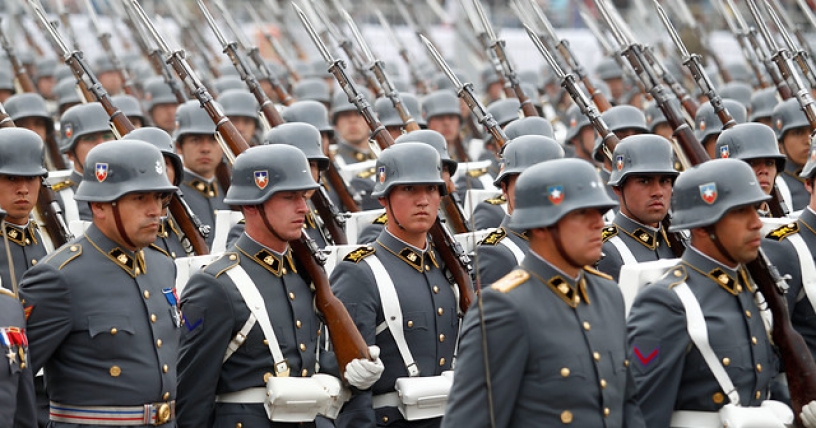
In the times of chivalric orders, military personnel incorporated the practice of cardinal virtues and behaviors that reinforce their discipline, courage, commitment, and unity into their culture and way of being. This is commendable and desirable considering the characteristics and demands of the military profession, which includes, among other things, the willingness to give one’s life in combat in defense of the interests of one’s country. Being a military member requires a commitment that other professions do not entail, and that is why they are prepared differently.
This preparation involves transforming them from civilians into combatants, who, at their extreme, are authorized to kill or may be required to die fighting against the enemy. Both behaviors are not typical for which a human being prepares, and therefore, citizens are transformed and equipped physically and mentally for this role, including the ethical and moral qualities necessary to kill the enemy or die for their country. Otherwise, if I do not wish to undertake this, I would hire mercenaries, as was the practice of many European nations before the transformation introduced by Napoleon when he created the concept of the nation in arms, or I would seek the protection of a country if I do not want to face the reality of having to take responsibility for the defense and protection of sovereignty, territory, and national interests.
In any case, there were already historical references that countries used to model the soldiers of their armies and the crews of their navies. Not only were there the knights of the Crusades in the Middle Ages, but also Greek heroes who enriched our Western culture with role models. The Iliad and the Odyssey provide us with examples such as Odysseus, Achilles, and Hercules, who were fantastic examples of martial conduct but weak in many aspects of humanity.
Since we have had our Army and Navy, and later the Air Force, we have been shaping soldiers, crew members, and aviators with the necessary conduct and ethics for their functions, and we have also used the examples of those who distinguished themselves in combat or gave their lives for Chile to strengthen the formative-transformational work. The examples of O’Higgins, Carrera, Bueras, Blanco, Cochrane, Prat, and Aldea were key in shaping the army that is always victorious and never defeated, or the Navy of victory or death. The Air Force, which originates from the Army and Navy, takes what they provide in terms of culture and traditions and adds the example and imprint of Commodore Merino Benitez, who still guides them 90 years later.
The heroic example of the 77 from Concepción became the oath of the flag that all Chileans who join the armed forces take, where they swear to give their lives for the homeland if necessary, but also promise to be an honorable, brave, and patriotic soldier. Because I am unaware of why we require members of the armed forces to promise to be honorable in their oath, it sounds as if we are incorporating and demanding other virtues beyond those necessary for war, which raises the question of whether the recently reported issues relate to a breach of military honor or simple breaches of probity and compliance with legal and administrative norms. I lean towards the latter.
The possible administrative and legal violations that have been made public regarding the Army have nothing to do with military honor. They would be violations of another nature that impact the trust the public may have regarding the probity of past administrations, but there is nothing to indicate that military honor is affected or, on the other hand, the Army’s capacity to defend the sovereignty and interests of Chile. The recently revealed facts, which must be proven, resemble problems we have seen in other public and private enterprises that have not been able to meet the current demands that both private and public entities must fulfill in terms of regulations and laws. Times have changed, and with them, the levels of demand that the people of Chile expect from all their institutions, whether military or civilian.
In summary, we need armed forces that are efficient and effective in military matters, highly respectful of human rights due to their monopoly on force, and correct and impeccable in the execution of the laws and administrative regulations that affect them, which does not differ from the demands we should place on other public and private organizations in the performance of their tasks. Knowing the Army, I am confident that they are affected, but they are very resilient, and under the leadership of General Ricardo Martinez, they will know how to move forward with an institution better than the one we know, beloved and connected with its people, always victorious, never defeated.
Source: El Mostrador